The short answer: put your bird feeder somewhere high enough that cats can't reach it, close enough to natural cover that birds can bolt if a sparrowhawk arrives, but far enough from thick bushes that predators can't hide right underneath it. Then keep it away from windows. That combination solves roughly 80% of bird feeder placement problems in one go. Everything else is refinement.
Where to Put a Bird Feeder: Best Locations and Tips

Eleanor Hartwick
11 Apr 2026
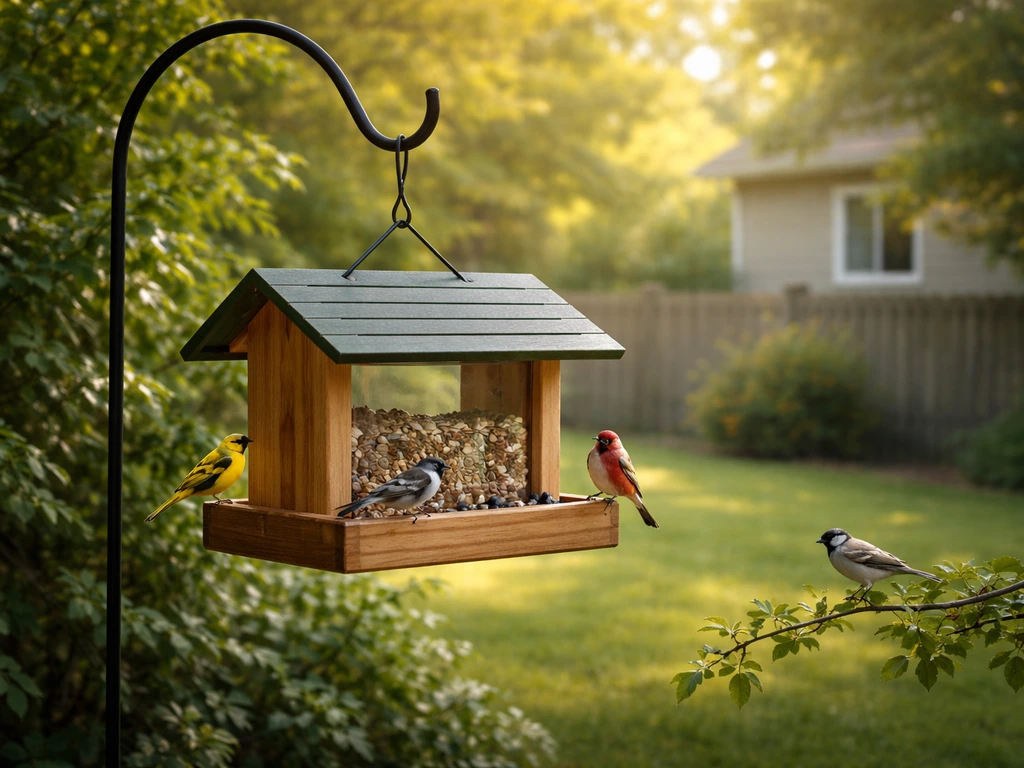
How to choose the right spot in your yard or garden
Start by walking your garden and thinking about three things at once: what can reach the feeder from below, what can swoop in from above, and what's the nearest window. Most placement mistakes trace back to ignoring one of those three. A spot that looks perfect from your kitchen window might be sitting two feet below a fence that a cat uses every morning.
The RSPB recommends placing feeders high enough to put them out of reach of ground predators like cats, with the ideal position a couple of metres away from thick cover such as hedges or dense shrubs. That spacing lets small birds make a quick retreat toward cover if an aerial predator like a sparrowhawk appears, while still leaving enough open space that a cat, fox, or other ground hunter can't crouch undetected right below the feeder. The goal is a balance: birds need to feel safe enough to stay and feed, but they also need a clear exit route.
Also think about how many feeding spots you have. The Sussex Wildlife Trust points out that using several feeding sites spread around the garden reduces the number of birds crowding any single spot. That matters a lot for disease risk, which I'll come back to later, but it's also just better for the birds. A single feeder drawing thirty birds into one tight cluster creates stress and competition that a quieter, better-placed feeder avoids entirely.
The placement rules that actually matter
Distance from cover
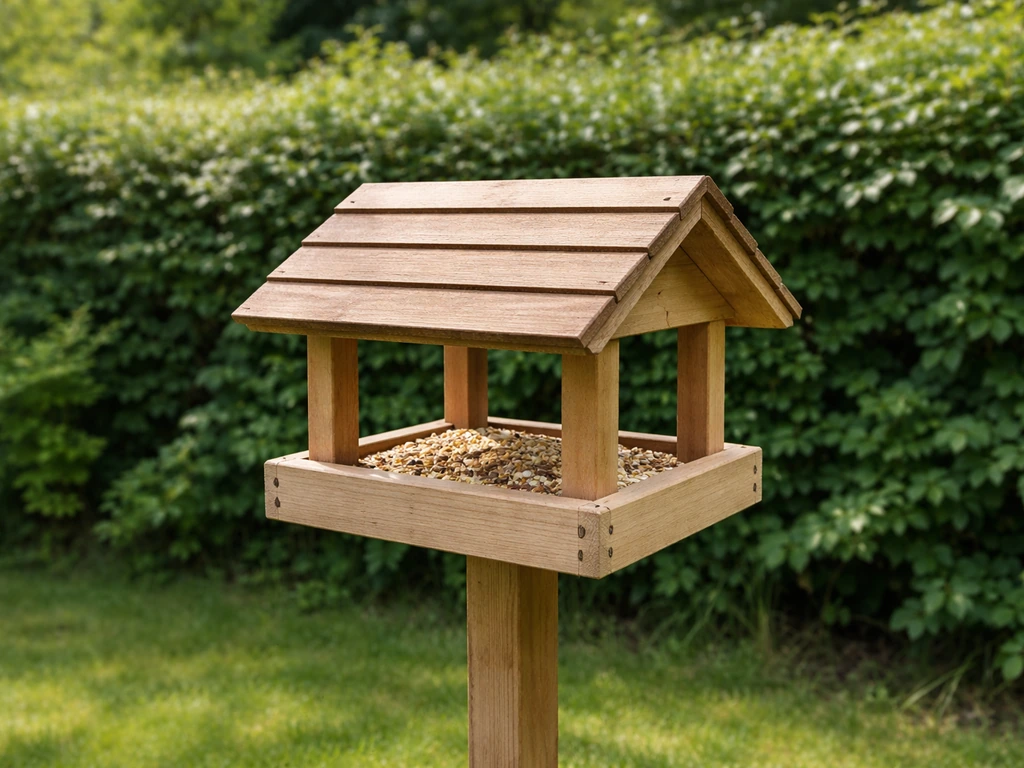
Aim for roughly two metres from dense shrubs or hedges. For feeder placement, the UKPetFood Best Practice Guidelines PDF notes that cat-predation mitigation commonly recommends positioning feeders around 2 metres from cover around 2 metres from dense shrubs or hedges. Close enough that birds can dash to safety, far enough that a predator can't use that cover as a hunting blind. The Garden Wildlife Health best practice guidance (a UK initiative involving the BTO, RSPB, and ZSL) frames it simply: cats should be "unlikely to be able to hide from view close to the feeder" while birds can "reach cover quickly if required." That sentence is basically the whole placement philosophy in one line.
Distance from windows
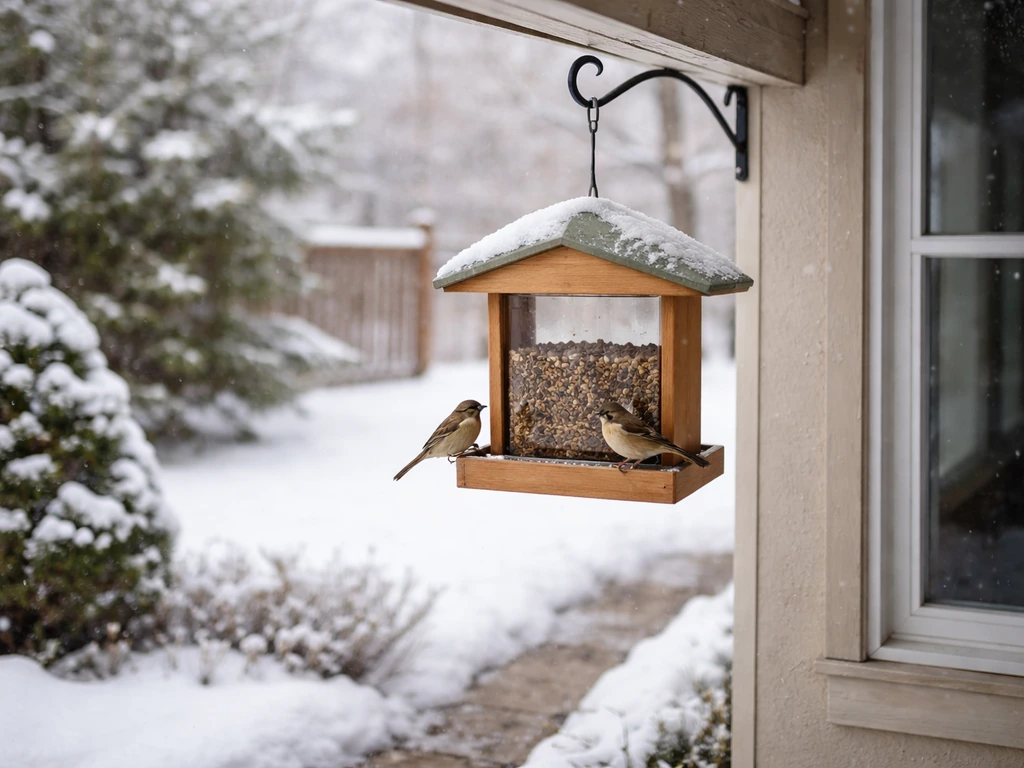
Window strikes kill a huge number of garden birds every year, and feeder placement is one of the easiest ways to reduce the risk. The research-backed rule of thumb, often called the 3-30 rule, works like this: if you want a feeder near a window, keep it within 3 feet (about 90 cm) of the glass. At that distance, birds don't have enough room to build up speed, so a collision is unlikely to be fatal. At intermediate distances, somewhere in the 15 to 30-foot range, birds hit the glass at full speed and rarely survive. Islington Council's bird-feeding guidance echoes this: position feeders where you can watch from a window, but be deliberate about the distance. Either very close or well away from glass is safer than the middle ground.
Height and cat-proofing
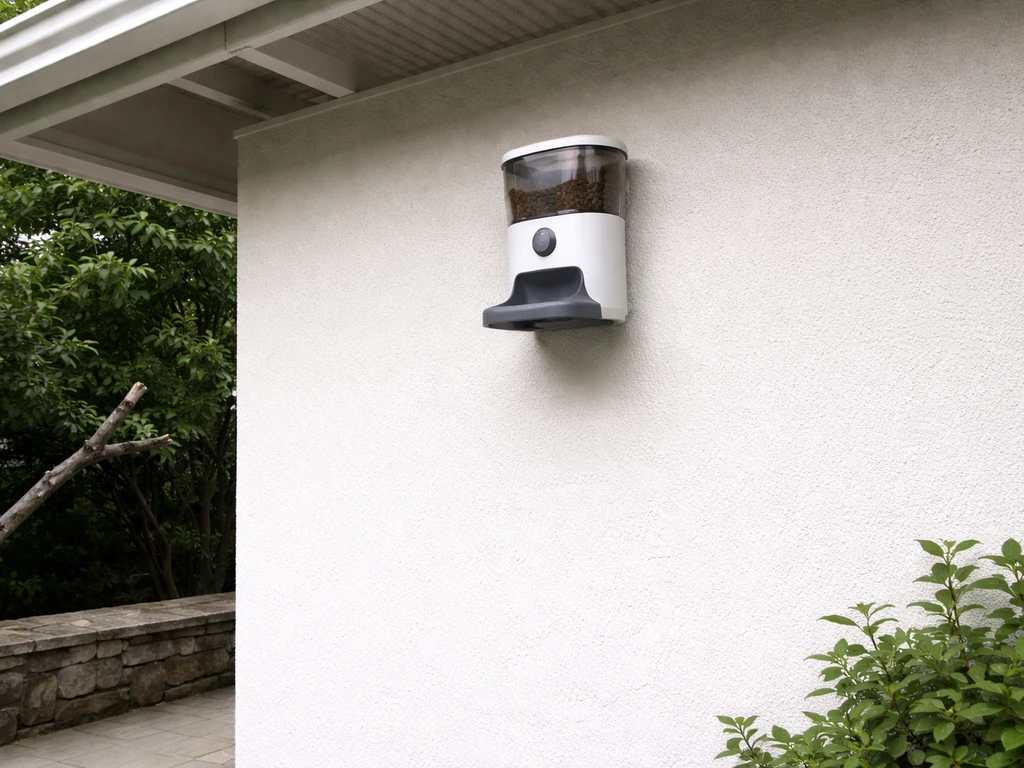
The RSPCA is quite specific here: place feeders well above cat height and away from cat perches like branches and walls. Cats are excellent jumpers, so "high enough" is not just above eye level. If your feeder is on a pole, think about whether a cat could use a nearby fence, raised border, or shed roof to get level with it. Keep those jump-off points in mind when you're choosing the exact installation spot.
Where to hang or install your feeder, by situation
Hanging from a tree
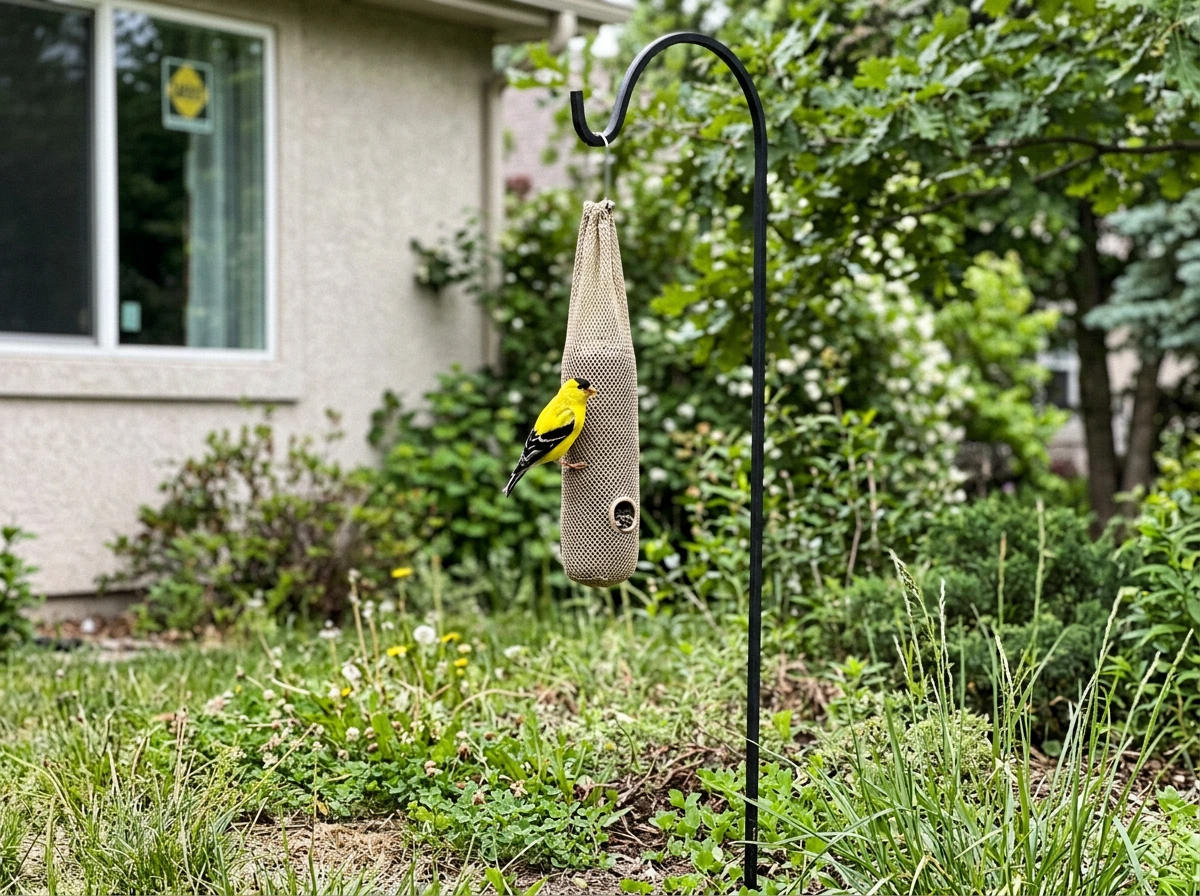
Trees are the instinctive choice, and they work well with a few caveats. Choose a branch that's high enough to foil cats, but check whether the tree is close to a fence or wall that a cat could use as a launchpad. Hang the feeder near the end of a branch rather than close to the trunk, which makes it harder for squirrels to access. If you're working out the ideal setup for a pole rather than a branch, the guidance on where to put a bird feeder pole covers the specifics of siting freestanding setups in a garden.
Near a window
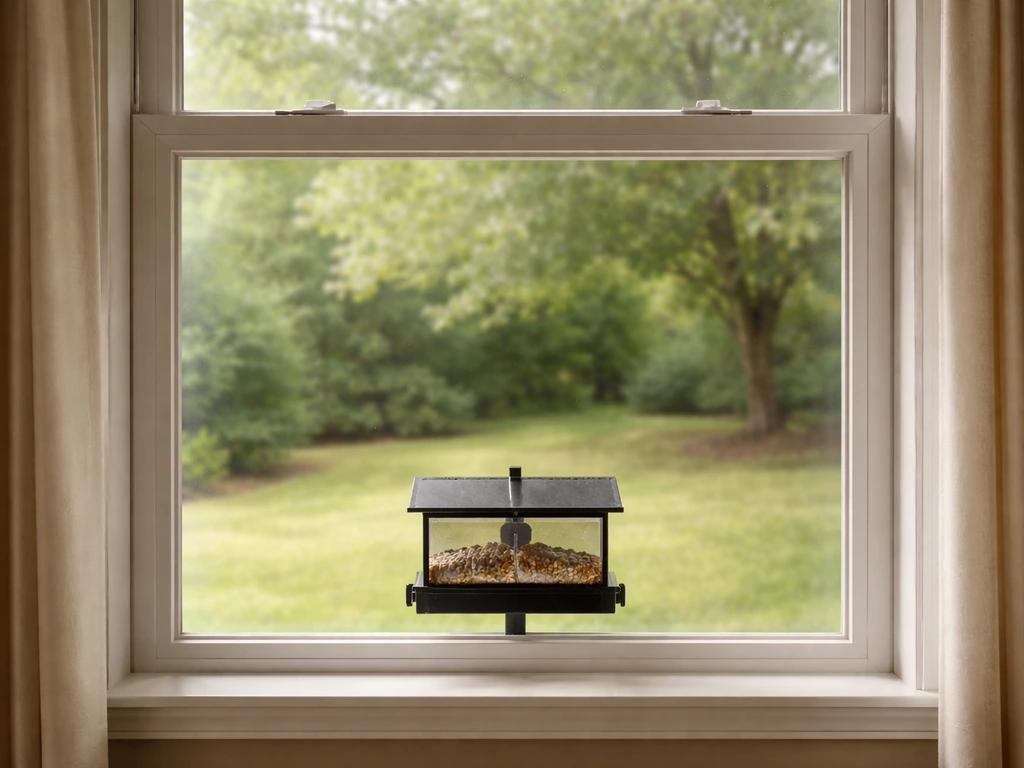
Window feeders are brilliant for close-up views, especially in smaller gardens with no space for a pole. The key is the 3-foot rule above. If you're using a suction-cup window feeder, Bird Spot's guidance on window feeders notes that the suction cups should be placed flat against the glass for a proper seal. A practical tip I've heard from multiple readers: a small drop of olive oil on the base of each suction cup helps maintain the vacuum seal in cold or very hot weather when the glass contracts and expands.
Open yard or garden, no convenient tree
A freestanding pole is usually the best solution here. Position it in the open, at least two metres from thick shrubs, and think about sight lines: you want it visible from indoors so you can actually enjoy the birds, but also visible enough that approaching cats have nowhere to lurk. The RSPCA reinforces this point, advising that feeders should be in "an open space where birds are likely to feel safe, away from cats." If your whole garden is quite enclosed, spreading two or three smaller feeders around works better than one large central station.
Placement in practice: UK gardens and specific layouts
UK garden feeding has a few considerations that don't always show up in generic advice. Sparrowhawks are a real and regular presence in suburban gardens, so the cover-distance rule matters more here than it might in parts of the world where raptor pressure is lower. British gardens also tend to be smaller and more enclosed, which means the 3-foot window rule becomes more relevant since feeders often end up closer to the house by necessity.
Different birds also need different placement strategies. Ground-feeding species like blackbirds, collared doves, thrushes, dunnocks, and robins won't use a hanging feeder at all, or will only pick up what falls beneath it. The Wildlife Trusts notes these species prefer feeding at or near ground level. For them, a low bird table or scattered food on open ground works far better than a suspended feeder. Dunnocks and wrens, in particular, tend to prefer open ground around a bird table rather than dense cover nearby. So if you want to attract a wider range of species, think about combining a pole-mounted feeder with a ground-level option placed a few metres away. For species-specific placement, the guide on where to put an oriole bird feeder is a good example of how much placement strategy varies by target species.
If you're specifically trying to attract finches like goldfinches and siskins, placement relative to cover and the type of feeder matters quite a bit. The dedicated guide on where to hang finch bird feeders goes into that in much more detail than I can cover here.
Where not to put a bird feeder
Some spots feel convenient but create real problems. Here's where I'd steer you away from:
- Right next to a window or greenhouse at intermediate distance (15 to 30 feet from glass): this is the collision danger zone. Either go very close or position the feeder well away from any large glass surface.
- Directly below or adjacent to fences, walls, or low branches that cats can use as jump points: the RSPCA is explicit about avoiding cat perches near feeders.
- Tucked under dense overhanging shrubs or against a thick hedge: cats and other predators can approach unseen, and birds don't have clear sightlines to spot danger.
- In a spot you rarely check or clean: placement becomes a disease risk if feeders aren't maintained. Wet, droppings-contaminated ground under a forgotten feeder is exactly where trichomonosis and other diseases spread between greenfinches and chaffinches.
- Directly on or over a high-traffic human path: birds will avoid it entirely if people are constantly passing within a metre or two.
- In an area prone to standing water or flood-prone ground: wet food rots quickly and draws rats.
On the disease point: the Game and Wildlife Conservation Trust has linked trichomonosis to serious declines in greenfinch and chaffinch populations in the UK, and contaminated feeders are a primary transmission route. If you notice multiple sick or dead birds near your feeder, the BTO recommends stopping feeding entirely for at least two weeks so birds disperse and transmission risk drops. If you think birds have been affected by disease, it is best to stop feeding for at least two weeks and empty bird baths BTO recommends stopping feeding entirely for at least two weeks. Removing the feeder temporarily is far better than watching an infection sweep through your whole local population.
The RSPB also advises moving feeders regularly, not just cleaning them, to prevent the build-up of food waste and droppings contaminating the same patch of ground repeatedly. Shift the position slightly every few weeks if you can. It's a simple habit that makes a real difference.
Does your feeder type change where you should place it?
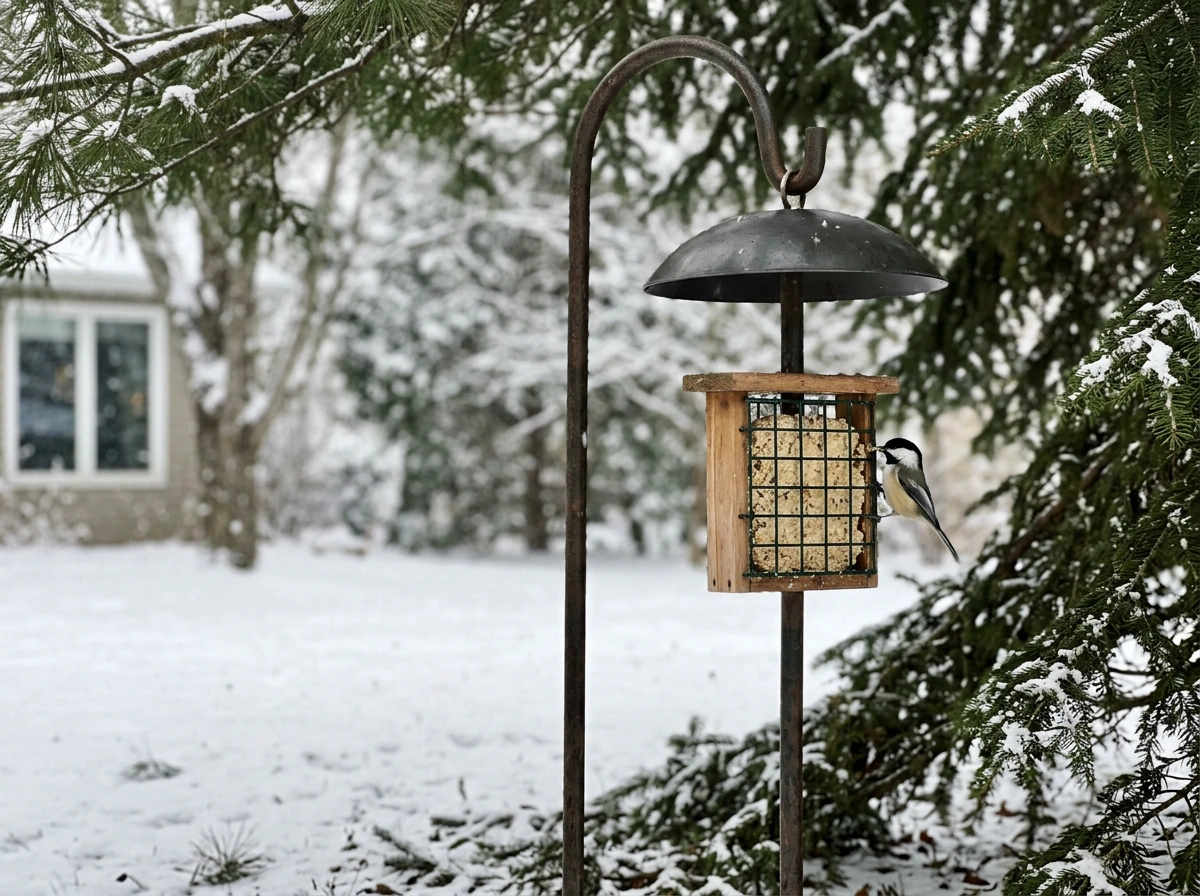
Yes, noticeably. Different feeder designs attract different birds and have different placement requirements. A tube feeder for nyjer seed needs to be at a height and exposure that works for clinging birds like goldfinches. A suet feeder does better in a slightly more sheltered position, ideally with some overhead cover to slow the fat from melting in direct summer sun. If you're placing a suet feeder specifically, the article on where to place a suet bird feeder goes through the positioning details, including which birds use suet and how they prefer to approach it.
Smart bird feeders, which include cameras and sometimes AI-powered species identification, add another layer to the placement decision. For these to work properly, you need to think about angles and lighting as well as bird safety. A smart feeder placed perfectly for the birds but with a window directly behind it will produce washed-out footage. Position the camera-feeder so the lens faces away from direct sunlight glare, ideally with a neutral background like a fence or hedge at a comfortable distance behind it. Still apply all the same safety rules: height, distance from cover, away from cat perches. The camera doesn't change the fundamental biology.
Ground-level feeders and trays require their own approach. Keep them in the open so approaching predators are visible, put out small amounts of food at a time (Norfolk Wildlife Trust recommends fresh food each morning rather than large quantities left to sit), and move them regularly to avoid contaminating the same patch of soil. For a broader breakdown of how placement interacts with feeder type and garden layout, the bird feeder placement tips guide covers combinations that work well together.
Quick reference: placement rules at a glance
| Placement factor | Recommended approach | Why it matters |
|---|---|---|
| Height | High enough that cats cannot jump or climb to it | Ground predator safety |
| Distance from dense cover | Roughly 2 metres from thick shrubs or hedges | Escape cover nearby without hiding spots for predators |
| Distance from windows | Either within 3 feet (90 cm) or well beyond 30 feet from glass | Prevents fatal window strike collisions |
| Distance from cat perches | Away from fences, walls, and low branches cats can use to jump | Reduces ambush risk |
| Multiple feeders | Spread 2 to 3 feeders around the garden | Reduces crowding and disease transmission |
| Visibility for you | Visible from a window or seating area | Lets you monitor for signs of disease or predation |
| Ground below feeder | Move position regularly, keep area clean | Prevents disease build-up from droppings and waste food |
Place it well, keep it clean, and watch what happens over the first few weeks. You'll quickly notice which birds are using it, whether anything is being disturbed by predators, and whether the location is working. Feeder placement isn't a one-time decision; it's something you adjust as you observe. Start with these rules and then let the birds tell you what's working.
FAQ
Can I put a bird feeder directly on the ground or on a tray, instead of a pole or tree?
Yes. You can put a feeder in the open near grass, but you still need a predator visibility buffer, even for “ground-style” setups. Choose a spot where you can clearly see the approach path from indoors, avoid hiding places like dense weeds or stacked pots within a few feet of the feeder area, and use small, daily refills so you do not end up feeding in a spot that attracts predators to linger.
How should I measure the distance to a window if the feeder is on a pole or has a long perch?
Check both distance to glass and your viewing angle. If you are using a pole-mounted feeder near a window, measure from the glass to the feeder’s nearest moving part (perch or seed outlet), not to the pole base in the yard. Also rotate the feeder if it is on an adjustable bracket, so birds do not fly straight toward the window from the approach side you can’t easily see.
What should I do if my feeder is high, but cats still seem able to reach it?
Start by preventing the “launch points” problem. If cats can access the feeder from a nearby fence rail, shed roof edge, or raised border, raising the feeder a bit higher may not be enough. In tight gardens, prioritize moving the feeder farther away from those structures horizontally, because a cat often uses the structure to reduce the vertical jump needed to reach the feeding height.
What’s the right response if I notice sick birds at the feeder?
Use a stopping-and-reset routine. If you notice a cluster of sick or dead finches or multiple birds acting lethargic, stop feeding for at least two weeks, remove the feeder and any loose seed that keeps birds returning to the same spot, and clean thoroughly before restarting. Then consider splitting into a different location to avoid re-establishing a concentrated feeding area.
Does moving the feeder around really matter if I clean it regularly?
Avoid “set it and forget it” cleaning. Placement determines how quickly droppings and wet seed build up in one patch of ground. Even if you clean the feeder, move it slightly every few weeks so the immediate area under the feeder does not become a recurring contamination hotspot, especially if rain splash and fallen seed keep accumulating around the same stones or soil.
How can I place the feeder to attract finches without increasing risk for other birds?
For finch-loving feeders, the biggest placement lever is feeder type plus cover spacing. Tube feeders for smaller cling-to-seed birds generally work best slightly more exposed than suet setups, but still kept away from cat hiding spots and at a distance from thick cover that allows quick escape. If you keep switching between species, keep a dedicated finch feeder at a different height or location so one placement style does not accidentally underperform for another group.
Any special placement considerations when using a camera or AI bird feeder?
If you are using a smart feeder with a camera, test it in your actual lighting conditions before you finalize the mount height and angle. Make sure the lens does not point toward a bright window or reflective surface, and confirm that the camera field of view includes the feeder entrance even when birds perch differently. Safety rules still apply, so do not compromise height or cover distance just to improve video.
If I want a wide variety of birds, how far apart should I place pole feeders and ground feeders?
Combine strategies rather than forcing one spot to do everything. Use the pole-mounted option for tree and cling-feeding species, and add a separate ground-level option a few metres away for ground feeders. Keep the ground feeding area in open sight, with small amounts refreshed frequently, so you do not create a predator-friendly “buffet” directly under the higher feeder.
Can I move the feeder temporarily during storms or seasonal changes?
Yes, but be deliberate about timing. In windy or storm-prone weather, temporary moves can also reduce buildup under the feeder, but do not relocate repeatedly day to day because birds learn patterns. Instead, pick a new spot that preserves the same safety logic (height, visibility from indoors, escape toward cover) and change position gradually, then reassess after a few weeks of usage.