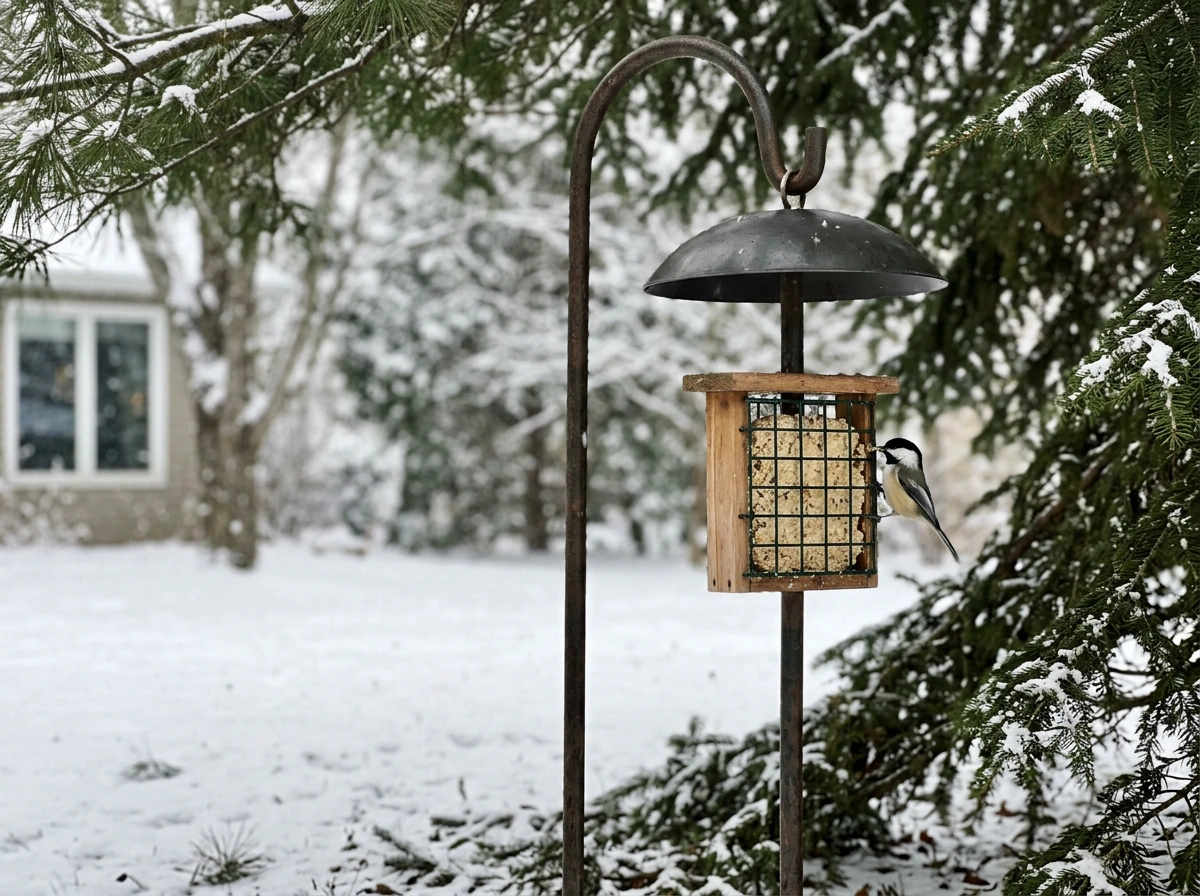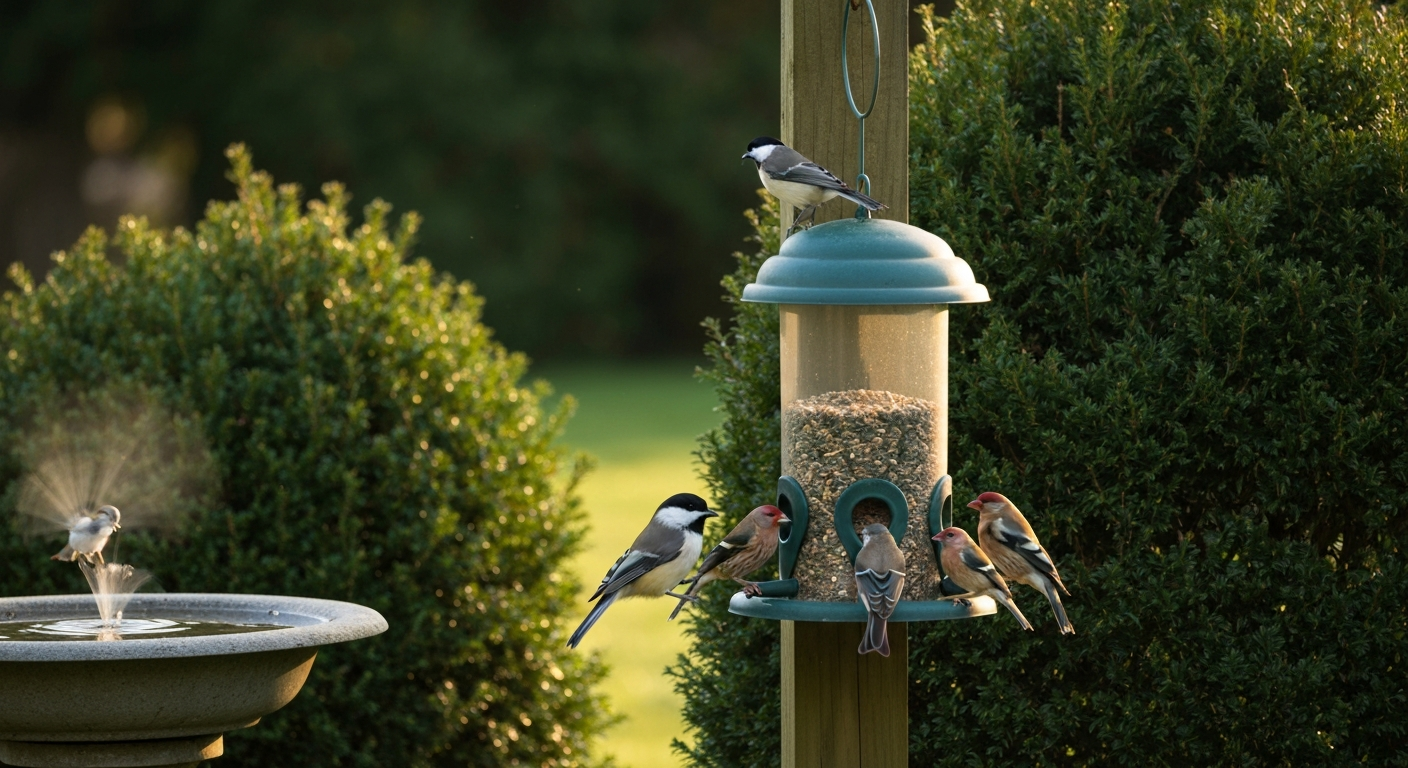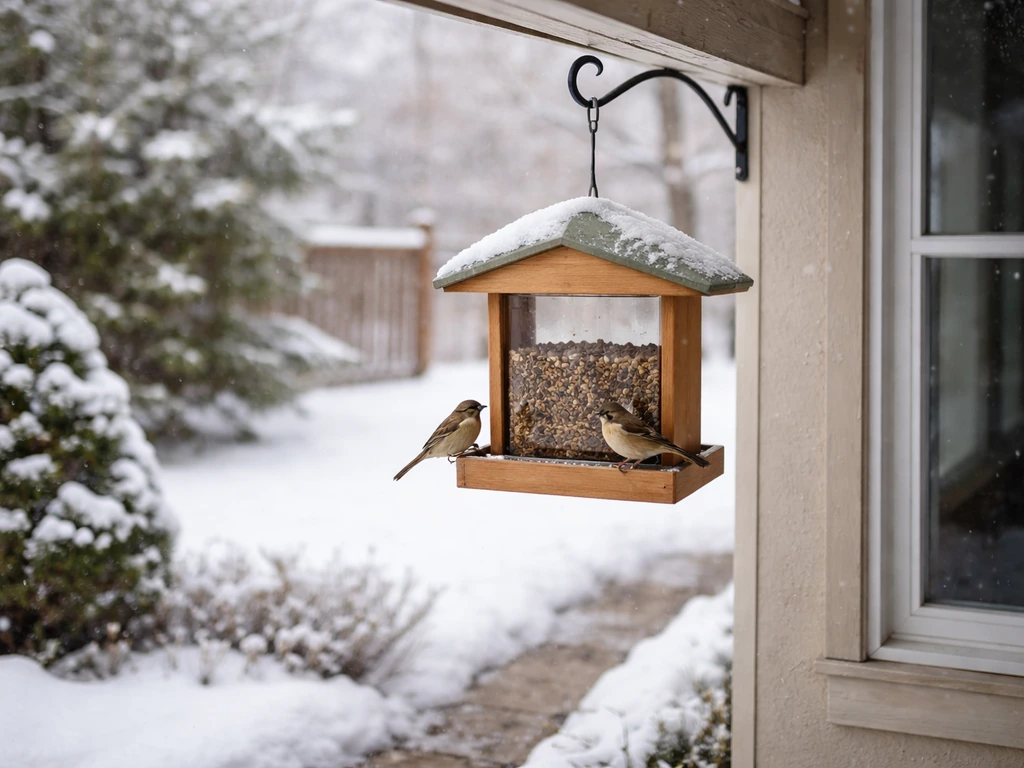
Hang your finch feeder within 3 feet of a window or at least 10 feet away from one, position it 5 to 6 feet off the ground, and place it within easy view of nearby shrubs or trees without being so close that squirrels can leap onto it. That's the short answer. The longer answer involves understanding why finches sometimes ignore a perfectly good feeder for weeks, and what small adjustments flip the switch from zero visitors to a feeder full of goldfinches every morning.
Where to Hang Finch Bird Feeders: Best Placement Tips

Eleanor Hartwick
23 Mar 2026
How finch behavior should shape where you put the feeder
American Goldfinches and House Finches are not secretive birds, but they are cautious ones. They prefer semi-open spaces with weedy, open ground nearby and some trees or shrubs within quick reach for cover. In the wild, that means field edges, roadsides, and garden borders rather than dense forest interiors or wide-open lawns with no shelter. Your feeder placement needs to mimic that same balance: visible and accessible, but close enough to escape cover that a finch feels safe landing there.
Finches are daylight feeders that tend to hit feeders hardest in the early morning and again in the early afternoon. You'll often notice a quieter late-morning lull and then a second wave of activity picking up again before late afternoon. This bimodal pattern matters for placement because it tells you finches are active in natural light, not hunting in deep shade. A feeder tucked into a heavily shaded corner under dense evergreen canopy may feel sheltered to you but feels dim and unappealing to a goldfinch used to foraging in bright, open areas.
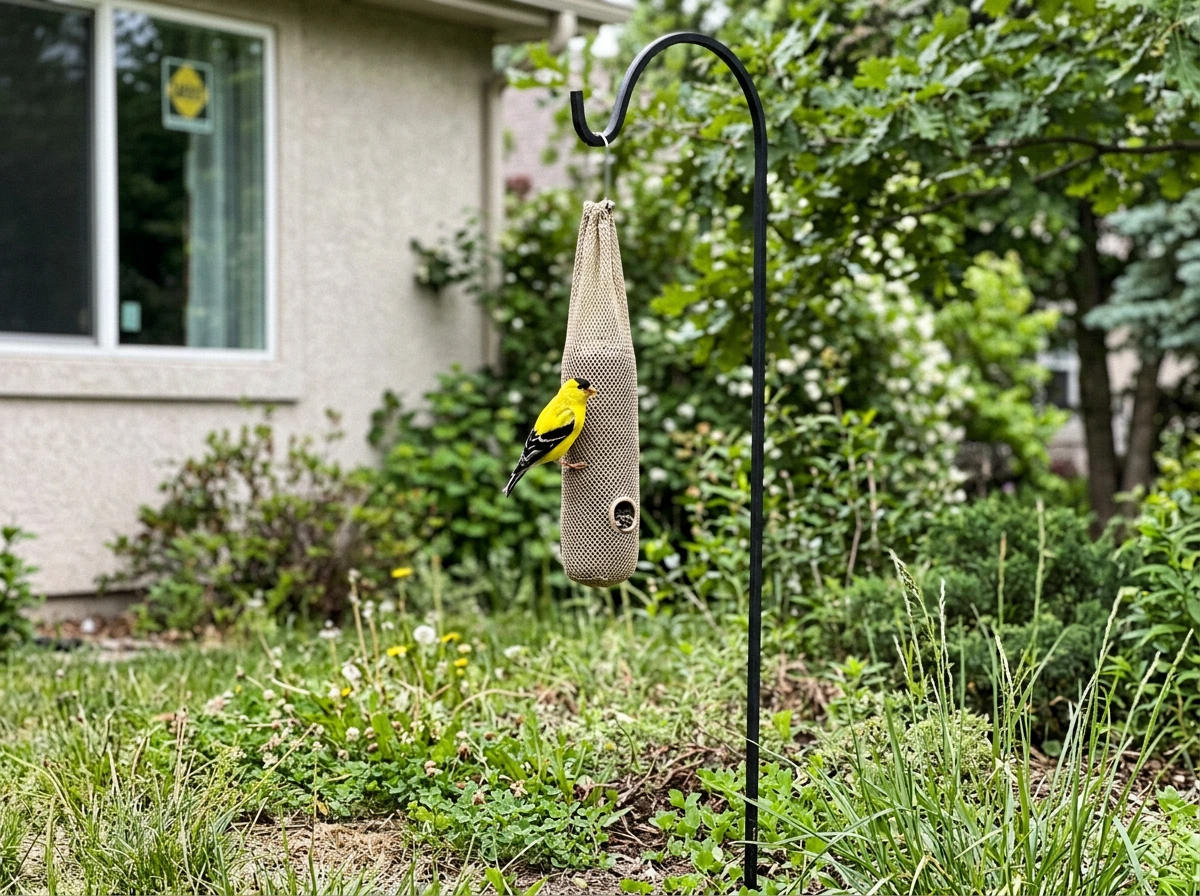
Finches also have a strong preference for nyjer (thistle) seed, and they're built for tube feeders and thistle socks with small ports. This isn't just a seed preference, it's a feeder-style preference, and it affects placement because the feeder style itself determines how the bird orients, perches, and feels secure while feeding. A wide platform feeder placed in an otherwise perfect spot may still underperform compared to a tube feeder or nyjer sock in a slightly less ideal location.
Picking the right spot: visibility, shelter, and access
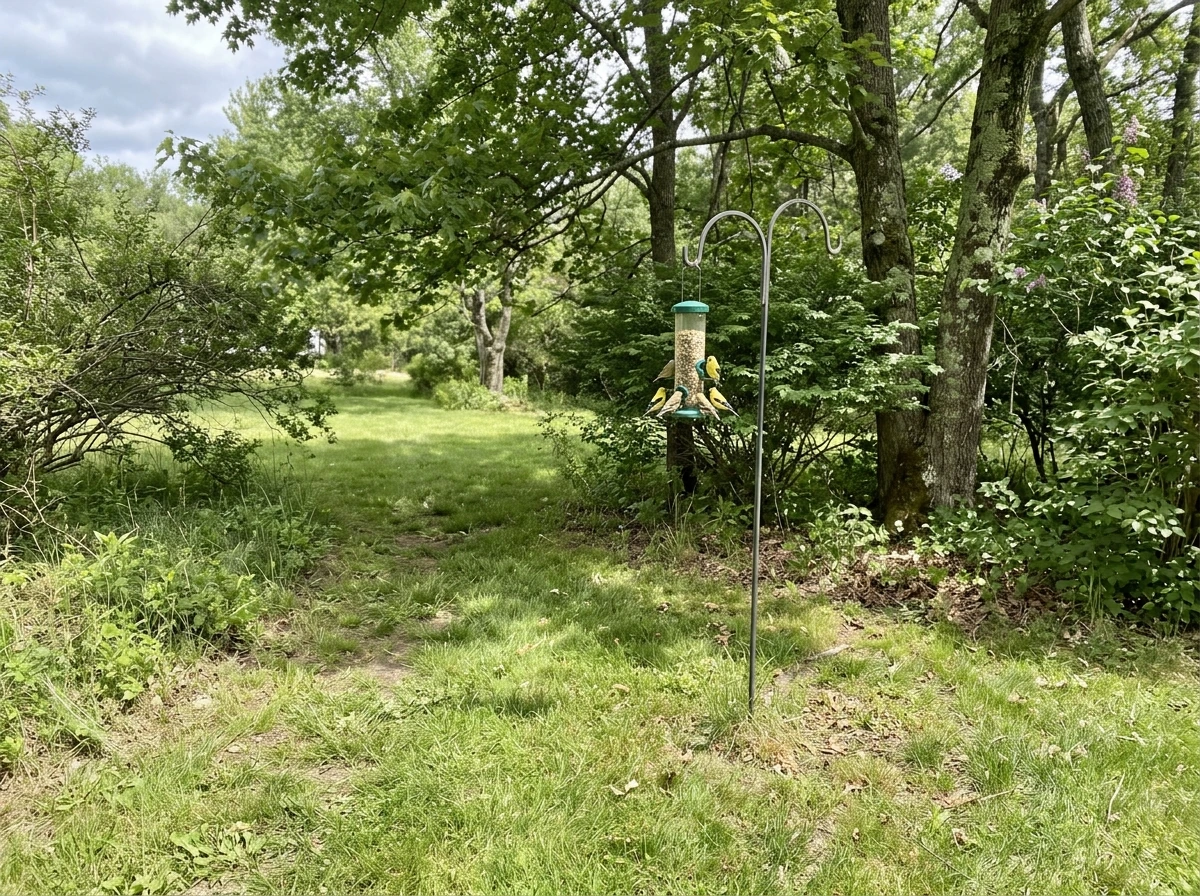
The single most useful mental model for placing a finch feeder is to think in concentric zones. You want open space immediately around the feeder (so birds can approach without navigating dense branches), a buffer zone of 8 to 10 feet with no squirrel launch points, and then some form of shrub, hedge, or small tree within 10 to 15 feet as nearby escape cover. That combination tells a finch: I can get to this feeder easily, I can see predators coming, and I can bail out fast if I need to.
In practical yard terms, that often means hanging a feeder on a standalone pole rather than from a tree branch, or mounting it on a hook off a deck railing with clear sightlines in multiple directions. Tree branches can work, but they almost always mean squirrel access, and they tend to put the feeder in more shade than finches prefer. A freestanding pole with a squirrel baffle mounted 4 to 4.5 feet up gives you the most control over all of these variables at once.
Visibility for the birds also means visibility for you, which matters more than people admit. If you can see the feeder from a window where you spend time, you're far more likely to notice when it's empty, when seed has gone bad, or when activity suddenly drops (which is often the first sign of a problem like a feeder cat or a sick bird). Place the feeder where you'll actually watch it.. bird feeder placement tips
Height, window distance, and predator safety
Height is straightforward: aim for 5 to 6 feet off the ground. That's high enough to keep the feeder out of easy reach of ground-level cats while still being convenient for you to refill without a stepladder. Going much higher (say, 8 or 9 feet) doesn't offer finches any meaningful advantage and makes maintenance a hassle, which means you'll clean it less often.
Window distance is where a lot of people unknowingly cause harm. The dangerous zone for window collisions is roughly 10 to 30 feet from a window, because at that distance a bird builds up enough flying speed to cause fatal impact if it startles and flies toward the glass. The U.S. Fish and Wildlife Service recommends keeping feeders within 3 feet of a window as one effective solution, because birds leaving the feeder at that range don't gain lethal momentum before they hit the glass. If you can't get within 3 feet, try to get the feeder beyond 30 feet from any large window. The middle ground (3 to 30 feet away) is where most window kills happen.
For squirrel proofing, the numbers to know are: 8 feet of horizontal clearance from any object a squirrel can jump from (fences, deck railings, tree trunks, large shrubs), and at least 5 feet of vertical clearance from the ground to the feeder. A dome-shaped baffle mounted 4 to 4.5 feet up the pole cuts off the climbing route. Without the baffle, the 8-foot horizontal rule alone isn't enough because squirrels also climb straight up poles.
| Placement Rule | Recommended Distance/Height | Why It Matters |
|---|---|---|
| Feeder height above ground | 5 to 6 feet | Out of cat reach; easy to refill and clean |
| Distance from window (safe zone) | Within 3 feet OR beyond 30 feet | Prevents lethal window collision momentum |
| Distance from squirrel launch points | At least 8 to 10 feet horizontally | Prevents jumping access from trees, fences, decks |
| Pole baffle height | 4 to 4.5 feet up from ground | Blocks climbing route before feeder is reached |
| Distance from dense cover/escape shrubs | 10 to 15 feet away | Close enough for safety, far enough to spot predators |
Sun, wind, and rain: keeping seed fresh and mess manageable
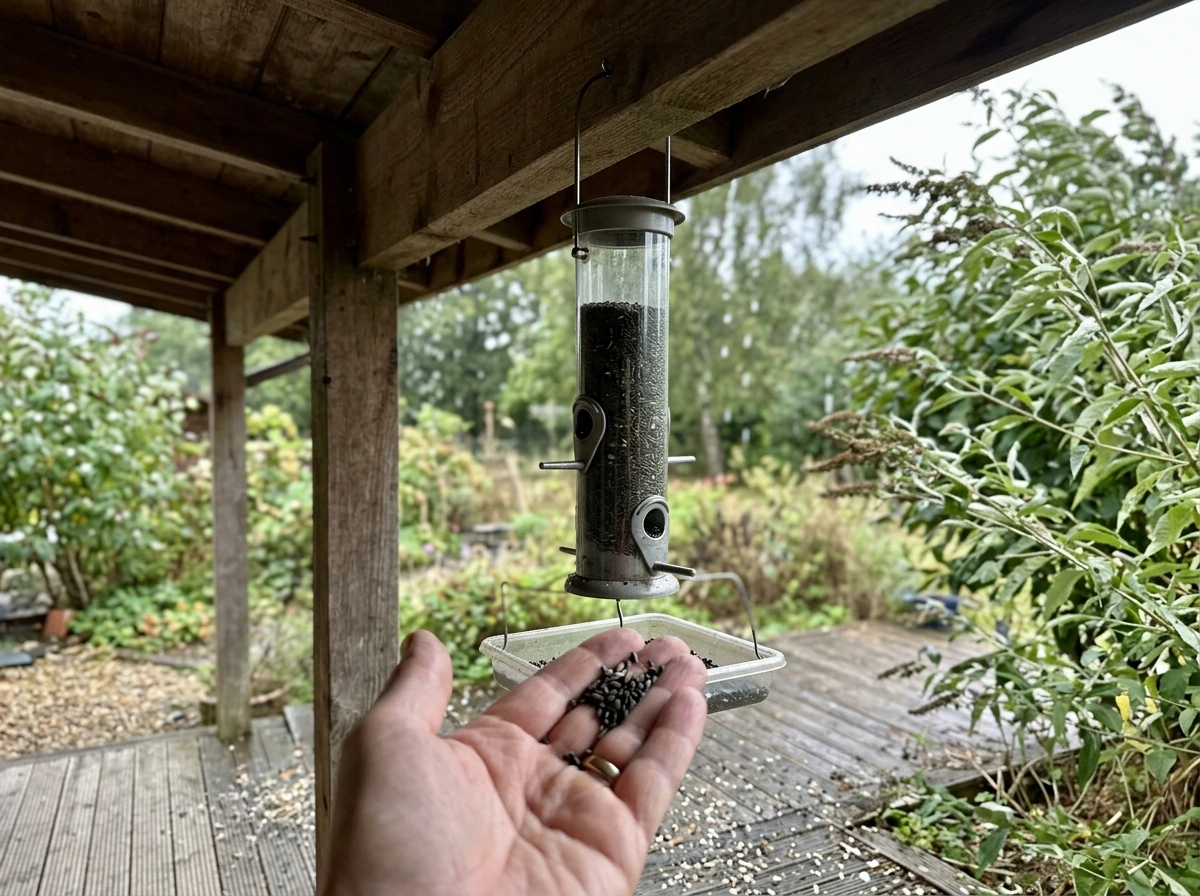
Nyjer seed goes bad faster than almost any other bird food. It's small, oily, and when it gets wet it clumps, molds, and becomes unpalatable (or worse, harmful) very quickly. Where you hang the feeder directly affects how fast that happens. Avoid spots where rain falls directly into the feeder ports or where afternoon sun bakes the seed for hours. A location with morning sun and afternoon shade is a good default in most climates.
Wind is the other factor most people overlook. A feeder in a very exposed, windy spot will swing constantly, spill seed onto the ground, and dry out or blow out nyjer at an expensive rate. It also makes finches reluctant to land because a swinging feeder feels unstable. Hanging the feeder on the sheltered side of a fence, building, or hedge (while still maintaining those 8-foot squirrel clearances) cuts wind exposure significantly without sacrificing visibility.
If you do get mold in the feeder, the right move is to discard all the seed immediately, not to pick out the bad parts. Wash the feeder with a solution of 1 part bleach to 9 parts water, rinse it thoroughly, and let it dry completely before refilling. Clemson Extension’s Home & Garden Information Center recommends using a [10% bleach solution (1 part bleach to 9 parts water)](https://hgic. clemson.
edu/washing-bird-feeders/) to disinfect bird feeders, then rinsing before refilling. This isn't just a tidiness issue. Moldy seed can make birds sick, and a feeder with a reputation for bad food (from the birds' perspective) will get ignored. Placement that reduces moisture exposure in the first place is far easier than reacting to mold problems after they start.
What to do if finches aren't showing up
This is the question I hear most often, and the answer almost always comes down to one of four things: wrong seed, wrong feeder style, wrong location, or not enough time. Finches can take two to four weeks to discover a new feeder, especially if you're in an area where they haven't been feeding before. Before you make any placement changes, confirm you're using fresh nyjer seed in a tube feeder or nyjer sock with small ports sized for finches. If the seed has been sitting in the feeder for more than three to four weeks without any bird interest, it may already be stale and unappealing, which is a very common situation.
If seed freshness isn't the issue, run through this checklist before repositioning the feeder:
- Move the feeder closer to visible cover (shrubs, hedges, or small trees) if it's currently in a wide-open spot with no nearby perches or escape routes.
- Check if the feeder is in deep shade for most of the day. If so, move it to a spot with at least some morning sun.
- Look at the area from bird height. Is there a lot of human foot traffic directly underneath or beside the feeder? Finches are skittish about repeated close-range disturbance.
- Try moving the feeder to a completely different side of the yard. Sometimes local finch flight paths simply don't cross a particular spot, and relocating 20 feet can make an enormous difference.
- If you have other feeders nearby, place a nyjer feeder close to them at first. Finches following other birds to an established feeding area will notice the nyjer feeder and return to it.
Watch what happens in the first hour of daylight over several days before deciding a placement isn't working. Finches often scout a new feeder early, land briefly, and leave before you're even awake. Setting up a simple trail camera or just making a point of watching from indoors before 8 a.m. can tell you whether birds are actually investigating and not committing, versus whether no birds are visiting at all. Those are two different problems with different solutions.
Seasonal adjustments and keeping maintenance realistic
In winter, finch feeder placement can shift slightly. Goldfinches in their dull winter plumage are still active at feeders in most parts of North America but may prefer a spot with more wind protection than their summer location. Moving the feeder a few feet closer to a south-facing wall or fence during cold months reduces exposure without significantly changing the dynamics that make the spot appealing in the first place. House Finches tend to be year-round residents in many areas and are somewhat hardier about exposed locations, but they also appreciate wind shelter in harsh weather.
In spring and summer, watch for seed spoiling faster as temperatures and humidity rise. This is when placement relative to direct afternoon sun really starts to matter. If you notice finch visits dropping in midsummer, check the seed before assuming the birds have moved on. Rancid or moldy nyjer in a hot feeder is one of the most common reasons summer activity falls off at what was a busy winter and spring location.
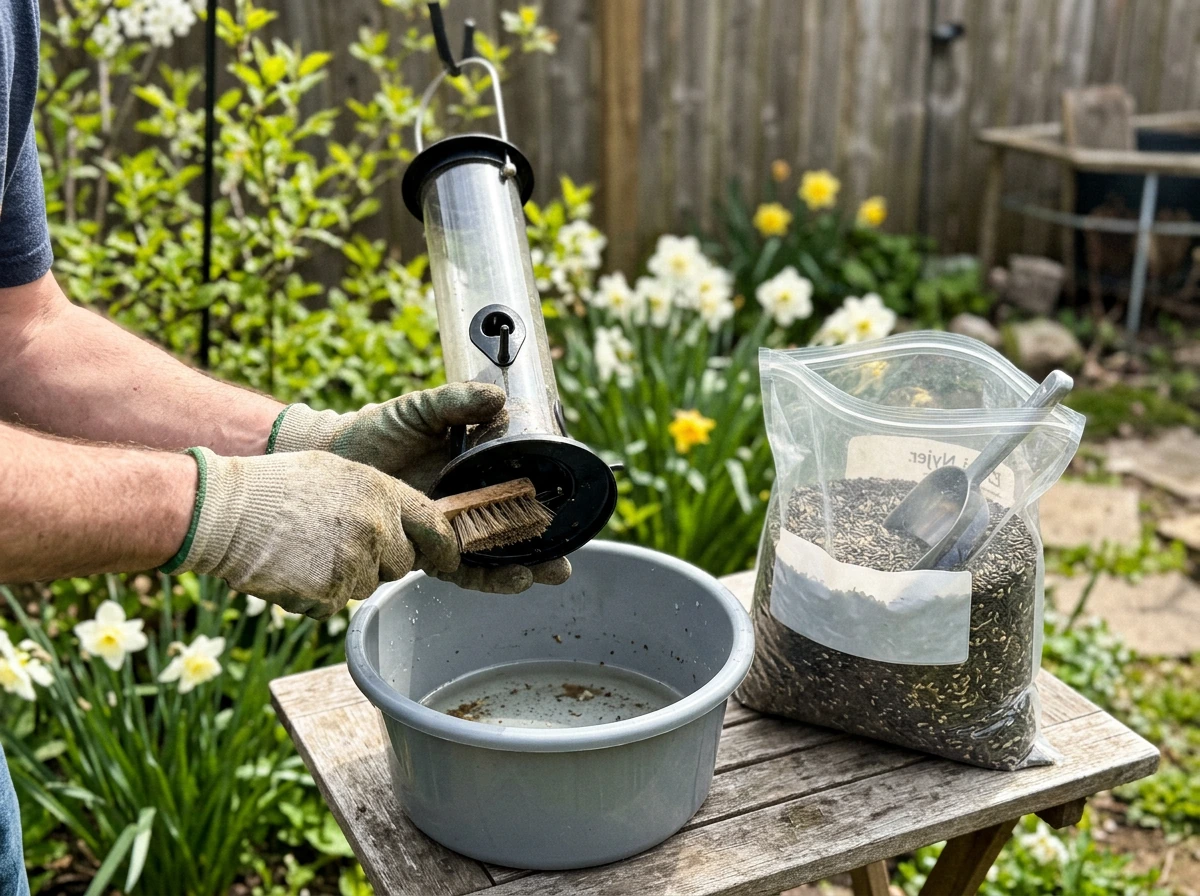
One placement consideration that rarely gets mentioned is your own access to the feeder. A feeder you can reach comfortably to refill and unhook for cleaning will get cleaned regularly. A feeder that requires a ladder or awkward stretching will get neglected. Plan your placement around a maintenance path you'll actually use, because a feeder cleaned every two weeks with a bleach-water solution and refilled with fresh nyjer seed will outperform any perfectly positioned but neglected feeder every single time. Treat access as a placement requirement, not an afterthought.
If you're thinking through placement for other feeder types alongside your finch feeder, the same core logic applies: height, window distance, and squirrel clearance are the non-negotiables, and the species-specific preferences layer on top of that foundation. General feeder placement principles and suet feeder positioning involve some of the same trade-offs, especially when it comes to shade, accessibility, and predator risk.
FAQ
Can I hang a finch feeder from a tree branch instead of using a pole?
Yes, but expect more squirrel access and more shade. If you do it, choose a branch where the feeder ports are still 5 to 6 feet high, keep an 8-foot clear zone from nearby jump-off points, and avoid dense foliage directly above the feeder because finches prefer brighter, less dim landing zones.
What if my yard layout makes it impossible to keep the feeder 10 feet away from a window?
If you cannot place it within 3 feet of a window, the safer alternative is to put it beyond 30 feet from large windows, since the collision risk zone is mostly 3 to 30 feet. If you are stuck in the middle, consider adding window decals or repositioning the seating area so you can still see the feeder without increasing bird-glass strikes.
How close should finch feeders be to each other if I have multiple locations?
Give them separation so finches do not hesitate over uncertainty. In practice, place feeders so each has its own nearby escape cover (shrubs or small trees within 10 to 15 feet) and avoid clustering several tube feeders in one tight area where squirrels can learn a single launch route.
Is morning sun always best, or can I use afternoon sun if the feeder is shaded some of the time?
Morning sun with afternoon shade is usually the best balance because it helps dry the nyjer. If the feeder sits in afternoon shade only part of the time, rain can still wet ports and promote clumping and mold, so look for a spot where ports do not get direct rainfall and where afternoon sun is blocked most days.
Do finches avoid feeders that are too high, like 8 to 12 feet off the ground?
They usually do not gain meaningful advantage from going higher than about 6 feet, and maintenance becomes harder. Beyond that range, you tend to clean less frequently, which can hurt more than height helps, especially with nyjer that spoils quickly when it gets moisture.
How long should I wait before changing the feeder location if no finches show up?
Give it 2 to 4 weeks, because finches can take time to discover a new feeder. Before moving, confirm the seed is fresh nyjer in a finch-appropriate tube or sock and make sure the feeder is visible from where you can check activity, since early scouts may visit briefly and leave.
What should I do if I see seed mold, but birds are still visiting?
Remove all remaining seed immediately, discard it, and wash the feeder thoroughly (bleach-water solution, then rinse and fully dry) before refilling. Even if birds are still coming, moldy nyjer can become harmful and birds may eventually abandon the feeder if it starts tasting or smelling off.
How can I reduce wind problems without sacrificing safety from squirrels?
Mount the feeder on the sheltered side of a fence, building, or hedge, but still maintain the squirrel rules (8 feet of horizontal clearance from jump points and enough vertical clearance from the ground). If you need extra stability, choose a mount that minimizes swinging so the feeder does not feel unstable to landing birds.
Will feeder placement work differently in winter versus summer in terms of sunlight and wind?
Yes, winter placement often benefits from more wind protection, even if light levels are fine. A practical approach is to shift the feeder a few feet toward a south-facing wall or fence in cold months, while keeping the same window distance and squirrel-clearance requirements.
What are the most common placement mistakes that lead to “no goldfinches” even when the seed is correct?
The biggest misses are dim, shaded corners that reduce perceived brightness, window locations in the 3 to 30 foot danger band, and squirrel-friendly setups that ignore the 8-foot jump clearance or omit a baffle. Another frequent issue is using a wide platform feeder when finches are expecting a tube or nyjer sock with small ports and stable orientation.