Bird feeders matter most when natural food is hard to find: during winter cold snaps, migration stopovers, and periods when ice or snow locks down ground-level foraging. A well-placed, well-maintained feeder gives birds a reliable calorie source at exactly those moments. But how much a feeder actually helps depends almost entirely on how you set it up and care for it. A dirty, poorly positioned feeder in the wrong spot can do more harm than good.
Why Bird Feeders Are Important and How to Use Them Safely
Eleanor Hartwick
30 May 2026
Core reasons bird feeders matter
The most straightforward reason feeders are valuable is timing. Audubon frames them as a way for birds to "fuel up for migration or make it through a tough winter", and that framing is accurate. In winter, some species cache seeds from feeders to eat later. Others shift their entire diet toward feeder-provided foods when insects and berries disappear. Along migratory routes where stopover habitat has been lost to development, a feeding station can provide a meaningful calorie opportunity that might otherwise not exist.
There's also a personal dimension that's worth taking seriously. Watching birds at a feeder is how most people develop a genuine interest in bird identification, behavior, and conservation. That connection has real downstream effects: people who observe birds regularly are more likely to support habitat protection. So feeders aren't just a snack bar for wildlife, they're also a consistent entry point into caring about the natural world.
New Hampshire Audubon notes that when stopover habitat is degraded during migration, birds face elevated risks of predation and starvation. A feeder in a yard with good shrub cover can function as a mini stopover site. That's not a trivial contribution in fragmented suburban landscapes.
What feeders can and can't do
It's worth being honest about the limits here. Feeders supplement wild bird diets, they don't replace habitat. To get the most benefit, it's also helpful to know the basics of what to know about bird feeders, including where they go, what they attract, and how to keep food safe. Of course, every benefit comes with tradeoffs, so it's worth reviewing the pros and cons of bird feeders before you decide what to buy and how to use it. A yard with native plantings, brush piles, and a water source will do more for birds than a feeder alone. Feeders also can't compensate for large-scale habitat loss; they help at the margins, not as a systemic fix.
The other real limitation is disease risk. Audubon lists several feeder-associated illnesses: house finch eye disease (mycoplasmal conjunctivitis), salmonellosis, aspergillosis, avian pox, and avian flu. Research published in peer-reviewed journals has shown that the more time a bird spends at feeders, the higher its individual risk of contracting conjunctivitis, and that higher feeder density can accelerate disease transmission during epidemics. These aren't reasons to panic, but they are reasons to take cleaning seriously.
| What feeders do well | What feeders can't do |
|---|---|
| Provide calories during food-scarce periods | Replace native plants and habitat |
| Support migratory birds at stopover sites | Offset large-scale habitat loss |
| Help people learn to identify local species | Eliminate predation risk from cats or hawks |
| Allow caching behavior in winter species | Prevent disease if left uncleaned |
| Attract a diversity of birds when stocked correctly | Work well if placed at dangerous window distances |
Where to place feeders for safety and results
Window strikes are one of the most preventable feeder-related harms, and placement distance is the key variable. The rule is simple: position feeders either within 3 feet of a window or 30 feet or more away. At under 3 feet, a bird that startles off the feeder doesn't build enough momentum for a serious collision. At 30-plus feet, birds aren't visually confused by window reflections when approaching. The dangerous zone is everything in between, roughly 4 to 29 feet, where birds can reach full flight speed before hitting glass.
Beyond window distance, look for nearby natural cover. Shrubs or low-branching trees within 10 feet give birds an escape route from hawks and cats, while still being far enough from the feeder that squirrels can't use them as a launch pad. Avoid placing feeders directly under large trees where squirrels have easy overhead access.
If you're in bear country, the U.S. Fish and Wildlife Service is direct about this: traditional hanging feeders are bear attractants. In those areas, consider switching to birdhouses, birdbaths, and native plantings instead of seed feeders, especially from spring through fall when bears are most active.
What to feed and how to choose based on local birds
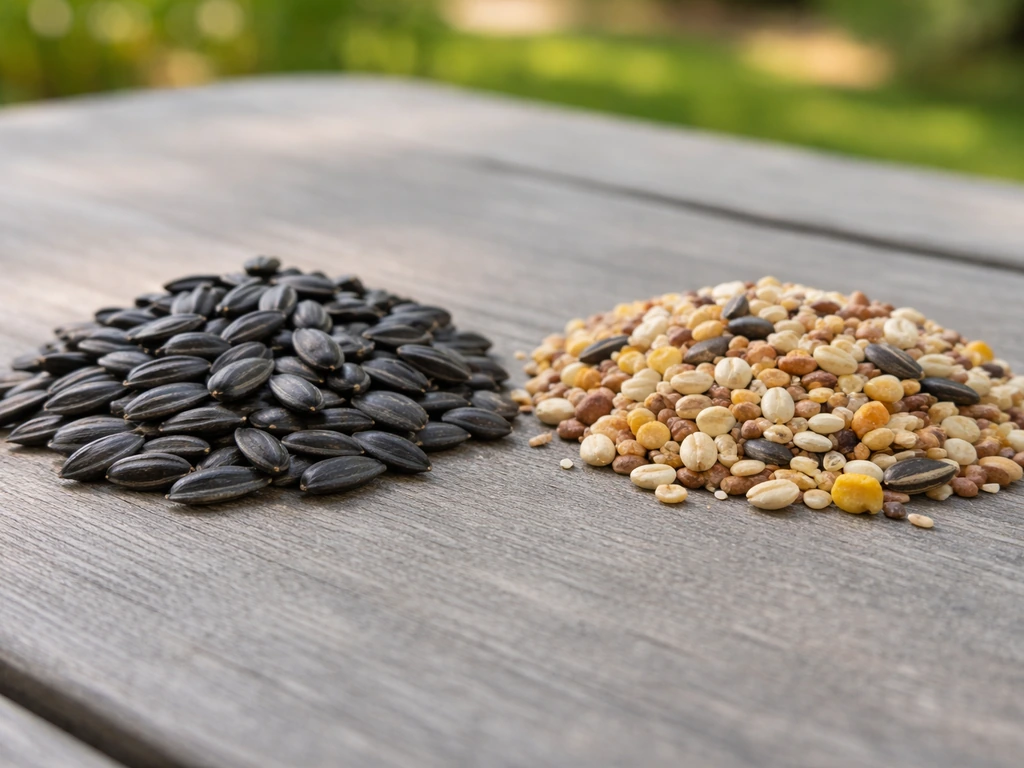
Black oil sunflower seed is the single best general-purpose option. It appeals to a wider range of feeder birds than any other seed, has a thinner shell that smaller birds can crack easily, and has a high fat-to-hull ratio that minimizes waste. If you only stock one thing, make it that.
Seed blends can work well, but many commercial mixes are loaded with filler seeds like milo, wheat, and oats that most North American songbirds ignore. Birds pick through and toss those fillers onto the ground, creating wet debris piles that attract rodents and grow mold. Audubon recommends offering different seeds in separate feeders rather than blending everything together. You'll waste less, attract more of your target species, and keep the ground cleaner.
Here's a quick breakdown of what different seeds and foods attract:
| Food type | Birds it attracts | Notes |
|---|---|---|
| Black oil sunflower | Chickadees, nuthatches, finches, cardinals, jays | Best all-around choice |
| Nyjer (thistle) | Goldfinches, siskins, redpolls | Needs a specialized thistle feeder |
| Suet (plain or insect-blended) | Woodpeckers, creepers, wrens | Use bottom-access cages to deter starlings |
| Safflower | Cardinals, chickadees, House Finches | Squirrels and most blackbirds tend to ignore it |
| Mealworms (live or dried) | Bluebirds, robins, thrushes | Great in spring and summer |
| Peanuts (shelled) | Jays, woodpeckers, titmice | High fat content; spoils quickly in heat |
One practical note: never carry seed from one season to the next. Old seed that's been sitting in a garage or shed through a warm summer can harbor mold and bacteria before it ever goes in the feeder.
Maintenance routines to prevent disease and keep food fresh
This is the part most people underestimate. A feeder that looks fine visually can still be harboring Mycoplasma or Salmonella in wet seed clumps at the bottom of a hopper. The baseline recommendation from most wildlife agencies is cleaning every two weeks, using a solution of 1 part bleach to 9 parts water (roughly a 10% bleach solution). The Iowa DNR recommends cleaning bird feeders and waterers about once each month with a 10% bleach solution and making sure they are dry before refilling with seed Plan regular cleanings for bird feeders, waterers and baths. Scrub all surfaces, rinse thoroughly, and let the feeder dry completely before refilling. Wet seed in a damp feeder is a disease incubator.
In wet weather or if you notice birds with swollen, crusty eyes (a sign of house finch eye disease), clean immediately and increase your cleaning frequency. Take the feeder down for a week if sick birds are visiting regularly, letting them disperse reduces transmission risk.
Don't overlook the ground beneath your feeder. Fallen seeds and hulls get wet, compact, and mold. Rake or sweep the area under feeders regularly, and consider placing a tray catcher under the feeder if you want to collect fallen seed before it hits the ground. Moving your feeder to a new spot every few weeks is another effective way to prevent debris buildup in one area.
- Clean feeders with a 1: 9 bleach-to-water solution every two weeks minimum
- Rinse thoroughly and let feeders dry completely before refilling
- Clean immediately if you spot any sick birds
- Rake fallen seeds and hulls from under feeders regularly
- Never reuse seed left over from a previous season
- Use hopper-style feeders that keep seed off standing water rather than open platform trays
Managing unwanted wildlife and other common problems
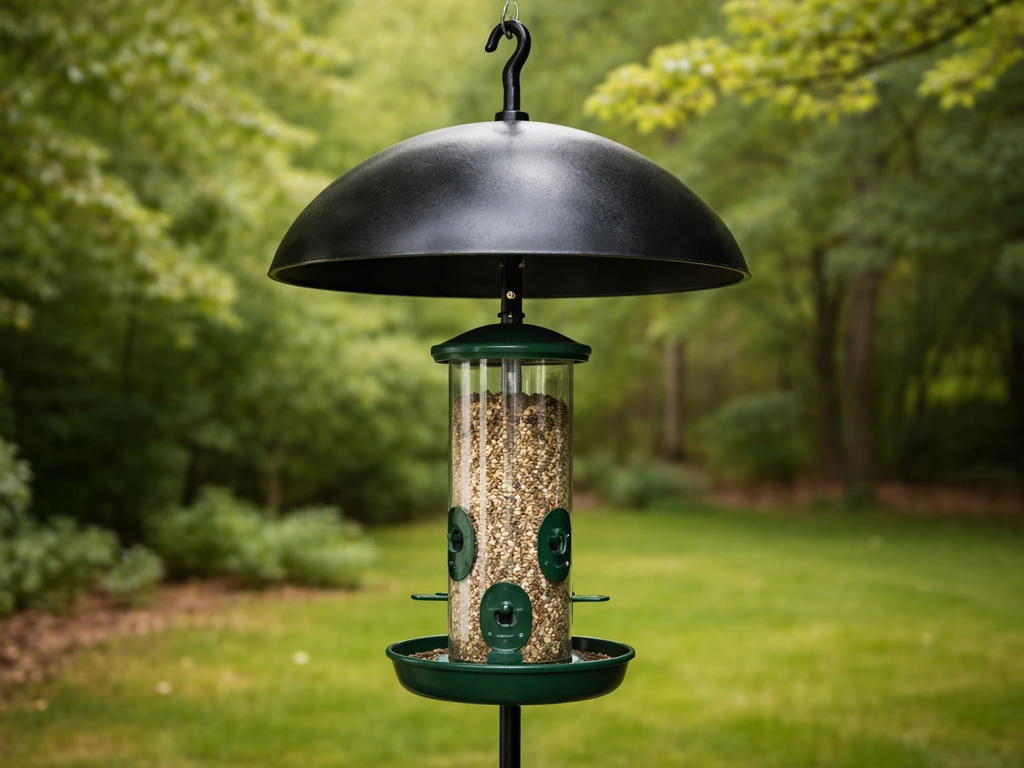
Squirrels are the most universal feeder challenge. Audubon is realistic about this: there's no truly squirrel-proof setup, but a pole-mounted feeder with a dome-shaped baffle above and a smooth metal or PVC pole below gets you very close. The critical detail is spacing. The feeder needs to hang far enough from any nearby tree, fence, or structure that a squirrel can't simply leap to it. Most squirrels can jump about 10 feet horizontally, so keep the feeder at least that far from any launch point.
Dominant species like grackles, European starlings, and house sparrows can take over feeders and crowd out smaller birds. Feeder design helps a lot here. Smaller hopper feeders physically prevent large birds from perching comfortably. For suet, use a bottom-access cage, starlings struggle to hang upside down, while woodpeckers do it easily. Avoid spreading seed on the ground or using large open platform feeders if grackles are a problem in your yard.
If you're in an area with raccoons, bears, or deer, the calculus changes significantly. Bears that get into feeders become food-conditioned quickly, which is dangerous for the animal and for you. In bear-prone areas, bring feeders in at night from spring through fall, or skip them entirely and focus on birdbaths and native plants. Raccoons can usually be deterred with the same pole-and-baffle setup used for squirrels, as long as the pole is smooth and the baffle is large enough.
Seasonal guidance and when to start or stop feeding
Winter is unambiguously the highest-value time to run a feeder in most of North America. For a practical seasonal schedule, see when to use bird feeders in winter, migration, and summer. Food sources are scarce, days are short, and birds need to maintain body heat around the clock. Project FeederWatch structures its entire monitoring season around November through April for exactly this reason. If you're only going to feed part of the year, winter is when it counts most.
Migration windows, typically March through May and August through October depending on your location, are also high-value moments. Migrants need reliable fuel stops, and a feeder with good nearby cover can function as one.
Summer is more complicated. The RSPB recommends pausing seeds and peanuts between May 1 and October 31 in the UK, allowing only lower-risk foods like suet and mealworms during warmer months. The reasoning: warm, humid conditions accelerate mold and bacterial growth in seed, disease transmission risk rises when birds crowd feeders during breeding season, and most birds have access to abundant natural food anyway. In North America, nesting birds in spring and early summer are actively foraging insects for their chicks, seeds aren't particularly useful to them during that window.
That said, you don't have to shut everything down in summer. If you keep up with cleaning (which needs to happen more frequently in warm weather), offer suet or mealworms rather than seed mixes, and watch for signs of crowding or sick birds, summer feeding can be done responsibly. The key is staying attentive rather than just topping off the feeder and ignoring it.
One more practical note: do a full bleach scrub and let feeders dry completely before you put them away at the end of the season, and again before you bring them back out in fall. Starting each season with a clean feeder is one of the simplest things you can do for bird health. If you want to dig deeper into the tradeoffs of year-round versus seasonal feeding, or into what feeder designs work best for specific disease prevention, those questions connect directly to broader topics around feeder setup, species-specific feeding, and timing that are worth exploring on their own. If you want the upside summarized, the benefits of bird feeders go beyond convenience and tie directly to feeding during winter and migration windows.
FAQ
How do I know whether my feeder is helping or actually causing problems?
Check for crowding (many birds packed onto perches), wet clumps of seed, and repeat visits by sick-looking birds. If the ground under the feeder stays muddy or moldy, or you see birds with crusty eyes, scale back or pause use until you can clean, fully dry, and improve placement and food choice.
Is it better to stop feeding during bad weather, or just clean more?
In heavy rain, sleet, or prolonged cold that thaws and refreezes, switch tactics. Remove the feeder during the worst wet period, discard contaminated seed, and clean and dry the feeder before refilling. More frequent cleaning helps, but feeding into persistent wetness still increases disease risk.
Can I use feeder food I already opened earlier in the year?
Avoid “finishing it off” if it sat in a warm, humid space or got damp. Once seed or suet has absorbed moisture, it can become moldy or contaminated. Store what you buy dry and sealed, and discard anything that smells off or clumps.
How often should I clean if I only feed for part of the year (like winter)?
Treat the frequency as weather-dependent, not just calendar-based. In winter, aim for the same baseline (about every two weeks) but tighten the schedule during thaw cycles or whenever you notice wet seed or residue buildup in the hopper, ports, and under-tray.
Do I need to disinfect every time, or is soap and water enough?
Soap and water removes debris, but disinfecting matters when disease risk is higher (wet weather, higher bird density, or known sick visits). Use a diluted bleach solution for a thorough clean, then rinse and allow complete drying before refilling so bleach residues do not linger.
What should I do if I see birds with swollen or crusty eyes at my feeder?
Clean immediately, increase cleaning frequency, and consider taking the feeder down for about a week to let birds disperse. Remove old, contaminated seed, and avoid “just adding more” until the feeder interior is dry.
Is a birdbath or water source a good alternative if I’m worried about feeder disease?
Yes, but water can spread pathogens too if it becomes dirty. Change water frequently, scrub the basin, and keep it in a place that reduces crowding. A clean water station can provide value without the same “seedpile” disease risk that comes from damp hoppers.
What’s the safest way to choose a feeder if I want to reduce disease and waste?
Prefer feeders designed to minimize spilled seed and keep food sheltered from rain and snow. Hopper types that dispense in a controlled way, plus a tray catcher when appropriate, reduce ground buildup, which lowers both mold and rodent attraction.
How can I reduce window strikes beyond the distance rule?
Use additional deterrents like window decals or screens to break up reflections, and keep feeders away from obvious flight paths. Also ensure nearby shrubs provide quick escape cover, because startled birds may change approach angle when they flush.
What should I do about squirrels if baffles do not fully stop them?
Re-check spacing from any launch points like branches, fences, and nearby ledges. If squirrels can consistently reach the feeder, shorten the “reach gap” by adding clearance, switching to a larger baffle, or using a pole-mounted setup with a smooth pole and correct baffle height.
Why are bigger birds taking over my feeder, and how do I rebalance?
Large birds can dominate if the feeder design allows easy access. Use smaller hopper feeders, adjust food type (for example, suet cages that limit hanging access), and avoid open platform feeding when grackles or starlings are frequent.
Is it okay to feed suet or mealworms in summer, or does it also increase disease risk?
It can be done more safely, but conditions still matter. Warm, humid weather can spoil foods if they get wet, so use sheltered feeders, clean more often than in winter, and remove anything that looks damp or degraded. Watch for increased crowding, since concentration raises transmission chances.
How do I store feeders and food between seasons without creating a contamination problem?
Before putting feeders away, do a full disinfecting scrub and let them dry completely. Store feeders in a clean, dry area, and start the next season with fresh seed. Never reuse seed that sat in a warm space where it may have absorbed moisture.
Should I keep feeding year-round, or is seasonal feeding better for birds?
Seasonal feeding often reduces disease and waste pressure during warm months when natural food is abundant and microbes grow faster. Year-round can still work if you stay highly attentive to cleaning and you shift food types, but if you cannot monitor frequently, focusing on winter and key migration windows is usually the safer bet.