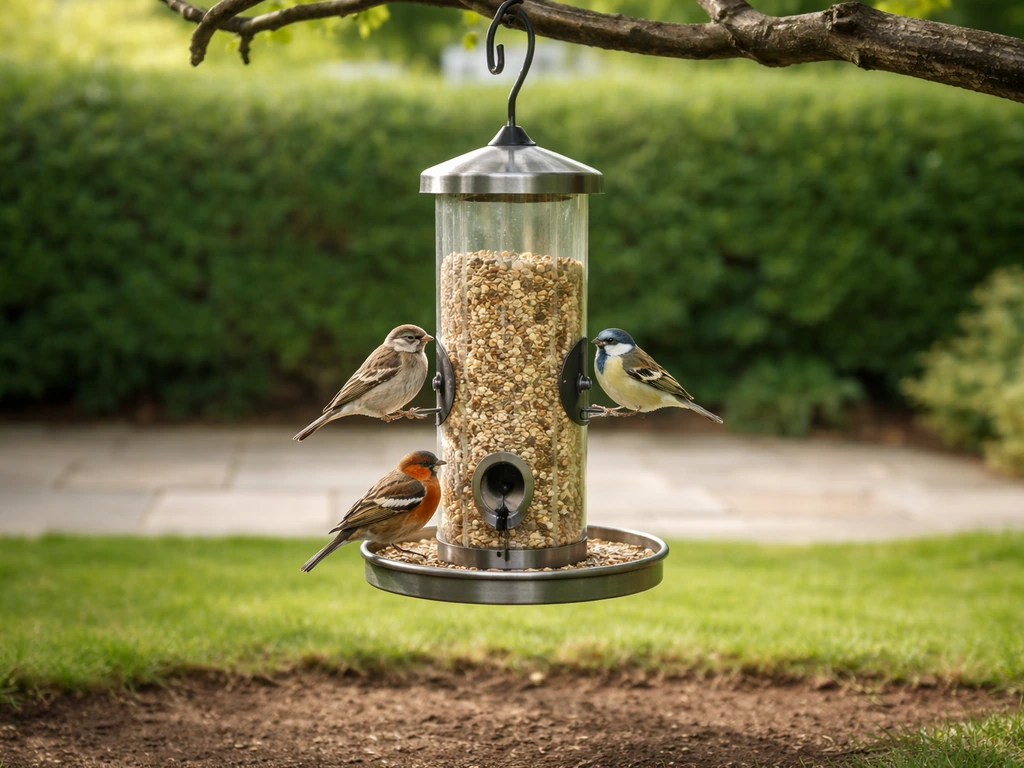
When people search 'Audubon bird feeder warning,' they're usually looking for one of two things: either they've just heard that the Audubon Society has concerns about backyard bird feeders and want to know if they should be worried, or they've already spotted a problem at their feeder and want to know what to do about it. If you are dealing with the Massachusetts bird feeder warning specifically, use the same logic about responsible management and avoid risky setups. Checking the specific Audubon bird feeder warning can help you decide what actions to take for your setup right now. The short answer is this: Audubon doesn't tell you to stop feeding birds. What they consistently flag is that feeders done wrong can genuinely harm the birds you're trying to help. The good news is that most of the risks are manageable with a few practical habits.
Audubon Bird Feeder Warning: What to Do Today

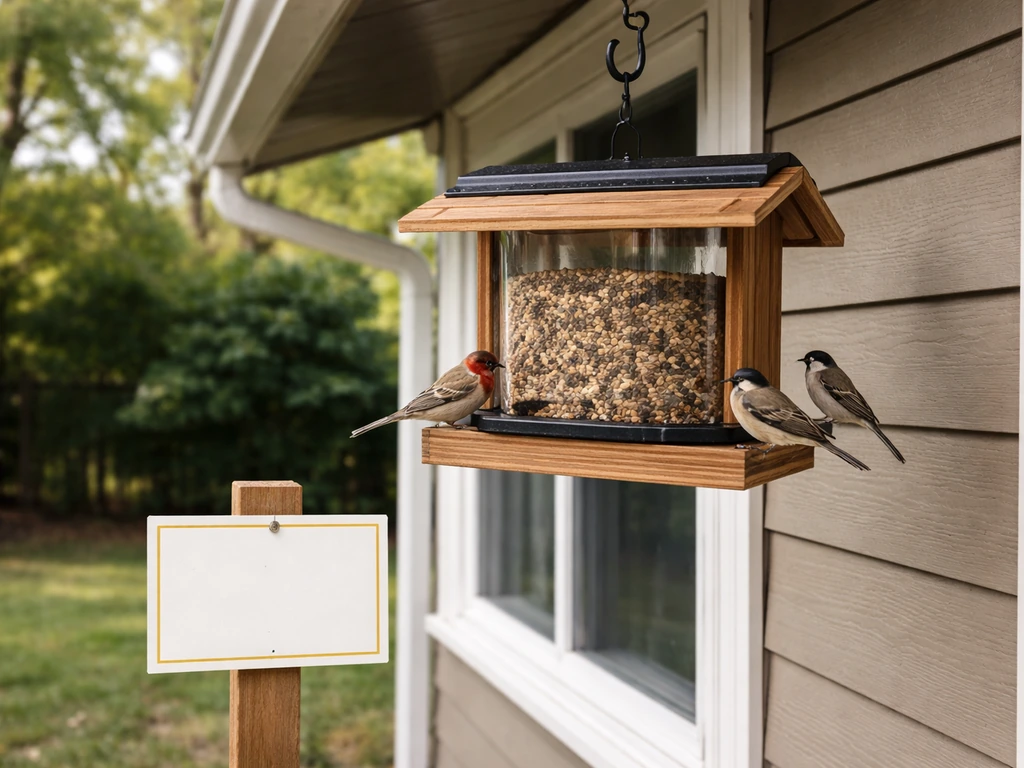
What 'Audubon bird feeder warning' usually refers to
Audubon's published guidance, across multiple articles and regional chapters, revolves around a consistent set of concerns. None of them are 'bird feeders are bad.' All of them are 'bird feeders require responsible management.' The specific risks they name are worth knowing, because vague warnings aren't useful.
- House finch eye disease (mycoplasmal conjunctivitis): a bacterial infection that causes swollen, crusty eyes and spreads easily at crowded feeders
- Salmonellosis: a salmonella infection transmitted through contaminated droppings, often left in or around feeders where birds congregate
- Aspergillosis: a fungal respiratory disease that birds pick up from moldy seed or moldy feeder surfaces
- Avian pox: a viral infection spread by direct contact at shared feeding stations
- Avian influenza (bird flu): a more serious and seasonally variable risk that occasionally prompts regional authorities to recommend taking feeders down entirely
Alongside disease risk, Audubon's warnings cover window collision hazards related to feeder placement, the danger of rancid or contaminated seed (especially in summer heat), attracting unwanted wildlife including rodents, and the behavioral problems that come from overcrowded feeders. Other organizations like the DNR and the RSPB raise many of the same concerns, and you'll find similar guidance across regional bird-feeding warnings, but Audubon's version is detailed, well-sourced, and practical to follow.
Immediate safety triage: stop-and-fix steps you can do today
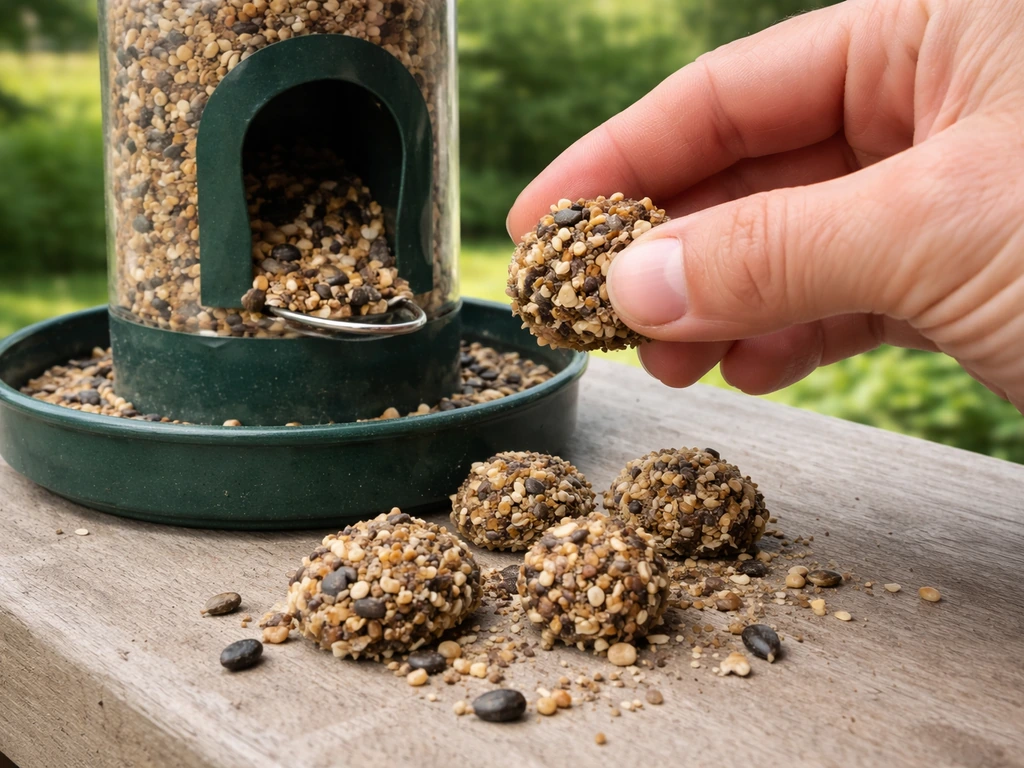
If you've landed here because something looks wrong at your feeder right now, start here. Don't wait for a full deep-dive into the topic. Work through these in order.
- Check the seed in your feeder today. Pull some out and look at it. If you see clumping, dark spots, a dusty or fuzzy appearance, or it smells musty or sour, the seed is contaminated. Remove it immediately. Don't just top it up.
- Scan the birds at your feeder for signs of illness: swollen or crusty eyes, fluffed-up feathers while perched (birds fluff when cold or sick, and warm-weather fluffing is a warning sign), labored movement, or birds sitting on the ground under the feeder unable to fly. If you see this, take the feeder down now and clean it before putting it back up.
- Look under and around the feeder for rodent activity: droppings, gnaw marks, or runs in the ground cover. If rodents are present, remove the feeder temporarily and reassess placement and food type.
- Check where your feeder is positioned relative to windows. If it sits between 3 and 30 feet from glass, it's in the collision danger zone. Plan to move it.
- If everything looks fine, take a quick note of when you last cleaned the feeder. If it's been more than two weeks, cleaning is your most important next step.
Feeder placement and setup to reduce risk (and unwanted visitors)
Placement solves more problems than most people realize. Two issues in particular, window collisions and squirrel raids, are almost entirely placement problems with placement solutions.
Window collision zones to avoid
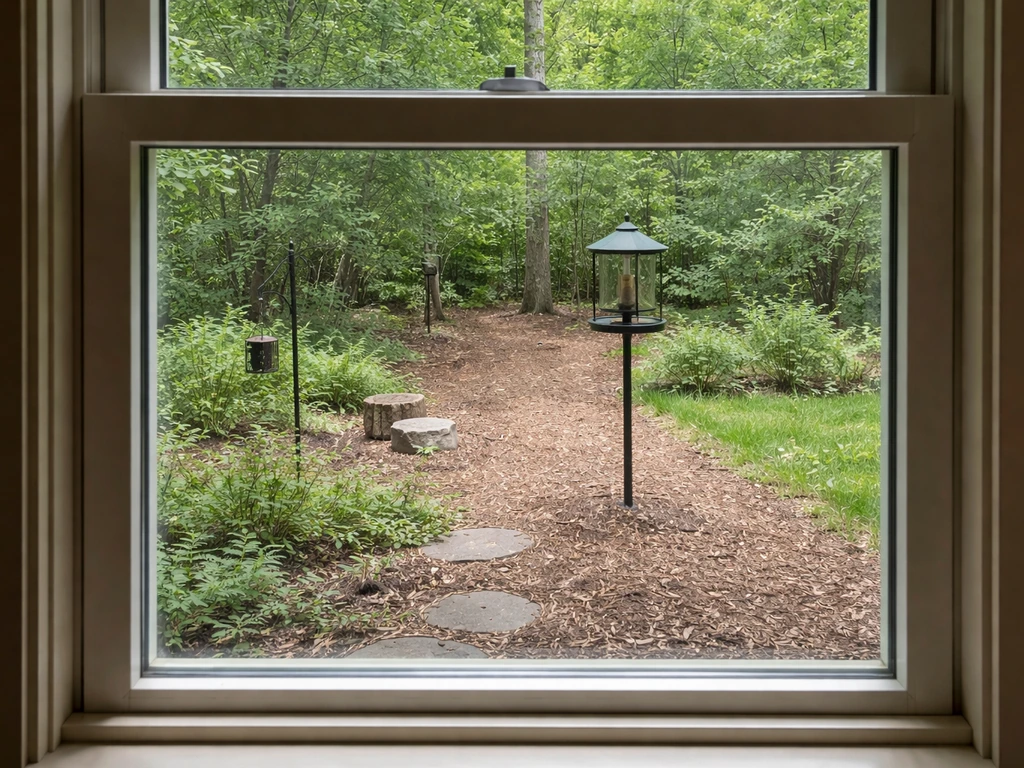
Audubon's guidance on this is clear and specific: feeders placed between 3 feet and 30 feet from a window create the most dangerous collision risk. In that range, birds build up enough speed after leaving the feeder to injure or kill themselves on impact. The fix is to place feeders either within 3 feet of the glass (close enough that birds can't gain dangerous speed) or more than 30 feet away (far enough that they've reoriented to open space before heading toward the house). This isn't a suggestion to worry about later. It's a setup decision that determines whether your feeder is a hazard.
Squirrel-proofing with baffles: the numbers that matter
Audubon's squirrel guidance gives specific measurements, which makes it actually useful. For a baffle to work, the feeder needs to be at least 8 to 10 feet horizontally from any solid structure a squirrel could launch from, including trees, fences, sheds, and walls. The baffle itself should sit 4 to 5 feet off the ground. Below that height, squirrels can simply jump past it. Get both measurements right and a baffle does its job. Miss either one and it doesn't matter what baffle you buy.
Spread feeders out to reduce disease pressure
Audubon specifically recommends using multiple feeders spread apart rather than one large central feeder. The reason is direct: disease spreads more easily when birds are concentrated in one spot. Multiple feeders reduce physical contact between birds, reduce the density of contaminated droppings in any single area, and lower competition-driven stress (which also affects bird health). If you only have one feeder, even moving it a bit further from other feeders during high-traffic seasons helps.
Food choice, handling, and preventing mold and contamination
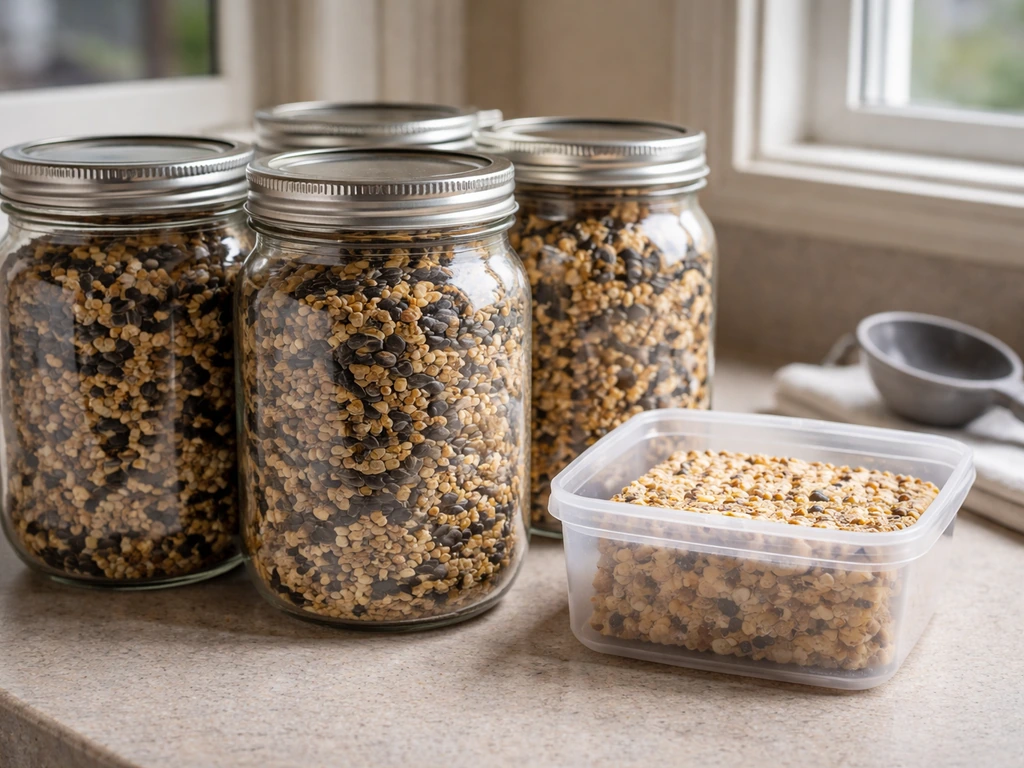
The seed or suet you put in a feeder is only as safe as the way you store and handle it. Audubon's warnings here focus on two main failure points: buying in bulk without using it fast enough, and not accounting for heat and humidity.
In summer heat, seed oils go rancid faster than most people expect. Rancid seed doesn't always look or smell obviously bad, but it can still make birds sick. Audubon specifically warns about this and recommends buying smaller quantities more frequently rather than storing large volumes. Use watertight containers to keep moisture out, and store them somewhere cool if possible. If seed has been sitting in a hot garage through a heat wave, treat it as suspect.
Moldy seed is the direct cause of aspergillosis, a fungal respiratory disease. This is one of Audubon's most-repeated warnings, and for good reason: once seed gets wet inside a feeder, mold can establish itself quickly. Tube feeders with clogged drainage ports are a common culprit. Check that drainage holes are clear every time you refill. If you pull seed out and it's clumped or smells musty, that batch needs to go. Audubon's instruction for disposal is specific: bury it or dispose of it somewhere birds cannot access it. Don't scatter it on the ground as 'ground feeding.' That just spreads the problem.
For suet, the same summer heat warning applies. Suet softens, melts, and goes rancid in hot weather. In summer, switch to no-melt or rendered suet cakes, or skip suet entirely until temperatures drop.
| Food type | Main risk | Hot weather caution | Storage tip |
|---|---|---|---|
| Black-oil sunflower seed | Mold if wet; rancidity if stored too long | Oils go rancid faster above 80°F | Airtight container, buy in smaller batches in summer |
| Mixed seed blends | Filler seeds (milo, millet) often go uneaten and rot | High waste means faster mold buildup | Choose blends without filler; rake up ground debris |
| Nyjer/thistle | Clogs and molds quickly in humidity | Very prone to clumping in heat | Small feeder, refill often, tap ports to check flow |
| Suet cakes | Goes rancid and melts in heat | Unsafe above 70°F | Switch to no-melt formulas or remove in summer |
| Shelled peanuts | High mold and aflatoxin risk | Use quickly in warm weather | Small quantities, check freshness before filling |
Cleaning and maintenance schedule (and how to do it correctly)
Audubon's baseline recommendation is to clean seed and suet feeders at least every other week. That's the minimum. In hot, humid conditions, or if you've spotted sick birds, you should clean more frequently. And every time you empty a feeder completely before refilling, clean it then too. Don't just top up an empty feeder without going through the cleaning steps.
The disinfecting method Audubon describes (drawing from the National Wildlife Health Center's guidance) uses a bleach solution. There are two versions in their published guidance and they're compatible: a 9-parts-water to 1-part-bleach solution for general cleaning of feeders and birdbaths, and a 10 percent non-chlorinated bleach immersion for a deeper clean. For the immersion method, fully submerge the feeder in the solution for two to three minutes, then scrub all surfaces, and rinse thoroughly with fresh water. The step that gets skipped most often is the final one: let the feeder dry completely before refilling it. A wet feeder seeds mold growth immediately. This matters more than the scrubbing.
- Empty the feeder completely and discard any remaining seed (don't save it)
- Disassemble the feeder as fully as the design allows
- Scrub all surfaces with a brush and hot soapy water to remove debris and dried droppings
- Prepare a bleach solution: 9 parts water to 1 part bleach, or use a 10% non-chlorinated bleach solution
- Fully immerse (or thoroughly wipe all surfaces) for 2 to 3 minutes
- Rinse very thoroughly with fresh water to remove all bleach residue
- Air dry completely before reassembling, ideally in sunlight
- Refill only with fresh, dry seed from a clean storage container
Don't forget the area under the feeder. Seed hulls and droppings accumulate on the ground and act as a reservoir for bacteria and fungi. Rake or sweep underneath every week or two. A seed tray attached to the feeder can make this easier to manage.
Disease and outbreak prevention: when to pause feeding and how to restart
This is where Audubon's guidance gets most specific and most important. If you see birds showing signs of illness at your feeder (swollen eyes, visible lethargy, labored breathing, birds that won't flee when approached), Audubon's instruction is clear: take the feeders down. Not clean them and put them back up the same day. Take them down for at least several days, clean them thoroughly using the bleach method above, and monitor the situation before restarting.
Do not try to catch or treat a sick bird yourself. Audubon's guidance here is to contact a local wildlife rehabilitator or call the National Wildlife Health Center for instructions. Wild birds carry diseases that transfer to humans in some cases, and the stress of being handled can kill a bird that might otherwise survive. Leave it to people trained for this.
During regional disease outbreaks, including avian influenza events, some state wildlife agencies and DNR departments issue feeder warnings or outright recommendations to take feeders down until the outbreak subsides. State DNRs may also issue their own bird feeder warnings during outbreaks, so check local advisories when disease is in the area DNR bird feeder warning. These regional advisories override the general guidance. Audubon's national guidance provides the baseline, but local DNR and wildlife authority advisories should be followed when they're more restrictive. Many DNR departments also publish their own bird feeder warnings during outbreaks, so check your local guidance if you want to be extra careful DNR bird feeder warning. For a deeper checklist, see the bird feeding warning guidance from your local DNR or wildlife agency. It's worth checking your state's wildlife agency website periodically, especially in spring and fall migration when bird concentration (and disease pressure) peaks.
When you restart after a pause, clean the feeder again before refilling even if you cleaned it when you took it down. Rinse out your storage containers. Start fresh with new seed. Watch the returning birds for the first week with more attention than usual.
Troubleshooting common problems caused by feeders
Squirrels and rodents
If squirrels are raiding your feeder, verify the placement measurements before buying any new equipment. The feeder must be at least 8 to 10 feet from any structure and the baffle at 4 to 5 feet off the ground. If both of those are correct and squirrels are still getting in, check for overhead access: a branch or roofline they can drop from. Squirrels can drop up to 10 feet. Capsaicin-treated seed is another option, birds can't taste it but squirrels find it unpleasant, though results vary.
Rodents (mice and rats) are almost always attracted by seed spillage on the ground, not by the feeder itself. A seed tray, regular raking underneath, and switching to no-waste seed mixes (shelled seeds with no hulls to drop) will reduce ground debris significantly. If rodent activity is persistent, take the feeder down for two weeks to break the pattern before reinstalling it with a cleaner setup.
Mess and waste
Seed hulls, wet clumps, and scattered seed under feeders are management problems, not inevitable. Tube feeders with trays catch a lot of debris before it hits the ground. No-waste mixes (straight black-oil sunflower, shelled peanuts, nyjer) eliminate hull buildup. Wet weather accelerates decay, so check feeders more often after rain.
Feeder aggression between birds
If you're seeing one species dominate the feeder and chase others away, adding a second feeder at a different location usually resolves it. Dominant birds (starlings and house sparrows are common culprits) can't patrol two locations at once. Species-specific feeders help too: a nyjer sock feeder attracts finches but not most bully species, and a caged suet feeder keeps starlings out while letting smaller woodpeckers through.
Seasonal guidance and long-term best practices
Bird feeders genuinely help birds through tough conditions. Winter feeding supports birds through cold snaps when natural food is scarce, and supplemental food during migration helps birds fuel long journeys. Audubon acknowledges this directly. The warnings exist alongside the benefits, not instead of them.
That said, the risk profile changes by season. Winter is typically the lowest-risk period for disease, but high-traffic feeders still need the same cleaning schedule. Spring and fall migration bring the highest bird concentrations and the highest disease transmission risk. Summer brings heat, mold, and rancidity risks. Adjust your cleaning frequency and food choices with the season rather than running on autopilot year-round.
One honest tradeoff worth naming: a consistently managed feeder that's cleaned on schedule, stocked with fresh food, and properly placed is probably a net positive for local birds. A neglected feeder with old seed, no cleaning, and a pile of rotting hulls underneath is likely a net negative. Audubon's warnings are really about that gap. If you're committed to the maintenance side, feeding birds is worthwhile. If your life circumstances mean the feeder will go unattended for weeks at a time, it's better to take it down during those periods than to leave a contaminated station running.
Long-term, the best single habit is to build cleaning into your regular routine the same way you'd refill a pet's water dish: not when it looks bad, but on a schedule. Every other week minimum, more often in summer and wet weather, and every time you empty it. That one habit addresses most of what Audubon's warnings are pointing at.
| Season | Key risks | Cleaning frequency | Food tips | Action to take |
|---|---|---|---|---|
| Winter | Disease at crowded feeders; frozen water in feeders | Every 2 weeks minimum | High-energy seed (black-oil sunflower, suet); standard suet is fine in cold | Watch for sick birds; clean on schedule; check for ice clogging ports |
| Spring migration | High disease risk from concentrated migrating birds | Weekly or more | Fresh seed only; smaller quantities | Monitor closely; consider spreading feeders further apart |
| Summer | Mold, rancid seed, rancid suet; rodent activity | Weekly minimum | Small batches of fresh seed; no-melt or no suet | Increase cleaning frequency; store seed in cool location; dispose of any suspect seed |
| Fall migration | Same as spring: high concentration, disease pressure | Weekly or more | Fresh seed; check suet for rancidity | Deep clean before migration season starts; watch for outbreak advisories |
If you want to go deeper on specific regional guidance, wildlife agencies including state DNR offices and international bodies like the RSPB issue their own feeder warnings and seasonal advisories that complement what Audubon recommends nationally. The RSPB has its own garden bird feeding warning and seasonal advice that can complement Audubon's national guidance RSPB garden bird feeding warning. For broader context on the range of bird feeder warnings in circulation, there's useful overlap across these sources, and it's worth knowing what your local authority advises in addition to the national guidance.
FAQ
What should I do with the seed or suet if I find mold or sick birds at the feeder? (Do I just clean and refill?)
If you suspect seed is the problem (wet clumps, musty smell, obvious mold, or birds acting ill), the safest move is to remove the feeder and discard that specific batch. Cleaning without replacing old seed can reintroduce contamination when you refill.
Can I disinfect the feeder and leave it sitting out, then refill the next day? Or does it need immediate refill?
Yes, but disinfecting alone is not enough. After cleaning, let the feeder dry fully before refilling (a wet feeder encourages new mold quickly), and also remove hulls and droppings underneath so the surrounding reservoir is addressed.
How do I decide if I need a full bleach clean versus a quick rinse when I’m doing maintenance?
For minor dusting or light debris, you can rinse and scrub, but still follow the schedule and dry step. If you ever see sick bird signs or you used a bleach-based disinfection, treat it as a “full reset” cleanup, including the area under the feeder.
Is it safe to reuse bleach solution, and how long should I let the feeder soak?
Bleach solutions can leave irritating residue and can weaken some materials if misused. Use fresh solution each time, keep the dwell time within the guidance (2 to 3 minutes for full submersion in the immersion method), scrub all surfaces, rinse thoroughly, then dry completely before refilling.
Do bird feeder warnings about window collisions mean I need to stop feeding entirely? What if I cannot move the feeder?
If your feeder is in the “high collision risk” zone (between 3 and 30 feet from a window), changing seed type will not fix it. The practical options are relocate to within 3 feet or more than 30 feet, or add window safety measures like properly installed bird-safe window films or decals (and still reassess placement).
My birds look lethargic. Should I keep feeding to help them recover faster?
If birds are sick, the recommendation is to take feeders down for several days, not to keep feeding “but with fresh seed.” Start monitoring before restarting, and when you restart, clean again first and start with fresh food to avoid continuing exposure.
What if my local DNR is stricter than the general Audubon guidance, should I follow the local warning or my cleaning schedule?
Feeder pause decisions should be stricter during local outbreak advisories. If your state wildlife agency or DNR issues a “take feeders down” request during avian disease events, follow that even if your feeder looks clean.
How can I reduce mice and rats around the feeder without giving up winter feeding?
For rodents, the most important variable is reducing ground debris. A seed tray, regular raking/sweeping underneath, and switching to no-waste mixes can break the attraction cycle. If it is persistent, taking the feeder down for about two weeks can help reset the pattern before reinstalling.
I’m getting one bully species all day. What’s the quickest way to fix feeder “crowding” without making the situation worse?
If one species dominates, adding a second feeder often helps, but location matters. Place the second feeder far enough away that the dominant bird cannot defend both sites at once, and consider species-specific feeders (for example, a nyjer sock for finches or a caged suet option to deter bullies).
Can I change what I feed to lower risk during summer, especially for suet?
Yes, but treat it as a “seasonal switch,” not a permanent substitution. In hot weather, consider reducing or pausing suet that can melt, then resume when temperatures drop, while keeping the cleaning cadence (hot and humid periods still require more frequent cleaning).
If my feeder area gets packed, what’s the most practical way to reduce disease risk besides cleaning more often?
Overcrowding is usually a placement and feeder-management issue, not a single-feeder “volume” issue. Spread feeders out, avoid keeping one station continually packed, and consider tray-equipped designs that catch droppings and hulls better to reduce contamination buildup around birds.
RSPB Garden Bird Feeding Warning: Safe Feeder Setup
RSPB garden bird feeding warning explained with safe setup, cleaning routine, placement tips, and what to feed to cut di