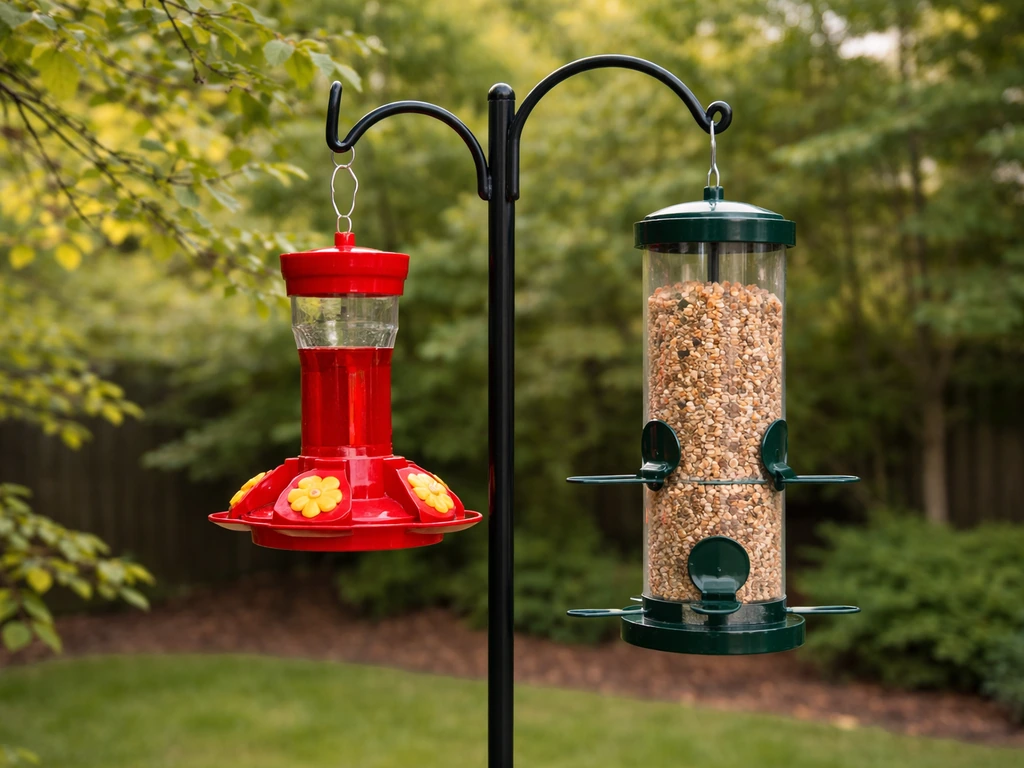
Yes, you can put a hummingbird feeder near a regular bird feeder, and plenty of backyard setups do exactly that. But "next to" and "near" aren't the same thing in practice, and the details matter. The short version: keep them at least 10 to 15 feet apart, ideally more, and pay attention to a few placement and maintenance factors that become more important when different feeder types share the same space. Get those things right and you can absolutely run a hummingbird feeder and a seed or suet feeder in the same yard without major problems.
Can You Put a Hummingbird Feeder Next to a Bird Feeder?

Eleanor Hartwick
20 Apr 2026
How far apart should they actually be?
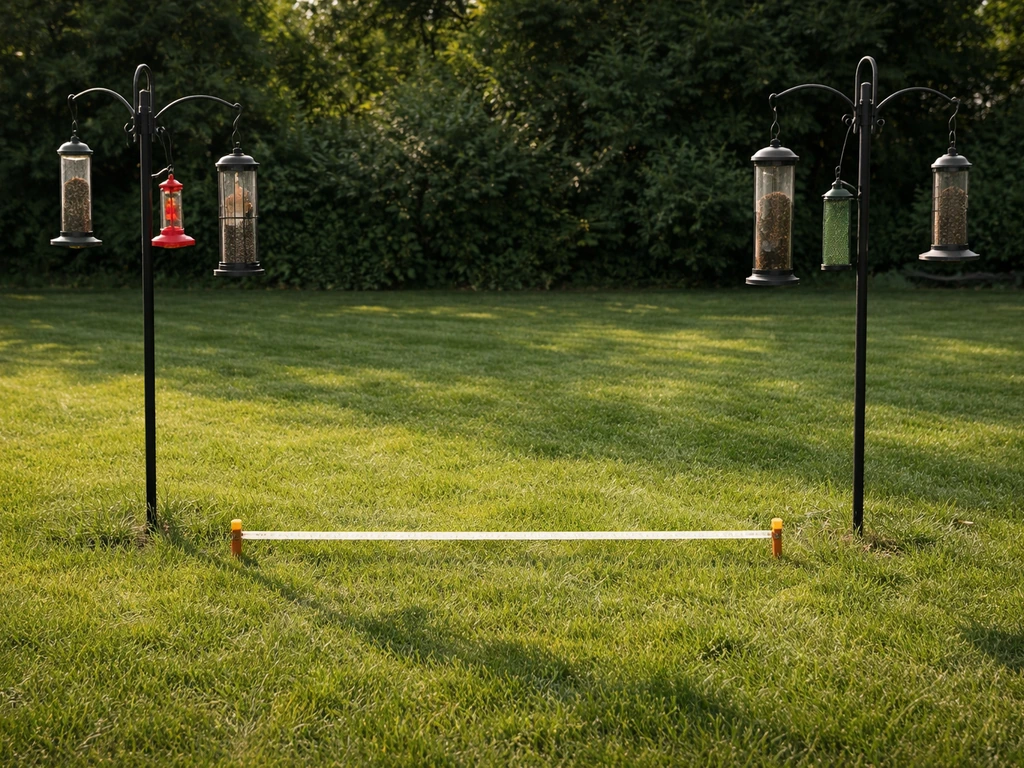
The most common mistake people make is placing feeders too close together, either because yard space is limited or because it seems convenient to cluster everything in one spot. Hummingbirds are intensely territorial, and a male ruby-throated hummingbird will spend more energy chasing other birds away from a nectar source than actually feeding if there's too much foot traffic nearby. When a feeder full of chickadees and house finches sits right next to the hummingbird feeder, you're essentially staging a conflict.
A practical minimum is 10 feet of separation, but 15 to 20 feet is significantly better if you have the space. At 10 feet, a territorial hummingbird can still see and react to activity at the seed feeder, which means stress and wasted energy for the bird. At 15 to 20 feet, you start to get genuine separation of feeding zones. If your yard allows it, placing feeders on opposite sides of the yard or on different sides of a structure (like a deck post vs. a tree on the other end of the yard) works even better.
The same logic applies if you're thinking about running multiple hummingbird feeders near other feeders. More hummingbird feeders means more territorial behavior between the hummingbirds themselves, so spreading them out rather than clustering them near each other or near seed feeders gives every bird a better shot at actually feeding. Space hummingbird feeders at least 10 to 15 feet from each other as well.
Placement tips that actually make a difference
Height
Hummingbird feeders work well at around 5 to 6 feet off the ground, which is roughly eye level for most adults and keeps them accessible for refilling and cleaning. Seed feeders are often hung at similar heights, so height alone won't separate feeding zones, but it does affect visibility for the birds. If you hang a hummingbird feeder too low, ground-feeding birds and squirrels become a bigger nuisance.
Sun and shade
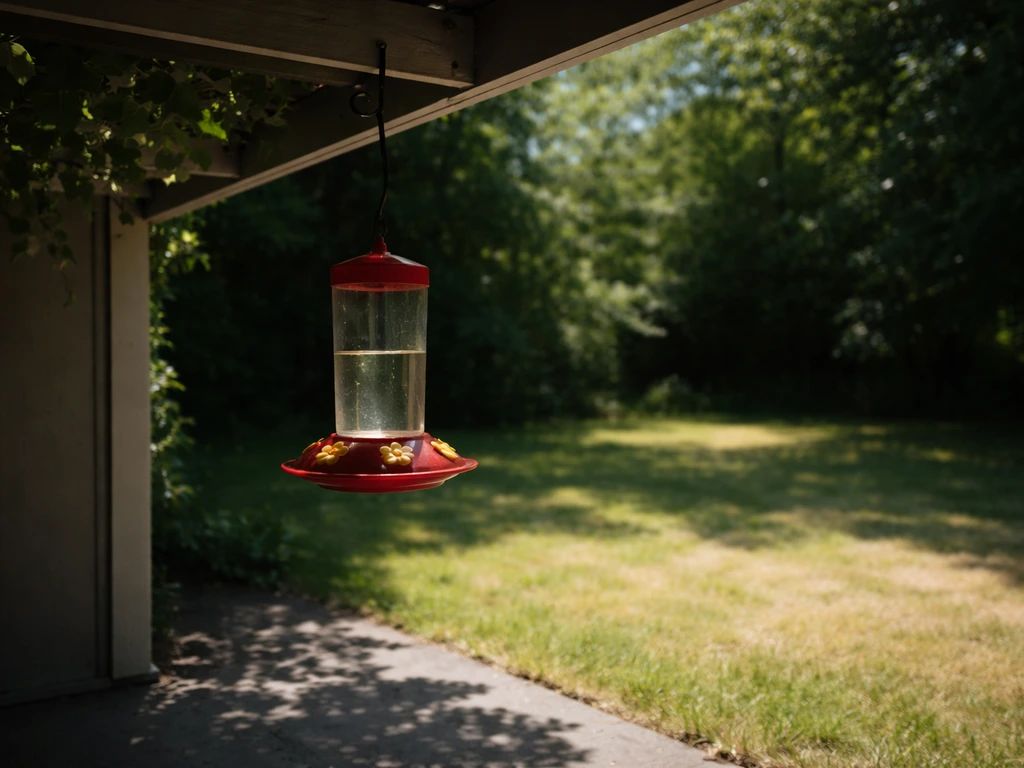
This one's critical for nectar feeders specifically. Direct sunlight accelerates nectar fermentation and leaking, so a shaded or partly shaded spot is better for hummingbird feeders than full sun. Perky-Pet's guidance specifically flags direct sunlight and wind as contributors to nectar leaking and spoilage. Partial morning sun with afternoon shade is a solid target. Your seed feeder placement is less sensitive to this, but if you're already pulling seed feeders out of direct sun to reduce seed spoilage, you're likely making a good choice for both feeder types.
Visibility and traffic patterns
Hummingbirds will find your feeder faster if it's visible from a distance and positioned near flowering plants or brightly colored garden features. At the same time, you want feeders close enough to windows or a seating area that you can actually watch them, which is most of the fun. Think about sightlines: can you see both the hummingbird feeder and the seed feeder from your main viewing spot without them being so close together that bird activity from one feeder disturbs the other? When you hang a bird feeder from a tree, position it so both feeders are easy to spot and don't create stressful crowding.
Wind exposure
Wind is harder to control than sun, but it matters. A hummingbird feeder swinging in the wind spills nectar, which attracts ants and wasps almost immediately. If you're in a spot with consistent wind, look for a spot with some natural wind break (a fence, a shrub, a building corner) and go with a saucer-style feeder rather than a bottle-style, since saucer designs tend to be more stable and leak less.
Managing competition and bully birds
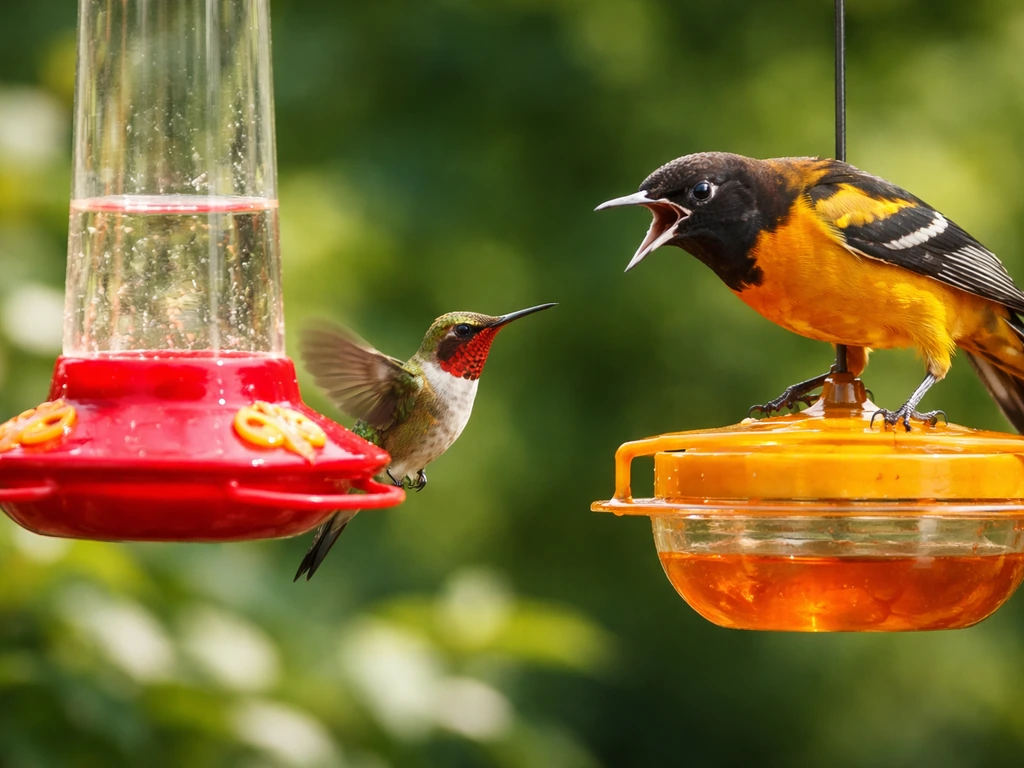
Hummingbirds are small, but they're aggressive in proportion to their size. The bigger issue when a hummingbird feeder sits close to a regular bird feeder isn't usually that larger birds steal nectar (they generally don't care about it), it's that the foot traffic from larger birds at the seed feeder stresses the hummingbirds and makes them spend more time guarding than feeding. You'll notice a hummingbird perching nearby and darting aggressively at every bird that comes close, even birds that pose no real threat.
Orioles, on the other hand, actively love nectar and will absolutely drain a hummingbird feeder if they find one. If you're in oriole territory (spring and summer in most of North America), placing your hummingbird feeder slightly more hidden or below the sightline of a nearby platform feeder can reduce oriole competition. Some people run a separate oriole feeder with a wider port specifically to draw orioles away from the hummingbird feeder.
The cleanest solution for persistent competition problems is more physical separation. If you see a hummingbird consistently getting chased away from its feeder by activity at a nearby seed feeder, move one of them. Many people also ask whether do bird feeders have to hang, and the answer depends on the feeder style you choose move one of them. You don't have to pick the feeder up and carry it to the opposite end of the yard, just moving it 5 to 10 feet can shift the dynamic noticeably. Track what happens for a few days after any adjustment before deciding if it worked.
Cleaning and maintenance when feeders are close together
Running feeders close together doesn't just raise behavioral issues, it also creates more concentrated maintenance demand. Nectar spoils fast, especially in warm weather. The National Wildlife Federation notes that in hot weather, mold and bacteria in a hummingbird feeder can build up quickly enough that daily or every-other-day cleaning is warranted. The Hummingbird Society breaks this down by temperature: at 90°F (32°C) or above, change nectar daily or every other day. Below 60°F (15°C), weekly cleaning is usually sufficient. Flathead Audubon puts the outer limit at 2 to 3 days regardless of temperature, with daily changes in very hot weather. The U.S. Fish and Wildlife Service recommends changing nectar every 3 to 5 days as a general guideline and advises using hot water and a bottle brush rather than soap or detergent, which can leave residue.
| Temperature | Recommended Nectar Change Frequency |
|---|---|
| 90°F (32°C) and above | Daily or every other day |
| 70–89°F (21–32°C) | Every 2–3 days |
| 60–69°F (15–21°C) | Every 3–5 days |
| Below 60°F (15°C) | Weekly |
When your hummingbird feeder is positioned near a seed or suet feeder, seed hulls and bird droppings from the nearby feeder can land in or around the nectar feeder, accelerating contamination. Check the hummingbird feeder more frequently for debris if it's within about 10 feet of a high-traffic seed feeder. A simple wipe-down of the ports and basin every couple of days can catch problems before they get serious.
Seed and suet feeders need regular cleaning too, but they're more forgiving about timing than nectar feeders. Still, if you're already building a feeder-maintenance routine, batch the cleaning so you're not making multiple trips. Pick up debris underneath all feeders at the same time to avoid creating a feeding ground for rodents.
Pests, ants, wasps, and other uninvited guests
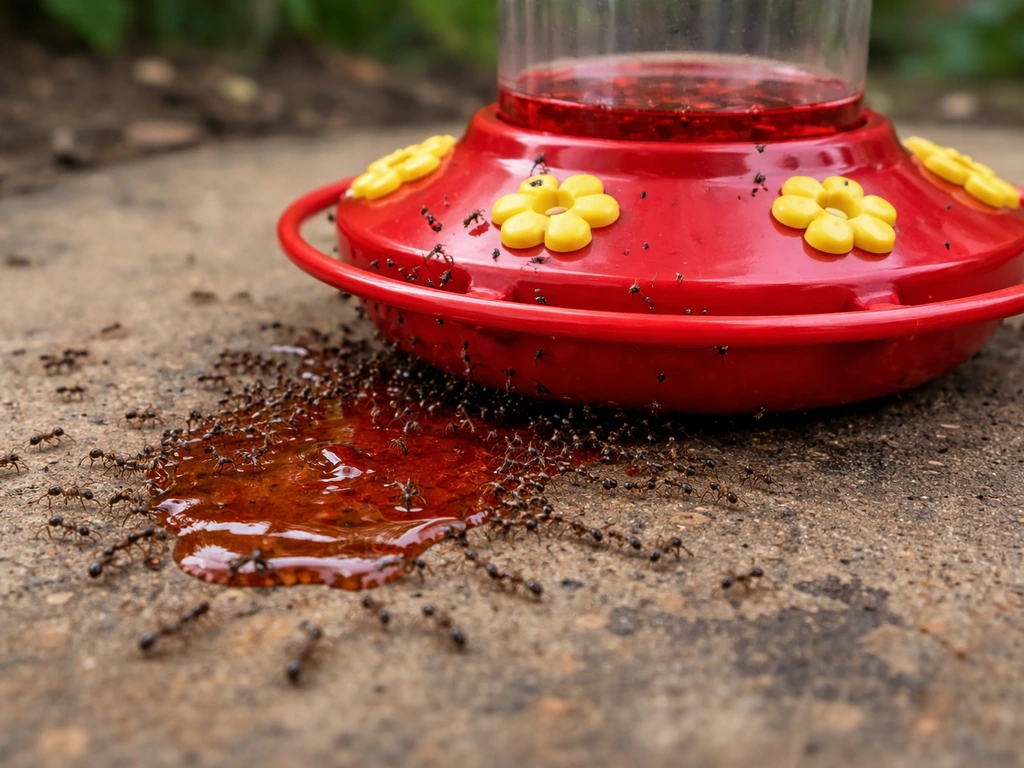
This is where having feeders close together can compound problems quickly. A nectar feeder that leaks or spills will attract ants almost immediately. Ants follow scent trails, so once they find a source, you'll have a steady column of them within hours. The most effective physical solution is an ant moat, a small water-filled cup that sits between the hanging hook and the feeder itself. Wild Birds Unlimited and other retailers sell feeders with built-in ant moats, and you can also buy add-on moats separately. Keep the moat filled with clean water, and ants can't cross it.
Bees and wasps are drawn to nectar for different reasons than ants but cause similar frustration. Saucer-style feeders where nectar sits below the feeding ports (rather than right at the tip) are harder for bees to access because bee tongues aren't long enough to reach nectar positioned deeper in the reservoir. Bee guards (small plastic mesh covers over the feeding ports) are another option and are widely available. HGTV's feeder guidance specifically calls out saucer and gravity-fed feeder designs as effective for reducing bee access. Avoid putting nectar feeders directly next to flowering plants that are already heavy with bee activity, since that's essentially inviting crossover visitors.
Squirrels and larger mammals are drawn more to seed feeders than nectar feeders, but a spilled or leaking hummingbird feeder placed low to the ground can attract raccoons or opossums at night. Keeping the hummingbird feeder at 5 to 6 feet off the ground and using a baffle on the pole or hanger reduces this risk. If you're already using baffles on your seed feeder pole, extend that same thinking to your hummingbird feeder mount.
Cats and other predators are a separate concern. A hummingbird hovering at a low feeder near a shrub or fence is vulnerable, so keep feeders out in the open rather than tucked right against cover that a cat could hide behind. The same is true for your seed feeders if you're seeing predation, but hummingbirds are particularly exposed during the few seconds they hover to feed.
A quick checklist if things aren't working
If you've set up both feeders and hummingbirds aren't using the nectar feeder, or if you're seeing conflict and wasted nectar, run through these steps before giving up on the setup.
- Check the distance: if the hummingbird feeder is within 10 feet of a busy seed feeder, move it farther away and give it a few days.
- Check the nectar: even if it looks clear, nectar older than 3 days in warm weather may already be fermenting. Dump it and start fresh with a 4:1 water-to-white-sugar mix.
- Check for shade: if the feeder is in full afternoon sun, relocate it to a spot with afternoon shade to slow spoilage and reduce leaking.
- Check for ants or bees: if either is present, add an ant moat, switch to a saucer-style feeder, or add bee guards to the ports.
- Check for dominant birds: watch for a single hummingbird (usually a male) spending most of its time chasing rather than feeding. Adding a second hummingbird feeder on the other side of the yard or out of direct sightline of the first can help.
- Check the feeder itself: clean it thoroughly with hot water and a bottle brush. Residue from old nectar can make fresh nectar turn faster and may deter birds.
- Check placement height and exposure: make sure the feeder isn't swinging in the wind or placed so low that ground activity disturbs feeding hummingbirds.
Running a hummingbird feeder alongside seed or suet feeders is one of the easiest ways to attract more variety to your yard, and the setup isn't complicated once you understand what each type of feeder needs. The main things to get right are distance, shade, and a consistent cleaning schedule. Get those three things dialed in and the two feeder types will coexist just fine. For the exact setup, make sure you can put two bird feeders next to each other only if you can still give them enough separation and manage traffic between them can you put two bird feeders next to each other.
FAQ
What should I do if I cannot keep the hummingbird and seed feeders 10 to 15 feet apart?
If feeders must be closer than 10 feet, increase separation by using different mounting heights and different viewing lines rather than relying on horizontal distance alone. For example, hang the hummingbird feeder slightly higher or lower than the seed feeder, and position them so one feeder is not in the hummingbird’s direct line of sight to the seed feeder’s busiest area (near perches or the hopper opening).
Should the seed feeder be placed in the same shade as the hummingbird feeder?
Put the hummingbird feeder where it gets partial morning sun and afternoon shade, and keep the seed feeder similarly shaded if your climate is warm. The reason is that warm nectar spoils faster, and a shaded hummingbird feeder also reduces leaks that attract ants and wasps, even if the seed feeder is in a sunnier spot.
My hummingbirds find the feeder but won’t stay. What quick checks should I do first?
If you see hummingbirds hovering near the nectar feeder but not feeding, the nectar may be too warm or contaminated (leaking, debris, or old nectar). In that situation, change nectar immediately, rinse with hot water, scrub with a bottle brush (no detergent), and move the feeder to a slightly more shaded spot before making any big placement changes.
Can I add multiple hummingbird feeders next to a seed feeder to get more hummingbird traffic?
Yes, but it can backfire. Avoid clusters of hummingbird feeders near busy seed feeders, and also avoid putting multiple nectar feeders right next to each other because hummingbirds will still defend nectar sources against other hummingbirds. If you add feeders, stagger them around the yard with the same 10 to 15 feet spacing rule.
How can I reduce oriole competition when both types visit my yard?
Orioles can outcompete hummingbirds when they discover nectar. If you’re seeing orioles at the hummingbird feeder, try lowering the hummingbird feeder slightly (still safe from pests) or placing it partly below the sightline of the platform feeder that orioles are using. Another option is to run a separate oriole feeder with a wider port to lure them away.
After I move feeders, how long should I wait before deciding it didn’t work?
Start watching at dawn and again during peak bird activity, because stress is often time-specific. If conflict begins only in certain hours, adjust feeding windows by shifting the feeder positions toward shade in the hotter part of the day and keeping the nearest seed feeder activity area consistent.
How can I tell if wind placement will keep nectar from leaking and attracting insects?
Use a stability check, not just a “squirrel-proof” assumption. For wind, switch to a saucer-style or gravity-fed design that sits more steadily, tighten any mounting points, and ensure the feeder is not swaying into the seed feeder’s space where birds are congregating.
What’s the most common reason ants appear at a hummingbird feeder next to a seed feeder?
If ants show up soon after nectar starts, the issue is usually a scent path (spilled nectar, dripping, or an unprotected mount). Fill and maintain an ant moat, wipe the area under the ports regularly, and consider shielding the feeder from direct drips from any overhanging seed feeder nearby.
Do I need a baffle on a hummingbird feeder if my seed feeders already have one?
Spilled nectar can draw mammals when nectar is low. Keep the hummingbird feeder around 5 to 6 feet, and if you use baffles on seed feeder poles, use similar protection on the hummingbird mount too. Also avoid putting nectar feeders next to dense cover where cats can hide and ambush while hummingbirds hover.
How often should I clean the hummingbird feeder if it’s close to a busy seed feeder?
Yes. Bird droppings and seed hulls can contaminate nectar, especially when the hummingbird feeder is close to a high-traffic seed feeder. Check the hummingbird feeder ports and basin more often when it is within about 10 feet of the other feeder, and do a quick port wipe-down during your nectar change routine.
Next Article
Do You Leave Bird Feeders Out All Year? Seasonal Guide
Should you leave bird feeders out all year? Get seasonal tips, safe feeding, and cleaning to prevent disease and pests.