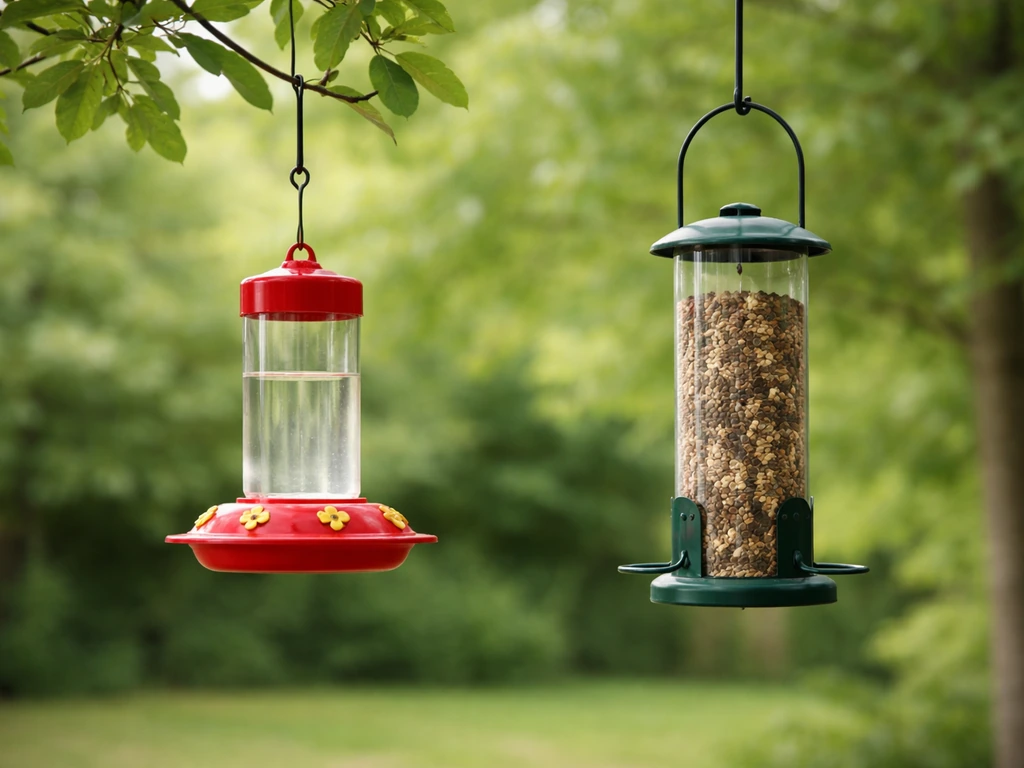
Yes, you can hang hummingbird feeders alongside other bird feeders, but placement and spacing matter a lot. The key is keeping hummingbird feeders far enough from seed feeders to reduce territorial stress on the hummingbirds, while still making both feeder types visible and accessible. A general working rule: keep hummingbird feeders at least 10 to 15 feet away from your seed or suet feeders, and if you have multiple hummingbird feeders, spread them out so no single bird can guard all of them at once.
Can You Hang Hummingbird Feeders With Other Bird Feeders?

Eleanor Hartwick
3 May 2026
Why hummingbirds and other birds don't always mix well
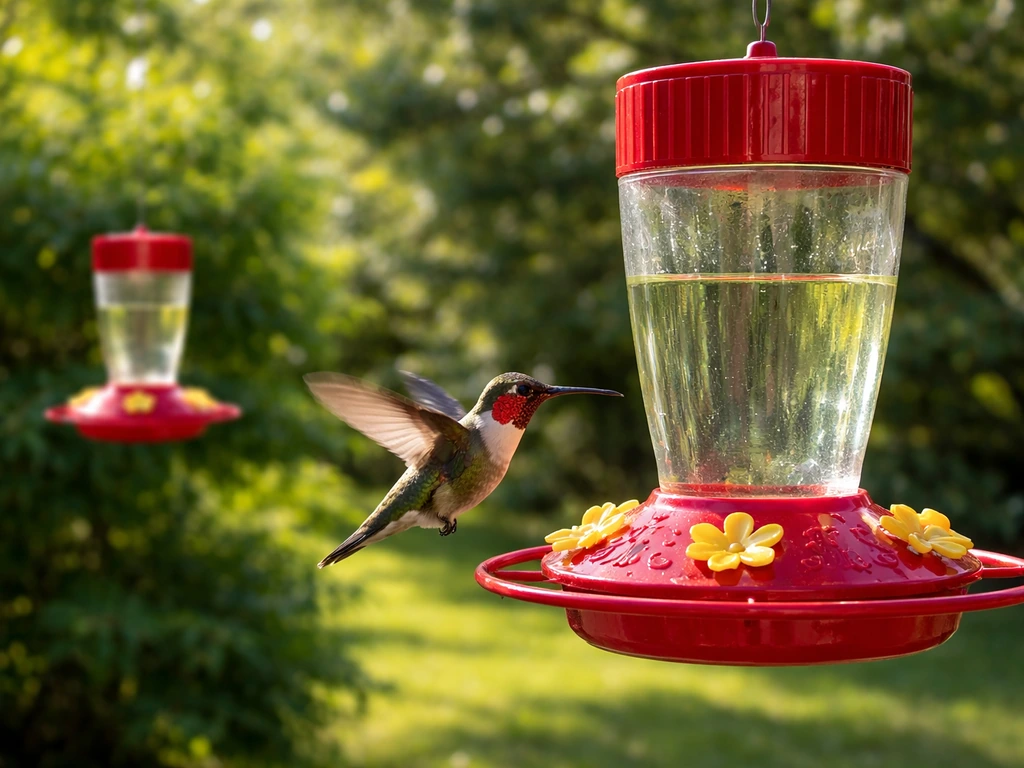
Hummingbirds are remarkably aggressive for their size. They fight constantly over nectar because they literally can't afford to share it when resources are scarce. Research on Anna's and ruby-throated hummingbirds shows that territorial chasing actually increases when feeders are clustered or resource-rich. In other words, putting one big multi-port feeder near your other feeders can create a hotspot where one dominant hummingbird camps out and drives every other hummingbird away.
Larger seed-eating birds don't usually want anything to do with nectar feeders, and hummingbirds rarely bother with seed feeders. The real issue isn't cross-species fighting. It's that the traffic and movement around a busy seed feeder can stress hummingbirds and make them abandon a feeder they'd otherwise love. Chickadees, finches, and woodpeckers swooping in and out of a nearby suet cage create a lot of activity that hummingbirds find unsettling.
How to space multiple feeders in the same yard
Distance is your most powerful tool. If your yard allows it, put your hummingbird feeder on one side of the space and your seed/suet feeders on the other. If you want to place two bird feeders next to each other, position them so one doesn't dominate the space and drive birds away. Even 15 feet of separation makes a noticeable difference in how relaxed the hummingbirds are. If you're working with a small deck or patio, aim for the opposite ends.
Height matters too. The U.S. Fish & Wildlife Service suggests a hanging height of roughly 2 to 4 feet for hummingbird feeders in backyard habitat setups, and experts at Country Living reinforce that 4 feet off the ground is a practical minimum to keep ground predators like cats from becoming a problem. This same hanging height guideline also helps answer where to hang bird feeders so different species stay comfortable. Seed feeders for larger birds can hang higher, which naturally separates the two feeding zones vertically as well as horizontally.
Shade and wind are worth thinking about too. Nectar spoils faster in direct sun, so positioning your hummingbird feeder where it gets morning light but afternoon shade helps the sugar water stay fresh longer. Your seed feeders are less sensitive to sun, so they can go where it's convenient. What both types of feeders share is a benefit from some nearby cover, like a shrub or tree, so birds feel safe approaching. Just keep seed feeders far enough from dense brush that squirrels can't leap onto them.
If you want to host multiple hummingbirds rather than just one dominant bird, spread feeders out so no single hummingbird can monitor all of them from one perch. Four small single-port feeders placed in different parts of the yard will feed more hummingbirds than one large four-port feeder in a central spot. Separating them around corners of the house or on different sides of a fence works well.
Nectar vs. seed: why the food difference matters for setup
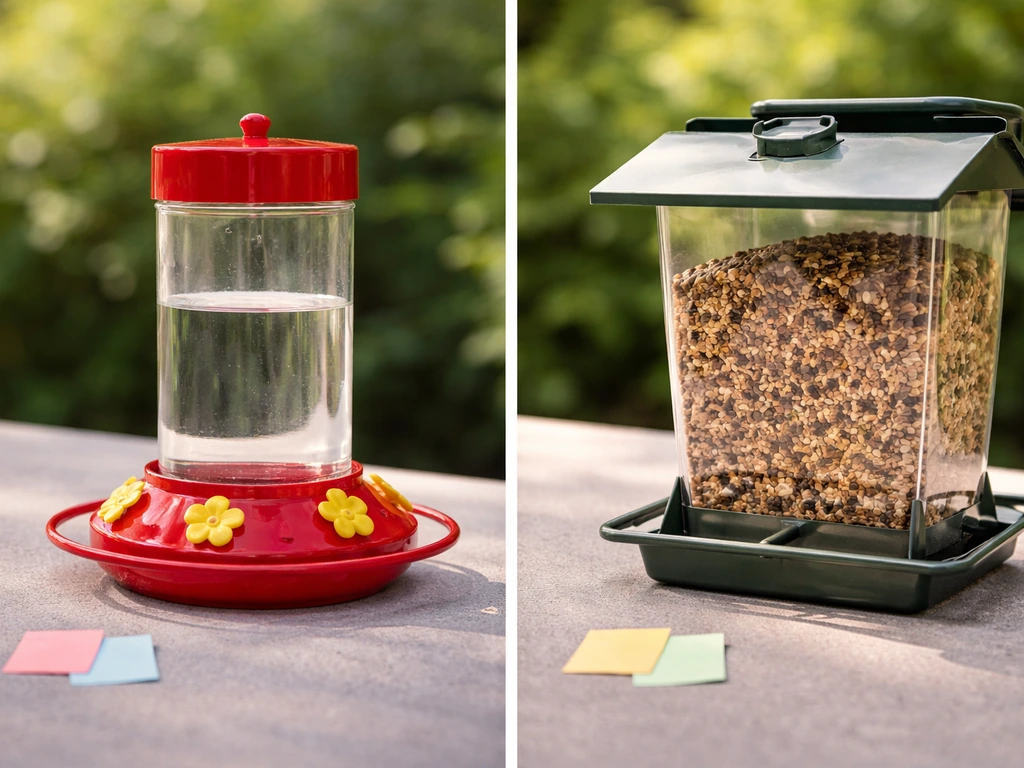
Hummingbird feeders run on sugar water, which is a 4:1 ratio of water to plain white table sugar. That's it. No honey, no red dye, no artificial sweeteners. Seed feeders hold dry foods: sunflower seeds, millet, nyjer, safflower, suet cakes. These two food types need completely different management timelines, and when your feeders share the same area, that difference can catch you off guard.
Nectar goes bad fast, especially in summer heat. Perky-Pet recommends changing it every two days in hot weather, and every three to five days in cooler conditions. Seed feeders can go longer between fills, but wet or moldy seed is just as much of a health problem for birds. The Minnesota DNR is direct about this: moldy, wet birdseed in unclean feeders can make birds sick. Having both feeder types in the same yard just means you have two different cleaning and refill schedules to track.
| Feeder Type | Food | Refill Frequency (Summer) | Cleaning Frequency |
|---|---|---|---|
| Hummingbird feeder | Sugar water (4:1 water:sugar) | Every 2 days in heat; 3–5 days otherwise | Every time you refill; immediately if moldy or insects found |
| Seed feeder | Sunflower, millet, nyjer, safflower | When empty or every 1–2 weeks | Weekly; immediately if seed is wet or moldy |
| Suet feeder | Suet cake | When empty; faster in heat | Every 1–2 weeks; replace if rancid |
Dealing with ants, wasps, and other pests when feeders share space
Sugar water is a magnet for insects, and when you're hanging a hummingbird feeder anywhere near seed feeders, you're creating a zone where ants and wasps are already active. If you want to hang a bird feeder from a tree, choose a sturdy branch and secure the cord so the feeder stays steady and safe for birds hanging a hummingbird feeder. The good news is there are effective, feeder-friendly ways to manage this.
Ants are the most common nuisance. Texas Parks and Wildlife recommends an ant moat, a small water-filled cup that attaches to the hanging wire above the feeder, creating a barrier ants can't cross. Many saucer-style hummingbird feeders have a built-in moat at the center. These work well as long as you keep the moat filled with water and don't let it evaporate.
Wasps and bees are trickier. TPWD advises rinsing the outside of the feeder bottle and the feeding ports before you hang it. Any dried or dripped nectar on the outside is what draws bees in the first place. Once wasps find a feeder, they recruit others, so cleaning up drips promptly and choosing feeders with bee-resistant ports (small openings recessed away from the nectar level) helps a lot.
Rodents are more of a seed feeder issue than a nectar issue, but they're drawn to yards with any food source. If you notice rodents, add baffles to your seed feeder poles, store seed in sealed metal containers, and clean up spilled hulls under feeders regularly. Keeping seed feeders and hummingbird feeders in different parts of the yard can also limit how much the rodent activity near your seed feeders spills over toward your hummingbird setup.
Keeping feeders clean when you have a mixed setup
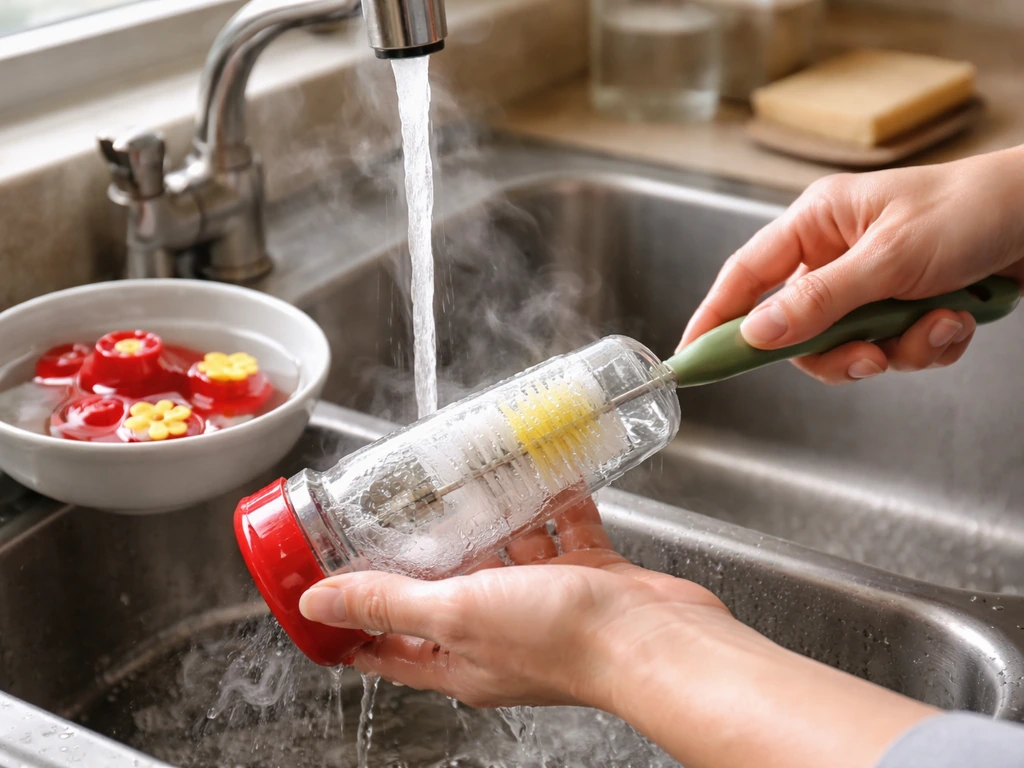
The most common mistake people make with mixed feeder setups is letting the hummingbird feeder slide because they're focused on the seed feeders. Nectar goes bad faster than seed, so it actually needs more attention, not less. Audubon recommends cleaning the hummingbird feeder immediately if you see mold, if a sick bird has visited, or if insects have gotten into the nectar. In hot weather, that can mean cleaning every single day.
Audubon Texas suggests washing hummingbird feeders with hot water and a brush every time you replace the sugar solution, and the schedule can be as frequent as daily in the hottest weather. At minimum, the Minnesota DNR's guidance of every seven to ten days during summer is the floor, not the goal. For seed feeders in the same yard, check weekly for wet or clumped seed and clean the feeder with a mild bleach solution (one part bleach to nine parts water, rinsed thoroughly) every few weeks.
One practical tip for managing multiple feeders: set a weekly schedule and do all your feeder checks on the same day. Walk through, inspect each feeder, refill as needed, and flag anything that needs a full cleaning. It takes less time than doing it reactively, and you'll catch problems before they affect the birds.
Window collision safety when placing multiple feeders
This one catches a lot of people off guard when they're arranging feeders near a deck or porch. Audubon Texas gives a clear rule: place feeders either less than 3 feet from windows or more than 30 feet away. The danger zone is in between, where birds build up enough speed to fatally strike the glass. Hummingbirds are especially fast and agile, but they're not immune to window strikes. When you're mapping out where to hang multiple feeders, factor in every window in the vicinity.
A practical backyard feeder layout that actually works
Here's a setup that works for most backyards, whether you have a small suburban space or a larger rural yard. The goal is to give hummingbirds their own calm zone while keeping seed-eating birds happy and accessible for watching.
- Pick one side or corner of your yard for hummingbird feeders. Hang at least one feeder at 4 feet off the ground in a spot with morning sun and afternoon shade. If you want to attract multiple hummingbirds, add a second feeder on the opposite side of the yard or around the corner of the house.
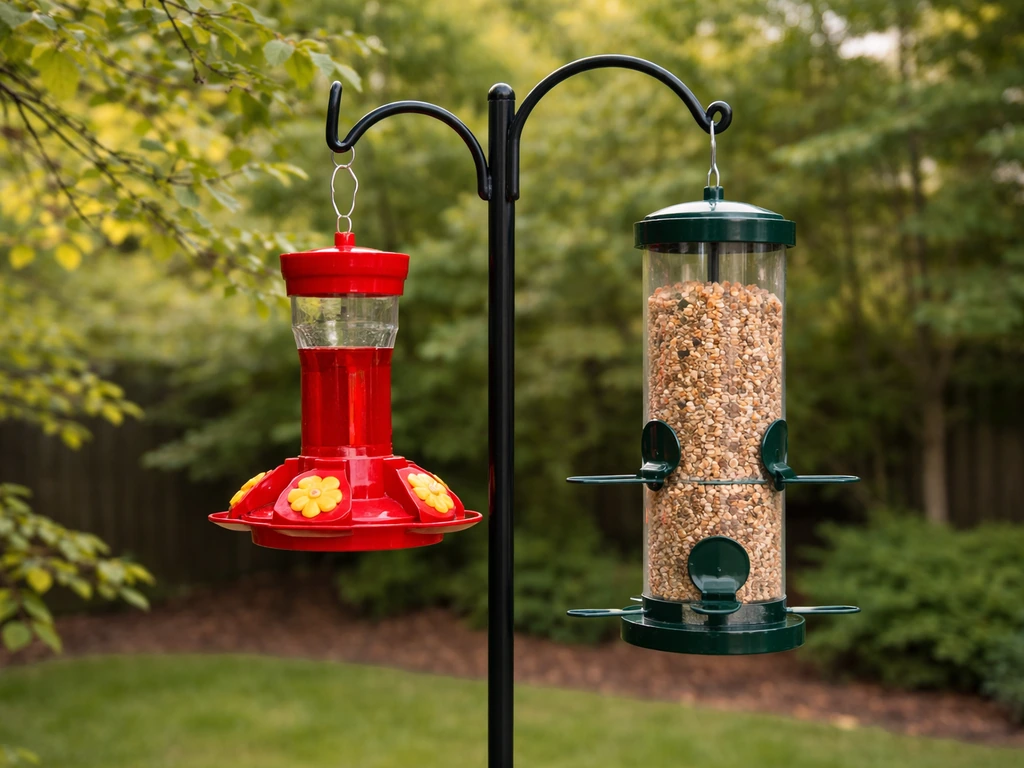
- Put seed and suet feeders on the opposite side of the yard, at least 10 to 15 feet from the hummingbird feeders. A pole with multiple arms works well here, keeping chickadees, finches, and woodpeckers in their own zone.
- Add an ant moat above each hummingbird feeder. Keep it filled with water at all times.
- Hang hummingbird feeders either within 3 feet of windows or more than 30 feet away. Apply window collision decals if you're in that in-between range.
- Set a refill schedule: check nectar every 2 days in summer heat, every 3 to 5 days in milder weather. Clean hummingbird feeders every time you refill. Check seed feeders weekly.
- Use plain white sugar at a 4: 1 water-to-sugar ratio for nectar. Never use honey, brown sugar, or red dye.
- Clean up spilled seed and hulls under seed feeders weekly to reduce rodent activity near the whole setup.
Quick checklist before you hang everything
- Are your hummingbird and seed feeders at least 10 feet apart?
- Is your hummingbird feeder hanging at 4 feet or higher off the ground?
- Does the hummingbird feeder location have afternoon shade?
- Are all feeders within 3 feet or beyond 30 feet of windows?
- Do you have an ant moat installed on each hummingbird feeder?
- Do you have a cleaning brush sized for your hummingbird feeder ports?
- Is your nectar made with plain white sugar only, at 4: 1 water to sugar?
- If you want to host multiple hummingbirds, do you have feeders spread to different parts of the yard rather than clustered together?
Mixed feeder setups work well once you've got the spacing and maintenance rhythm down. The hummingbirds get their own low-traffic zone, the seed birds get theirs, and you get a yard that's active with different species without the chaos of everyone competing in the same spot. Start with the placement basics, watch how the birds respond in the first week or two, and adjust from there. You'll know quickly if a hummingbird is being pushed out by too much activity nearby or if your nectar is going bad too fast for your current schedule.
FAQ
How far apart do hummingbird feeders and seed feeders need to be if they are on the same string or railing?
If they share the same railing, aim for 10 to 15 feet of horizontal separation between the hummingbird feeder ports and the seed or suet feeding area. If you cannot achieve that distance, increase vertical separation instead (for example, mount the seed feeder higher) and reduce traffic near the nectar by choosing a less active seed type or using a covered seed station where birds do not loiter at ground level.
Can I hang a hummingbird feeder directly above a seed feeder?
It is usually a bad idea because the birds can still overlap in the airspace and you will create constant disturbance right over the nectar. If you must do it, keep the nectar ports well away from any areas where seed birds perch or drop seed, and use a stable mounting so splashes or drips from the nectar do not land on the seed feeder.
Will having both types of feeders make hummingbirds give up faster because seed birds are there?
Most of the time hummingbirds are not deterred by seed-eating species themselves, the issue is the activity level around the seed feeder (frequent swooping, perching, and spilled seed). If you notice hummingbirds skipping the nectar, try relocating the seed feeder to a calmer perch area or use a baffle and cleaner seed setup to reduce the number of visits and the amount of debris.
What if I only have a small yard, can I still mix feeder types?
Yes, but you will need tighter management. Use multiple small hummingbird feeders spread out to prevent guarding, place nectar in a low-traffic corner or along a shrub line, and keep seed feeders in a different section or behind a physical barrier like a fence section (not just a visual separation).
Should I use one large multi-port hummingbird feeder or several smaller ones when other feeders are nearby?
Multiple small single-port feeders are often easier to manage in mixed setups because no single bird can dominate an entire “nectar zone.” In practice, placing 3 to 4 feeders at different angles around the yard reduces conflict, especially if the seed feeder area is causing background disturbance.
How do I prevent bees and wasps if my seed feeder attracts insects too?
Keep nectar fresh and dry by wiping any drips from bottle exteriors and ports during every check. Also consider feeding schedule timing, in very hot regions some people switch to more frequent changes during peak bee activity, which reduces the chance insects learn the location and linger.
Is it safe to refill hummingbird sugar water when the feeder is still full?
No, generally top-offs are a common mistake. Replace the entire solution during each cleaning cycle so mold and yeast do not accumulate, and rinse the reservoir before adding fresh nectar, especially if weather has been hot or you see cloudiness at the bottom.
Do I need to clean hummingbird feeders more often if seed feeders are close by?
Often, yes. Mixed feeder areas can increase insect presence and the chance of nectar contamination from drips or insect debris. If you see more insects around your hummingbird setup than usual, shorten the refill interval and inspect the ports closely before adding fresh sugar water.
Can rodents become a problem only because seed feeders are present, even if hummingbird feeders are separated?
Rodents are mainly drawn to seed, but their activity can increase overall clutter and spills that make your yard less hygienic. Even with separation, add pole baffles or guard seed access, clean up hulls frequently, and check the ground beneath hummingbird feeders for any wet debris from the seed area.
How do I handle placement around windows if I want to watch both hummingbirds and seed birds?
Use the window rule by mapping feeder positions so none fall into the danger zone (between about 3 feet and 30 feet). If a window view is important, consider placing seed feeders farther away and nectar feeders closer to the off-angle side of the yard, or use window screening and redirectors only where needed to reduce collision risk.
What is the best way to tell if the nearby seed feeder is stressing hummingbirds?
Look for patterns, not single events. If hummingbirds linger less than usual, stop returning after a certain time of day, or bunch up and chase repeatedly near the nectar feeder, it usually means traffic is too high or nectar quality is declining. Adjust spacing first, then adjust cleaning and shade placement.
Next Articles
Can You Put a Hummingbird Feeder Next to a Bird Feeder?
Yes. Get safe spacing tips for placing hummingbird feeders by bird feeders, avoiding conflicts and keeping nectar and se
Where to Hang Bird Feeders in Winter: Exact Placement Tips
Exact winter feeder placement tips for birds and safety: height, window distance, shelter, and troubleshooting.
Do You Leave Bird Feeders Out All Year? Seasonal Guide
Should you leave bird feeders out all year? Get seasonal tips, safe feeding, and cleaning to prevent disease and pests.