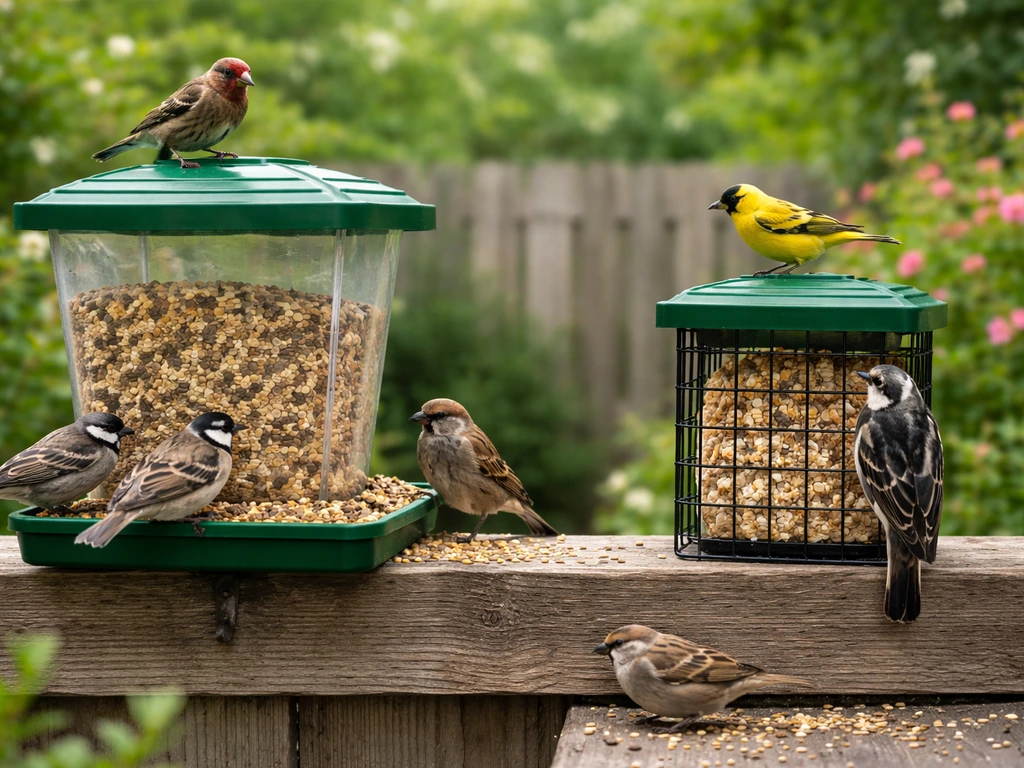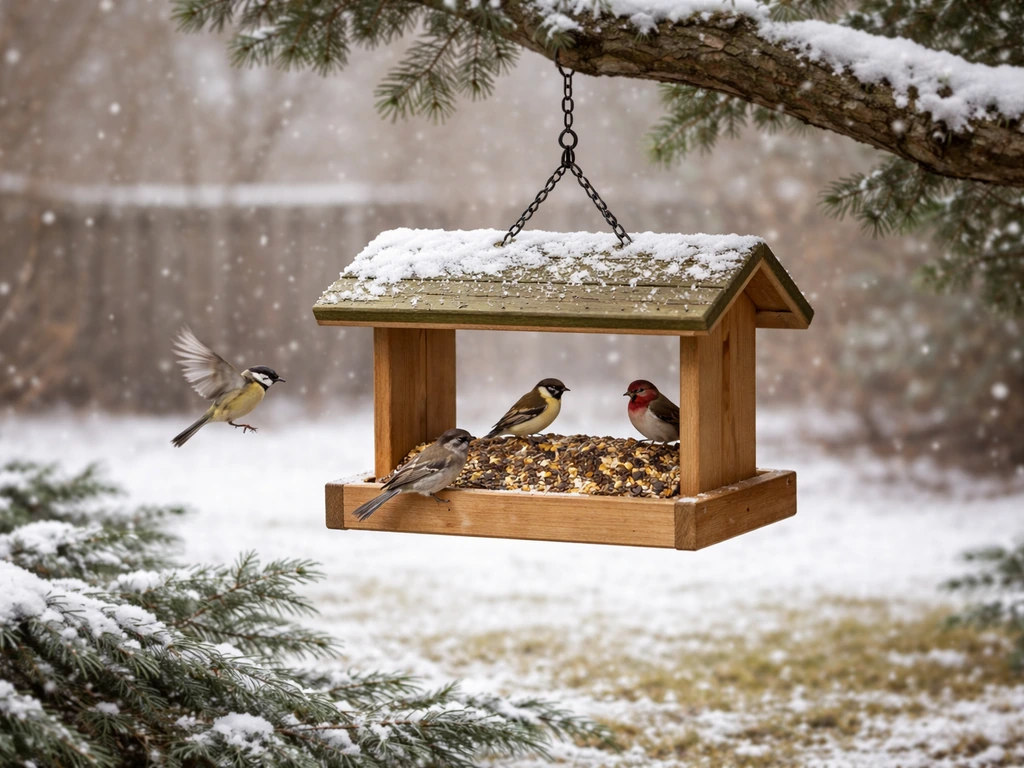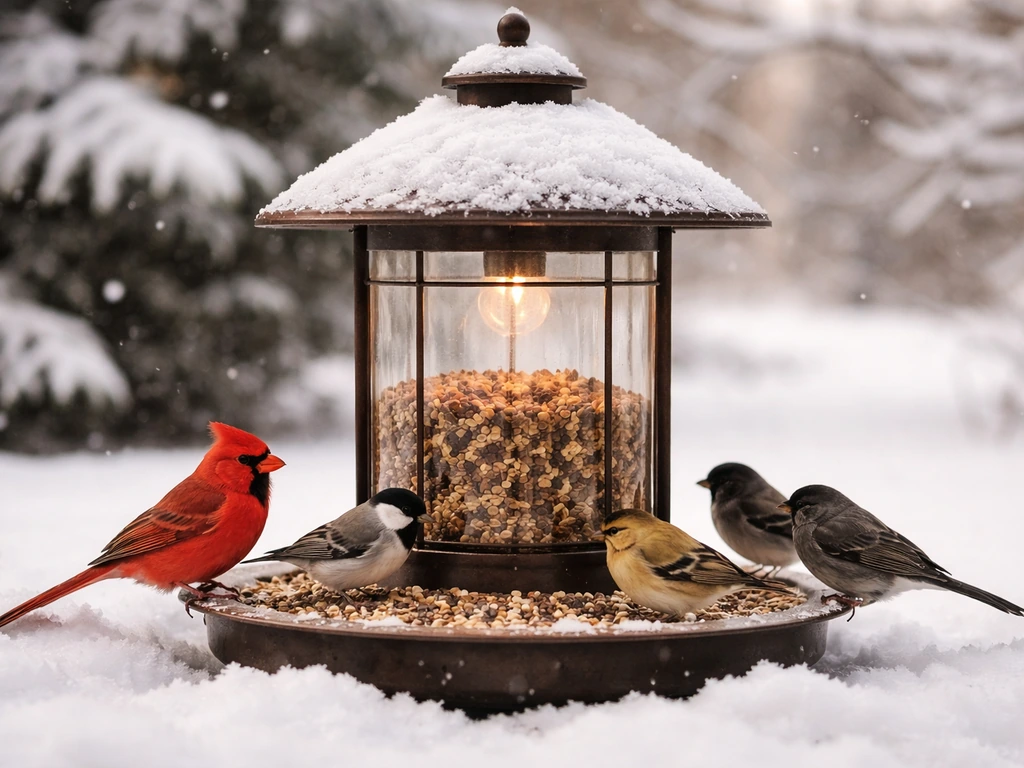
A bird feeder is a container or device you fill with food and place outside to attract wild birds. That's the simple version. Bird feeding is the practice of offering food at a feeder to attract and support wild birds in your area. In practice, bird feeders come in dozens of shapes built for specific foods and specific birds, and the feeder you choose, where you hang it, and how you maintain it will determine whether you get a backyard full of chickadees and finches or a feeder that sits ignored for weeks. If you're starting from scratch, the good news is that getting this right isn't complicated once you understand the basics.
What Are Bird Feeders? Types, Setup, and What to Feed
Eleanor Hartwick
26 Apr 2026
What a bird feeder actually is (and what it's for)
At its core, a bird feeder is a supplemental food source for wild birds. It doesn't replace natural food; it adds to it. Birding organizations like Audubon frame feeding as a way to support birds while also giving people the pleasure of watching them up close from home. That dual purpose matters: feeding done well can genuinely benefit birds, especially during harsh winters or when natural food is scarce, but feeding done carelessly can cause real problems like disease spread, dependency, and unwanted wildlife conflicts. The purpose of a bird feeder is to create a reliable, clean, and safe feeding station that birds return to predictably.
It's also worth being honest about trade-offs from the start. Feeders concentrate birds in one spot, which is exactly what makes them fun to watch but also what creates some risk. Concentrated birds can transmit infections to each other more easily than they would in the wild. That doesn't mean you shouldn't feed birds; it means hygiene and placement matter more than most beginners expect.
The main types of bird feeders and how they work
Different feeders are designed to deliver different foods in ways that match how specific birds actually eat. Here's a breakdown of the most common types you'll encounter.
| Feeder Type | How It Works | Best Food | Birds It Attracts |
|---|---|---|---|
| Hopper feeder | Enclosed walls and a roof protect seed from weather; birds perch on a tray below and feed | Sunflower seeds, mixed seed | Cardinals, jays, juncos, sparrows, finches |
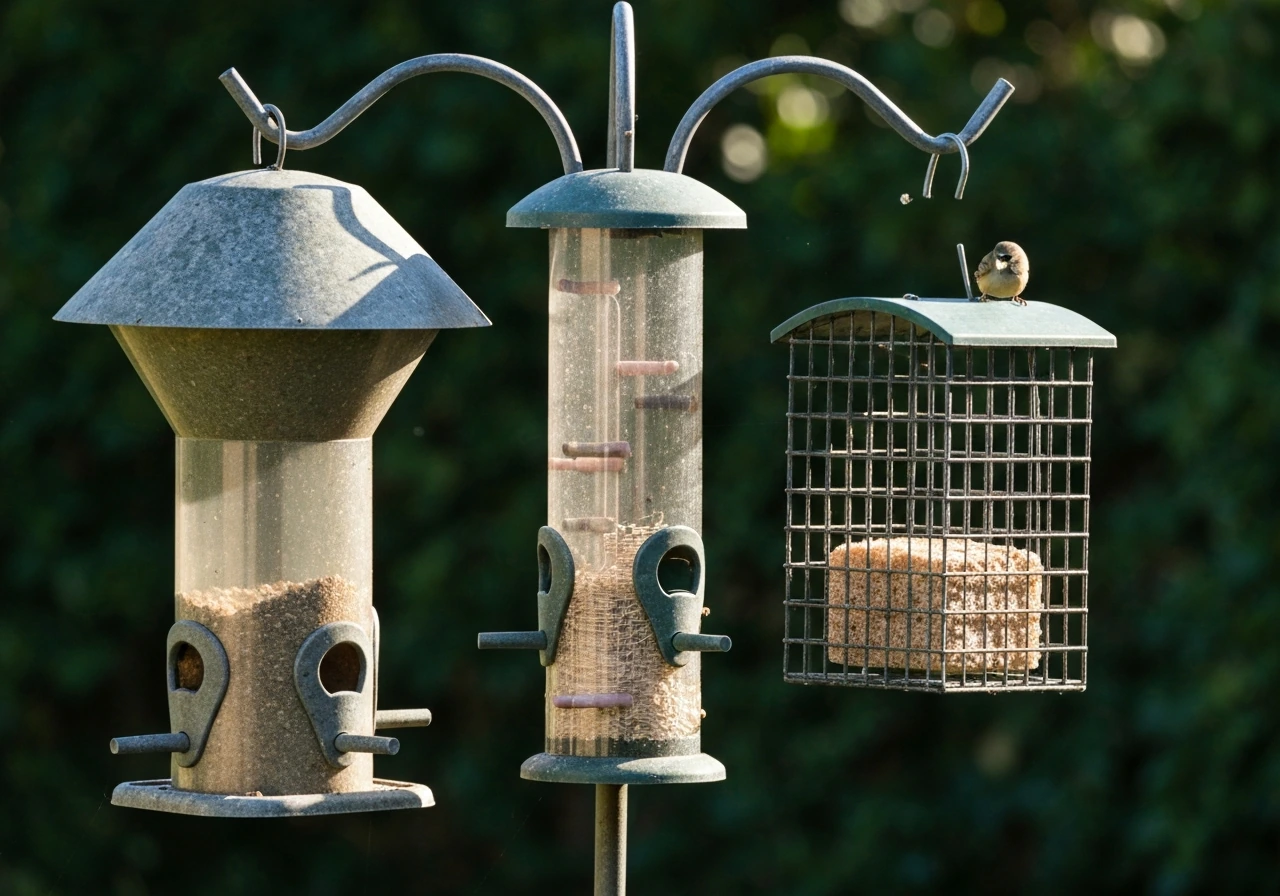
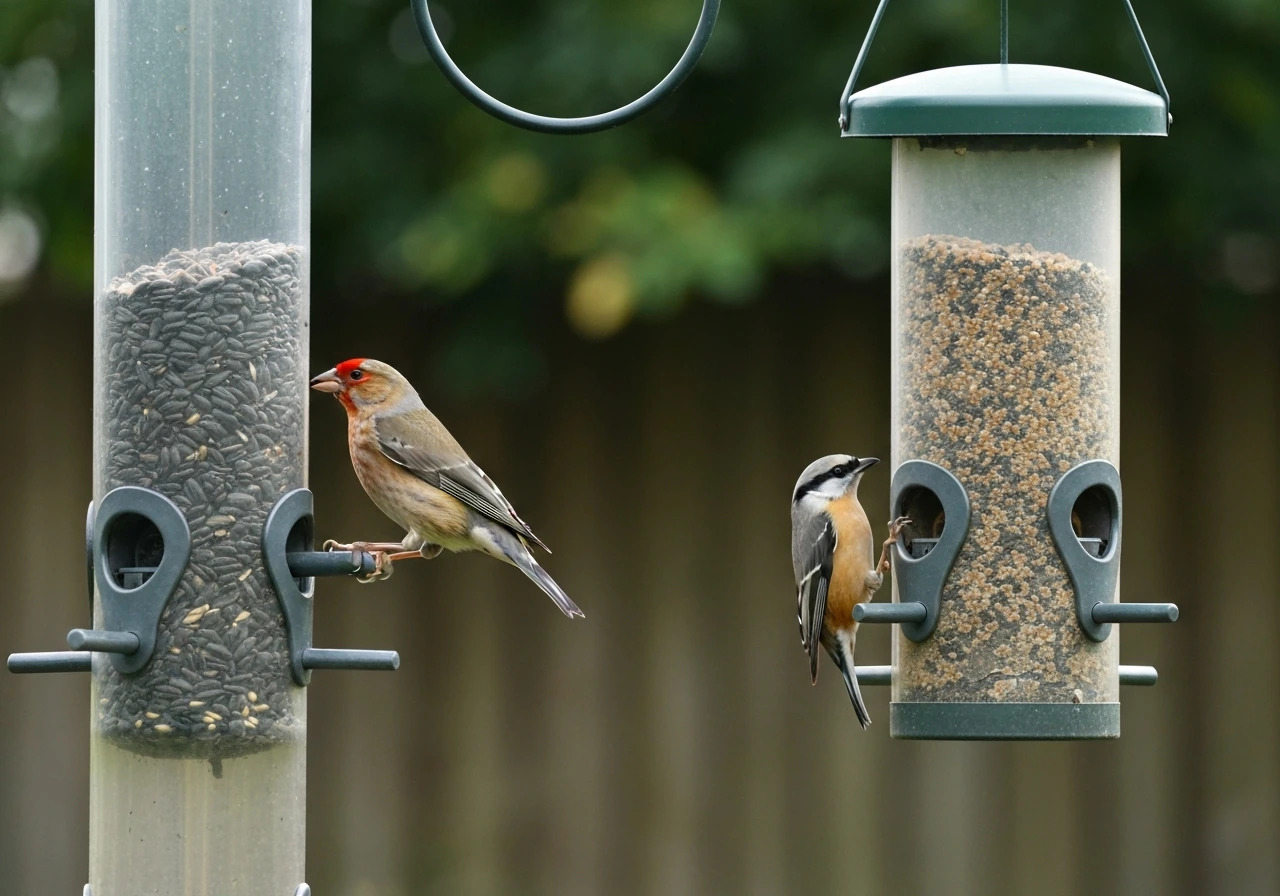
| Tube feeder | Hollow cylinder with multiple small ports and perches; birds cling and pick seeds out one at a time | Sunflower seeds, nyjer (thistle) | Finches, chickadees, nuthatches, siskins |
| Platform (tray) feeder | Open flat surface; no shelter, seed exposed to weather; accessible from any angle | Almost any seed or fruit | Ground-feeding birds: doves, sparrows, towhees |
| Suet feeder | Wire cage or mesh that holds a suet cake; birds peck and cling to extract fat and protein | Suet cakes | Woodpeckers, nuthatches, wrens, starlings |
| Nectar feeder | Sealed reservoir dispenses sugar water through small feeding ports | Sugar water (nectar) | Hummingbirds, orioles |
| Nyjer (thistle) feeder | Fine-mesh or tiny-port tube designed specifically for small seeds that would fall out of standard ports | Nyjer seed | Goldfinches, pine siskins, redpolls |
Hopper feeders and tube feeders are the most versatile starting points for beginners. Hopper feeders hold a larger volume of seed and protect it reasonably well from rain. Tube feeders are great for attracting finches and can be fitted with a nyjer sock or fine-mesh attachment to go after goldfinches specifically. Suet feeders are extremely effective in fall and winter when birds need high-energy food, and nectar feeders open up a completely separate world of hummingbird watching from late spring through early fall in most of North America.
Matching the feeder to the birds you actually want
Before you buy anything, spend a few minutes watching what birds are already in your yard or neighborhood. The birds already present are the most reliable predictor of what you'll attract. If you see American goldfinches on nearby plants, a nyjer tube feeder will bring them in fast. If you have woodpeckers working the trees in your yard, a suet cage hung on a tree trunk will get results within days.
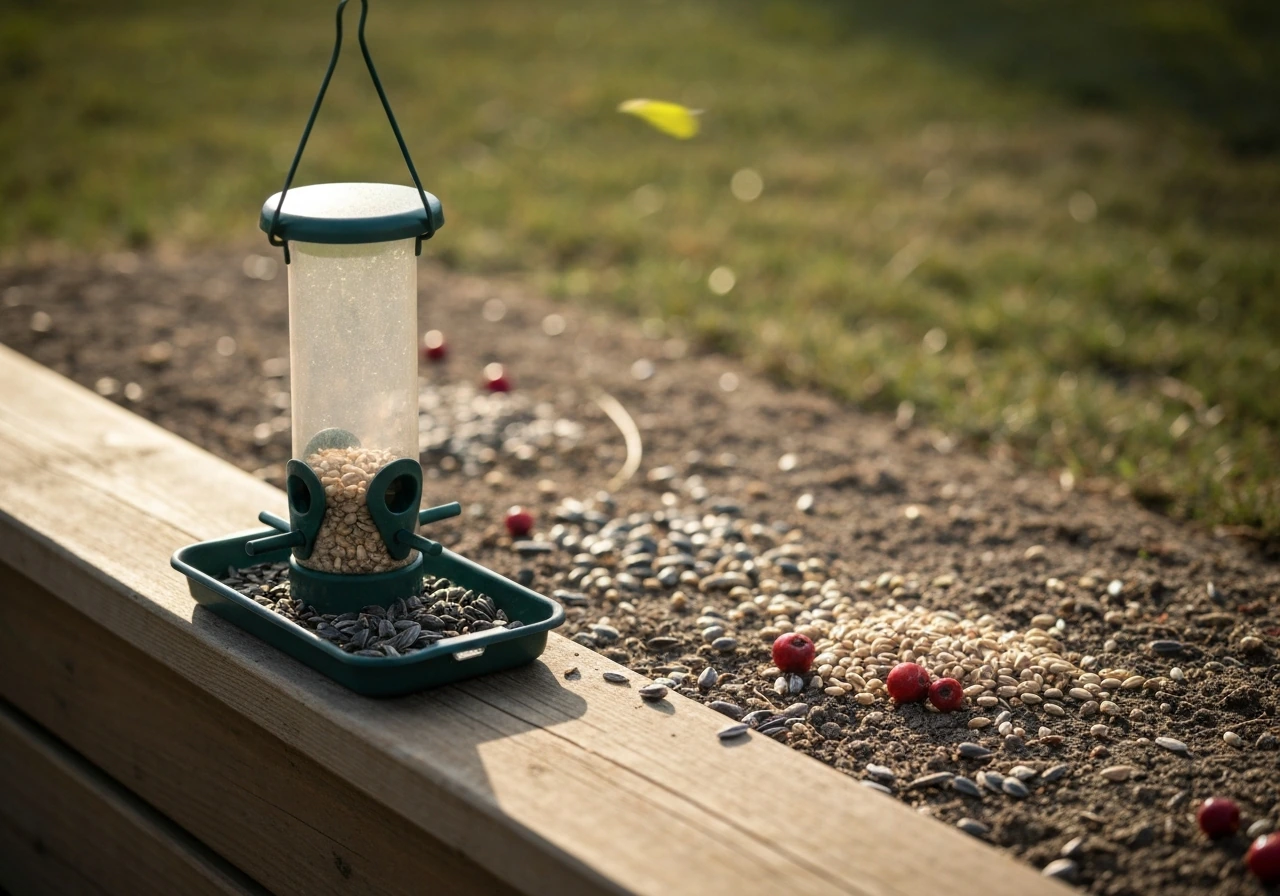
For most beginners in North America, a single hopper or tube feeder filled with black-oil sunflower seeds is the most effective starting point. Black-oil sunflower seeds have a thin shell that almost every feeder bird can crack, and they're one of the most universally attractive foods available. Avoid cheap mixed seed bags that are padded with filler seeds like milo or wheat; many birds pick around these and kick them to the ground, which creates mess, waste, and a pile of rotting seed under your feeder.
- Chickadees, nuthatches, titmice: tube feeder or hopper with black-oil sunflower seed
- American goldfinches, pine siskins: nyjer feeder or fine-mesh sock
- Northern cardinals, blue jays: hopper feeder, platform tray, or large-port tube
- Woodpeckers, wrens, nuthatches: suet cage feeder, especially in cold months
- Hummingbirds: nectar feeder with fresh sugar water (1 part sugar to 4 parts water)
- Mourning doves, juncos, sparrows: low platform tray or scattered seed on the ground
Where to put your bird feeder
Placement is probably the most underestimated factor in getting a feeder to work. Two rules drive almost everything here: visibility for birds and safety for birds.
Distance from windows
Window collisions kill a staggering number of birds every year, and feeders placed at the wrong distance are a significant cause. Audubon recommends placing feeders either within 3 feet of a window or more than 30 feet away. The logic is counterintuitive: a feeder close to the window (on the glass itself or within 3 feet) means any bird that flushes won't have enough room to build fatal momentum. A feeder more than 30 feet away gives birds enough distance to see the house as a structure and fly around it. The danger zone is the middle range, roughly 4 to 30 feet, where birds can gain speed but still fly directly into the glass.
Cover, open space, and predator exposure
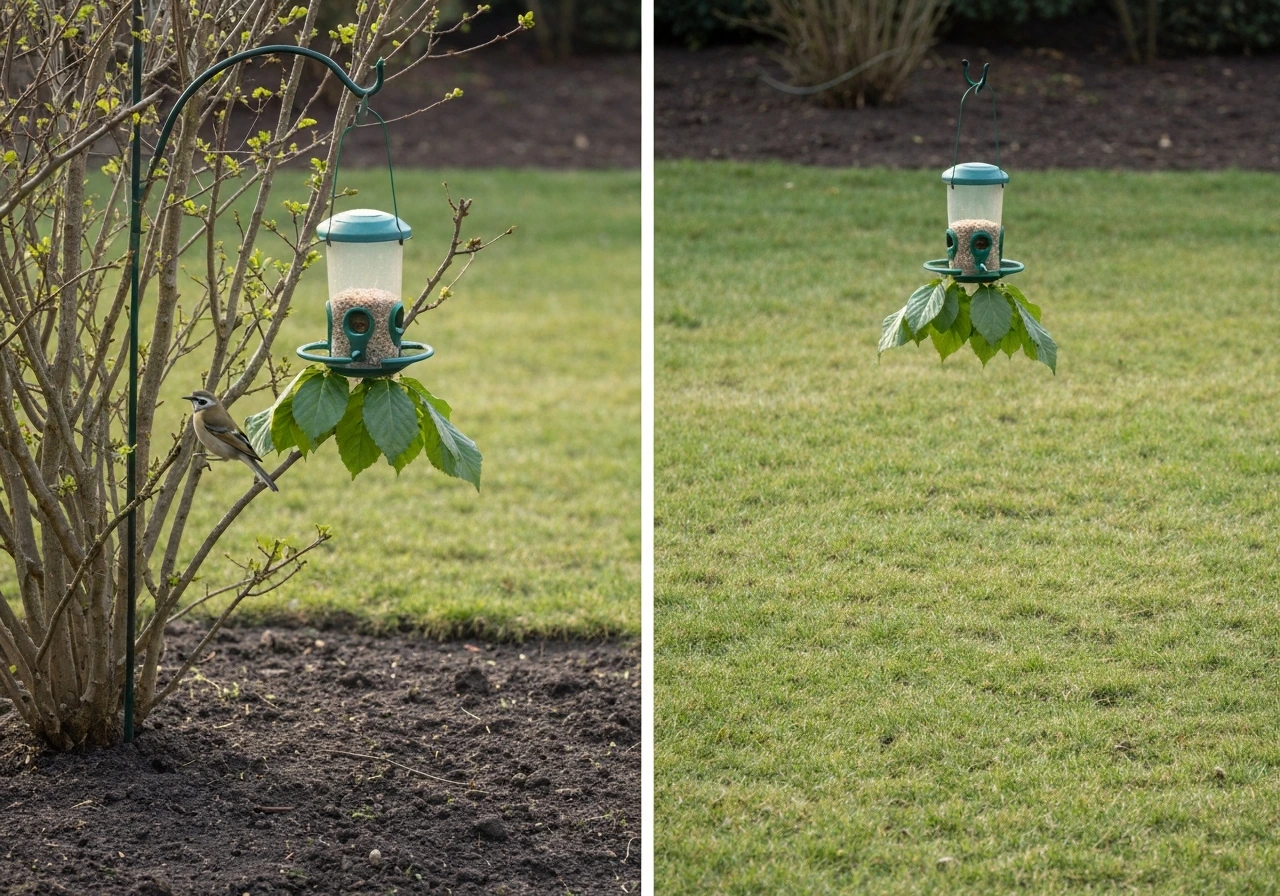
Birds feel safer feeding when there's some cover nearby to escape into quickly. Placing a feeder within about 10 feet of a shrub or small tree gives birds a quick refuge from hawks. At the same time, don't crowd the feeder into dense brush where cats can hide and ambush birds from below. A setup that's open enough for you to watch clearly but close enough to natural cover for birds to dart into is the sweet spot. If cats are a problem in your area, a pole-mounted feeder with a baffle (a cone or cylinder that prevents climbing) at least 5 feet off the ground and away from any surface cats could jump from works well.
Sun, wind, and rain exposure
Seed lasts longer when it stays dry, so orienting a hopper or tube feeder to avoid prevailing wind and rain exposure extends how long a fill stays fresh. Full afternoon sun on a nectar feeder will cause sugar water to ferment faster, which is bad for hummingbirds, so shade during the hottest part of the day is genuinely useful for nectar feeders.
What to put in feeders and how to manage it
The food matters as much as the feeder type. Here's what works for the most common feeding setups.
- Black-oil sunflower seed: the single best all-purpose choice for seed feeders; attracts the widest range of species
- Nyjer (thistle) seed: small and oil-rich, best for finches; requires a specialized fine-mesh feeder
- Suet cakes: high-calorie blocks of rendered fat mixed with seeds or fruit; essential for woodpeckers and insect-eating birds in winter
- Sugar water (nectar): 1 part plain white sugar dissolved in 4 parts water, cooled before filling; do not use honey, artificial sweeteners, or red dye
- Safflower seed: bitter taste deters squirrels and starlings but appeals to cardinals and doves
- Fruit and jelly: halved oranges or grape jelly in small cups attract orioles in spring and summer
For nectar, you can make a larger batch and refrigerate the extra for up to one week. Don't push it past that; old sugar water can grow mold and bacteria that harm hummingbirds. For nectar feeders, the sugar mix matters, so it helps to know how much sugar to use for the feeder you have how much sugar for nectar feeder. For seed, only fill feeders with as much as birds will consume in a few days during wet or humid weather. Wet seed molds quickly, and moldy seed is toxic to birds.
Keeping feeders clean and adjusting through the seasons
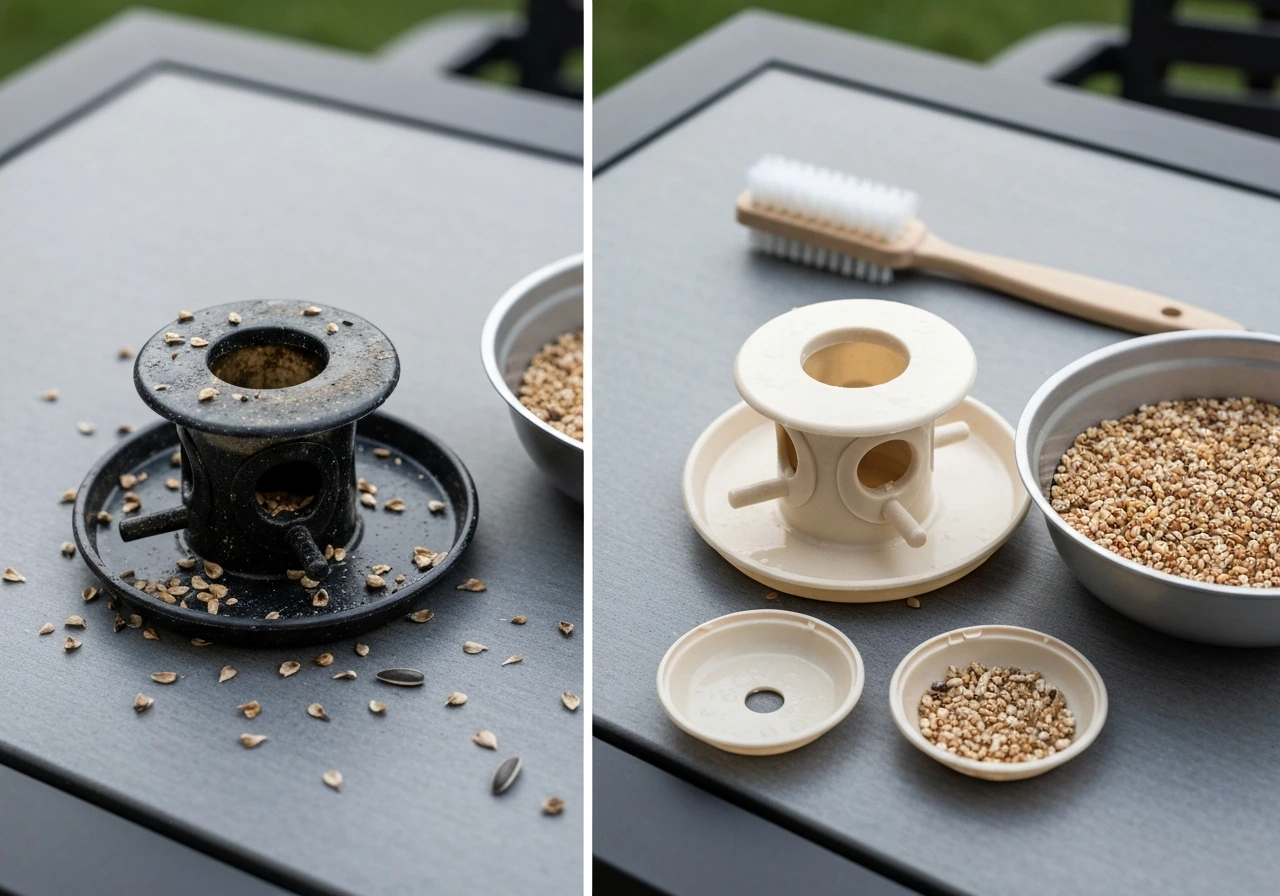
Cleaning is non-negotiable if you're going to feed birds responsibly. Dirty feeders harbor bacteria, mold, and pathogens that can spread quickly through a concentrated group of birds. The minimum standard is cleaning seed feeders at least once every two weeks, though once a week is better in warm weather. Nectar feeders need cleaning every 2 to 5 days depending on temperature; in hot summer weather, sugar water ferments in 2 days or less.
For a proper clean, scrub all surfaces to remove seed hulls, droppings, and debris, then soak the feeder in a solution of 1 part bleach to 9 parts water for 10 minutes. Rinse thoroughly and let it dry completely before refilling. This approach addresses mold, bacteria, and most pathogens. Suet feeders need scrubbing too, especially in summer when fat can go rancid quickly. Many people take suet feeders down entirely in summer for that reason.
Seasonal adjustments worth making
- Spring: put nectar feeders up before hummingbirds arrive in your region; add fruit and jelly for orioles; watch for migrating species that may appear briefly
- Summer: clean nectar feeders more frequently as heat speeds fermentation; consider reducing or stopping feeding if local disease outbreaks are reported
- Fall: suet feeders become more valuable as temperatures drop and birds need high-energy food; switch to weather-resistant hopper feeders
- Winter: keep feeders well-stocked and clear snow from tray feeders after storms; this is when supplemental feeding genuinely helps birds most in cold climates
Safety issues, unwanted visitors, and being honest about the risks
Bird feeders can attract more than birds. Squirrels, raccoons, bears, deer, and rats will all investigate a food source if given the chance. Squirrels are the most common frustration: a squirrel-proof feeder (usually a weight-sensitive mechanism that closes ports when heavier animals land) or a pole-mounted setup with a baffle will reduce but rarely eliminate the problem. In bear country, take feeders inside at night or bring them in entirely between spring and late fall when bears are active. Virginia's Department of Wildlife Resources specifically warns that feeders can cause unnatural wildlife concentrations that increase disease risk in non-bird species too.
Disease spread among birds is a real concern. Concentrating birds at a feeder creates conditions where respiratory illness, salmonellosis, and other infections can pass from bird to bird more easily than in the wild. The U.S. Fish and Wildlife Service notes that while bird feeders aren't considered a major driver of avian influenza spread for typical backyard feeder birds like finches and sparrows, the general principle holds: feeders concentrate birds, and concentrated birds are more likely to share illness. Regular cleaning, removing sick or dead birds promptly (wearing gloves), and spreading the word in your neighborhood when local outbreaks occur are all responsible practices.
If birds aren't showing up at your new feeder, don't panic. It can take a few days to a few weeks for local birds to find and trust a new food source, especially if there's no established feeding activity in your area. In other words, the bird feeder activity in your area is what determines how quickly birds discover and start using your feeder what is bird feeder activity. Try placing the feeder in a more visible, open location with clear flight paths to it. If you're using a seed mix with lots of filler seeds, switch to straight black-oil sunflower seed. And double-check your feeder placement against the window-collision rules: a feeder placed in the problem zone may be spooking birds that flush and hit the glass.
The cost and complexity of feeding can vary a lot. If you're wondering why are bird feeders so expensive, it's usually due to the materials, design features, and ongoing maintenance needed to keep them effective and safe cost. Hopper, tube, and squirrel-resistant models often cost more too, which is why droll yankee bird feeders can be surprisingly expensive why are droll yankee bird feeders so expensive. If you want a quick ballpark on how much are bird feeders, the best approach is to compare feeder type, capacity, and maintenance needs before you buy The cost and complexity of feeding can vary a lot.. A basic tube feeder costs very little, but specialty feeders designed to resist squirrels or made from durable materials can run significantly higher. If you're curious about what different feeder types cost before committing, that's worth researching separately. What matters most at the start is picking one good feeder, filling it with the right food, placing it correctly, and committing to keeping it clean. Get those fundamentals right, and the birds will find you.
FAQ
What are bird feeders used for, besides just watching birds?
They’re mainly a way to provide supplemental food when natural sources are limited, like during winter cold snaps or periods of drought. A feeder can also help you monitor which species are visiting your yard over time, which is useful for deciding what food and feeder types to match.
Should I feed birds year-round, or only in certain seasons?
Many people start with winter and spring because natural food can be scarce, then switch to more tailored foods later. In summer, extra care is needed to keep seed dry and nectar fresh, and some feeders (like suet) are often taken down due to faster spoilage.
How long will it take before birds notice a new feeder?
Often it takes days to a few weeks, especially if there wasn’t established feeding activity nearby. If nothing shows up after a couple of weeks, re-check the food choice, clean condition of the feeder, and whether placement gives birds an easy view and a safe escape spot.
Why do birds ignore my feeder even though it’s full?
Common causes are filler-heavy seed mixes, seed that’s getting wet and going bad, or placement in the “window collision zone” where birds avoid approaching. Also confirm the feeder type matches the target birds (for example, finches need a fine-mesh or proper tube setup, not a large hopper meant for bulk seed).
What’s the best starting seed if I’m not sure what birds I’ll attract?
Black-oil sunflower seed is usually the safest bet because many feeder birds can crack it easily and it tends to draw a wide variety. If you still see lots of waste on the ground, reduce the mix components or switch away from padded filler seeds.
How much seed or nectar should I put out so I don’t waste food?
For seed, fill only what birds can reasonably consume in a few days in wet or humid weather, since wet seed can mold quickly. For nectar, make and refrigerate only the extra you can use within about a week, because older nectar loses freshness faster and becomes unsafe.
How often do bird feeders need to be cleaned in cold vs hot weather?
Seed feeders are typically cleaned at least every two weeks, but warm conditions push that to about once per week. Nectar feeders need more frequent attention, and in hot weather you may need to refresh sugar water every few days because fermentation accelerates.
What’s the safest way to clean without leaving residue?
Scrub off hulls, droppings, and debris first, then use a diluted bleach soak (commonly 1 part bleach to 9 parts water) for about 10 minutes. Rinse thoroughly and let the feeder dry completely before refilling, so you don’t leave lingering chemical residue.
Can I use the same feeder for different foods?
It’s better to keep feeders dedicated because leftover residue can contaminate the next food type. If you switch from seed to nectar or suet to seed, clean thoroughly and consider using separate feeders to avoid cross-contamination and spoilage.
What should I do if I find sick birds or dead birds near the feeder?
Remove sick or dead birds promptly while wearing gloves, then clean the feeder and surrounding area before refilling. If there’s a local outbreak reported in your area, pause feeding temporarily and follow community guidance to reduce disease spread.
How do I reduce squirrels without attracting other animals?
A squirrel-resistant design (often weight-sensitive) or a pole-mounted setup with a baffle usually cuts down on access. Don’t place feeders in locations that help animals reach them easily, and secure the feeder so it’s not reachable from nearby branches or structures.
What’s the best feeder height if cats are a concern?
A pole-mounted feeder with a baffle, placed at least about 5 feet off the ground and away from surfaces cats could jump from, lowers the chance of ambush. At the same time, don’t put the feeder so deep into dense cover that birds can’t escape quickly.
What’s the window-collision rule for feeder placement?
Avoid placing feeders in the intermediate distance range where birds can gain speed and hit glass. As a practical guideline, keep feeders very close to windows (within about 3 feet) or place them more than about 30 feet away, and use clear visibility so birds can navigate safely.
Do bird feeders attract non-bird animals, and is that always dangerous?
They can attract animals like squirrels and raccoons, and in some regions bears may investigate food sources. This doesn’t automatically mean danger, but you should use appropriate containment, in bear country bring feeders in at night, and follow local wildlife guidance to reduce risk and unnatural animal concentrations.
Are bird feeders worth it if I’m worried about disease?
Yes, but responsibility matters most, because feeders concentrate birds. Consistent cleaning, removing debris, not overfilling in wet weather, and pausing when outbreaks occur are the practical steps that make feeding safer for the birds that return.