Bird feeding restrictions are real, vary wildly by location, and can come from multiple sources at once: your city or county code, your HOA, a state wildlife agency, a park district, or a temporary disease-outbreak advisory. Most backyard feeders are operating legally and doing fine, but if you've gotten a complaint, noticed a wildlife conflict, or just want to be sure you're in the clear, you can usually sort out your situation within a day or two by checking a handful of sources and making a few small adjustments to your setup.
Bird Feeding Restrictions Guide: What’s Allowed and How to Comply

Eleanor Hartwick
9 Jul 2026
What bird feeder restrictions actually cover
When people talk about bird feeding restrictions, they're usually lumping together several different types of rules that don't always come from the same place. It helps to separate them so you know which one is actually relevant to your situation.
- Municipal or county ordinances: Local codes that govern where feeders can be placed, how much seed can be put out at once, and whether spillage is allowed. Berwyn, Illinois, for example, requires feeders be designed to limit excess spillage and sets a minimum distance of 5 feet from any lot line and 15 feet from residential buildings on neighboring lots. Secaucus, New Jersey limits fills to no more than 10 ounces at a time and bans scattering seed on the ground.
- Park and public land rules: Park districts frequently prohibit all wildlife feeding in natural areas. The Chicago Park District and Oak Brook Park District both explicitly ban feeding birds and wildlife on their properties. The East Bay Regional Park District does the same, noting that feeding habituates wildlife and disrupts natural foraging.
- HOA and community covenants: Many HOA documents include a bird feeders section that limits feeding to commercially manufactured products and can restrict or suspend feeding during periods of heightened nuisance wildlife activity.
- State wildlife agency advisories: During disease outbreaks like highly pathogenic avian influenza (HPAI), state agencies may issue temporary take-down or cleaning advisories. These aren't always legally binding ordinances, but ignoring them during active outbreaks can have real consequences for local bird populations.
- Landlord rules: If you're renting, your lease may include restrictions on feeders, especially if you're in a multi-unit building where seed spillage affects shared spaces or attracts pests to neighboring units.
The thing is, most of these rules don't conflict with each other, but they can stack. Your city might allow feeders with certain placement rules, your HOA might require commercially made products only, and your state wildlife agency might currently have a cleaning advisory in place. You may need to comply with all three simultaneously.
How to find the exact rules that apply to you

This is the part most people skip, and it's where the real answer lives. Here's a practical sequence for tracking down your specific situation, in order of how likely each source is to apply to you.
- Search your city or county code: Go to your municipality's official website and search for terms like 'bird feeder,' 'wildlife feeding,' or 'animal feeding.' Many cities use online code libraries like Municode or eCode360. If you can't find it yourself, call your city clerk's office and ask whether there are any animal or nuisance ordinances that cover bird feeders.
- Check your HOA documents: Pull out your CC&Rs (Covenants, Conditions, and Restrictions) and community rules document and search for 'bird feeder,' 'feeding,' or 'nuisance.' If you don't have a copy, request one from your HOA management company.
- Check your state wildlife agency website: Search '[your state] DNR bird feeder' or '[your state] fish and wildlife bird feeding.' Look especially for any current HPAI advisories, which are typically listed under news releases or disease alerts.
- Check your local park or nature area rules: If your feeder is on or very near park property, or if you're trying to feed birds in a park, look up the specific park district's rules. Don't assume public land means open land.
- Review your lease: If you rent, read any relevant sections about exterior modifications, pest attraction, or balcony use.
- Search local news or community boards: Sometimes a city ordinance gets enforced after a neighbor complains, and local news coverage or Nextdoor posts can give you early warning about active enforcement in your neighborhood.
Most of this research takes under an hour. If you can't find a specific ordinance and there's no HOA, you're probably in the clear legally, but you still have a responsibility to manage your feeder in a way that doesn't create problems for neighbors or wildlife.
Why restrictions exist in the first place
Understanding the 'why' makes it much easier to comply intelligently rather than just checking boxes. Restrictions generally exist for four overlapping reasons: public health, wildlife health, nuisance and safety, and environmental impact.
Disease transmission
Bird feeders concentrate birds that wouldn't otherwise interact, and that creates real disease transmission risk. The APHIS fact sheet emphasizes wildlife-attraction mitigation as part of an integrated approach to preventing avian influenza transmission [disease transmission risk](https://www. aphis. usda.
gov/sites/default/files/fs-manage-wildlife-prevent-ai. 508. pdf). The CDC linked a salmonella outbreak directly to wild songbirds congregating at feeders.
HPAI has prompted advisories from multiple state agencies including Michigan DNR, Iowa DNR, and Utah DWR. That said, the U. S. Fish and Wildlife Service notes that the species most commonly visiting backyard feeders are not the ones most commonly infected with HPAI, so the risk at a typical backyard feeder is lower than some headlines suggest.
Still, a dirty feeder is a legitimate disease vector, and that's exactly why cleaning requirements appear in both local ordinances and health advisories.
Nuisance wildlife and neighbor complaints
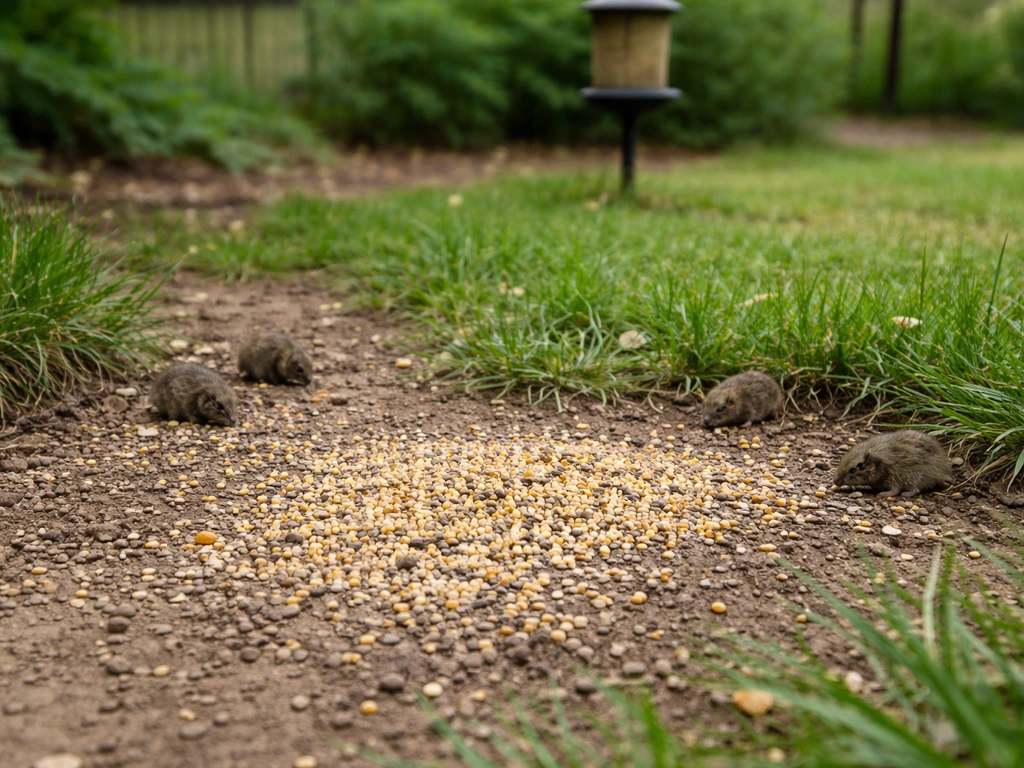
Spillage and mess are the number-one reason neighbors complain and the number-one reason ordinances get written. Seed on the ground attracts rats, mice, raccoons, squirrels, and in some areas bears. California's Wildlife Health Lab specifically flags that feeders can attract nuisance wildlife and pests as a documented negative side effect. Local codes in places like Secaucus and Berwyn are written precisely to head this off before it becomes a neighborhood conflict. If a city health commissioner receives enough complaints about a feeder, they can declare it a public health nuisance, and you can face fines or an order to remove it.
Habituation and environmental impact
Park districts prohibit feeding partly because birds and other wildlife that become accustomed to human food sources can lose their natural foraging behavior, become bold around people, and suffer when those food sources disappear. The East Bay Regional Park District cites this explicitly. In natural areas with sensitive ecosystems, even well-intentioned feeding can disrupt native bird communities by favoring generalist species over specialists.
What restrictions typically look like in practice
Restrictions aren't one-size-fits-all, but they tend to cluster around a handful of categories. Here's what you're most likely to encounter.
| Restriction Type | Common Rule | Real Example |
|---|---|---|
| Food type or amount | Limits on how much seed per fill; no ground scattering | Secaucus, NJ: max 10 oz per fill; no seed thrown on ground |
| Feeder placement | Minimum distances from property lines or neighboring buildings | Berwyn, IL: 5 ft from lot line, 15 ft from adjacent residential buildings |
| Feeder design | Must be commercially manufactured; must limit spillage | Berwyn, IL requires spillage-limiting design; HOA rules require commercial products only |
| Spillage cleanup | No accumulation of seed/waste under or around feeder | Independence, OH: spilled food under feeder is prohibited |
| Location-based ban | No feeding in parks, natural areas, or public land | Chicago Park District and Oak Brook Park District: all wildlife feeding banned |
| Seasonal or outbreak-based ban | Temporary suspension during disease events or high-nuisance periods | HOA covenants and state agency advisories during HPAI outbreaks |
| Sanitation requirements | Mandatory cleaning schedules or disinfection protocols | Michigan DNR: 10% bleach solution cleaning; CDC: at least monthly cleaning |
If you're in a suburban backyard with no HOA and no active disease advisory, your restrictions are likely limited to basic ordinance rules about placement and spillage. If you're in a dense urban area, near a park, or in a community with an active HOA, you may be dealing with several of these at once.
How to build a compliant feeding plan in the next 1 to 3 days
Here's a practical sequence you can actually complete this week. Go through these steps in order, and by the end you'll know exactly where you stand and what, if anything, needs to change.
- Day 1 – Do the research: Spend 30 to 60 minutes checking your city code, HOA documents, state wildlife agency website, and lease (if applicable) using the method described above. Write down any specific rules you find.
- Day 1 – Check for active disease advisories: Go to your state wildlife or DNR website and look for any current HPAI or salmonella advisories. If there's an active outbreak in your area, that changes your cleaning schedule and possibly whether you should be feeding at all.
- Day 1 – Measure your current placement: Pull out a tape measure and verify your feeder's distance from lot lines, neighboring structures, and any waterways or trails. Compare against any ordinance requirements you found.
- Day 2 – Assess your feeder design and seed management: Is your feeder commercially made? Does it have a tray or baffle to catch spillage? Are you putting out more seed than local rules allow per fill? Note any gaps.
- Day 2 – Clean your feeder now: Regardless of whether a cleaning requirement is explicitly in your local rules, clean your feeder today. Use a 10% bleach solution (1 part bleach, 9 parts water), soak for at least 10 minutes per CDC guidance, scrub thoroughly, rinse well, and let it dry completely before refilling. This addresses disease risk, satisfies most sanitation requirements, and is good practice.
- Day 2 – Clear ground spillage: Rake or sweep up any seed, hulls, or waste under your feeder. This is the single most common compliance issue and the most common trigger for neighbor complaints.
- Day 3 – Make any needed adjustments: Move the feeder if it's out of compliance on placement. Swap to a tighter feeder design if spillage is excessive. Reduce fill quantity if local rules require it. Add a squirrel baffle or catch tray if wildlife conflicts are a concern.
- Day 3 – Set a maintenance schedule: Mark monthly feeder cleanings on your calendar. Decide on a weekly ground-check routine. If you're in an area with seasonal restrictions, note the relevant dates.
If you want more granular guidance on setup choices, the dos and don'ts of feeder placement, or species-specific feeding approaches, those topics are worth exploring separately once your compliance baseline is solid. As you choose a setup, follow a clear set of bird feeder dos and don'ts to reduce disease and neighbor issues.
If feeding is restricted or banned where you are
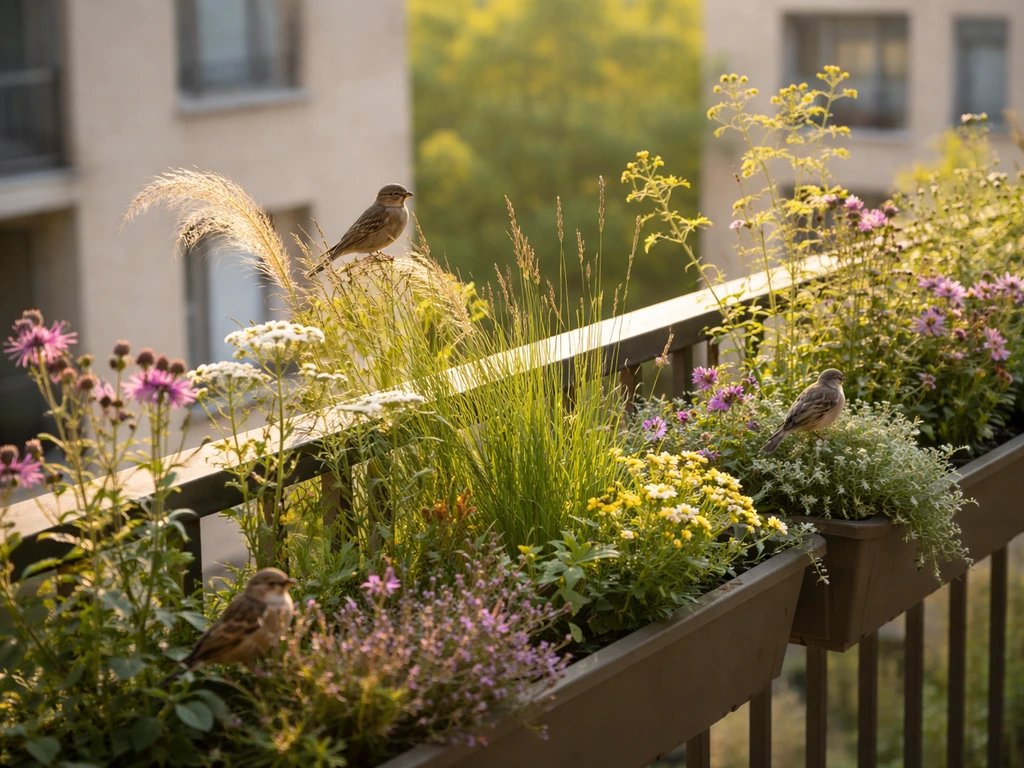
A feeder ban doesn't mean you can't support local birds. There are genuinely effective alternatives that work within legal restrictions and often do more ecological good than a feeder anyway.
- Plant native food sources: Native shrubs, grasses, and flowering plants produce seeds, berries, and insects that birds rely on year-round. Plants like serviceberry, native sunflowers, coneflowers, and dogwood provide food without the disease and nuisance risks of a feeder. This is the single most impactful thing most people can do for birds and it's legal everywhere.
- Create feeder-free habitat: Dense shrubs, brush piles, and water sources (birdbaths with fresh water) provide shelter and hydration without attracting the wildlife conflicts that feeders can cause. Keep any birdbath cleaned weekly to avoid mosquito breeding and disease transmission.
- Timed or seasonal feeding: If your HOA or local rules allow feeding with restrictions during certain periods, time your feeding to align with those windows, typically winter months when natural food is scarcest and nuisance wildlife pressure is lower.
- Switch to a compliant feeder design: If your current feeder is the problem (too much spillage, wrong type, wrong placement), replacing it with a squirrel-proof, low-spillage commercial feeder placed correctly may bring you back into compliance without giving up feeding altogether.
- Advocate for reasonable local rules: If you think a local ban is overly broad, attend a city council meeting or contact your HOA board. Some ordinances get written reactively after a single complaint and can be revisited with community input.
Troubleshooting the most common problems
Most 'I think my feeder is causing a problem' situations fall into a small number of categories. Here's how to address each one specifically.
You're attracting rats, mice, or raccoons
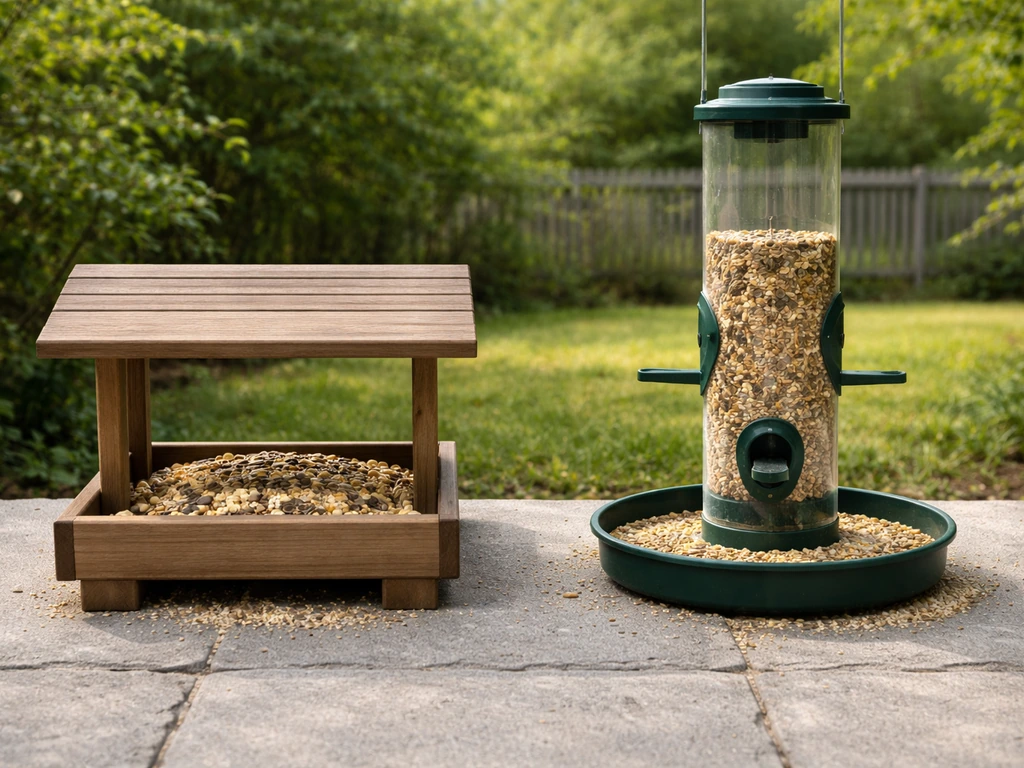
This is almost always a spillage and ground-seed issue. Switch to a tube feeder or a feeder with a deep catch tray, reduce your fill quantity so birds consume what's available before it falls, and clean up ground waste at least every two to three days. If you're using a platform feeder or ground feeder, consider switching to an elevated tube or hopper design. A squirrel baffle on the pole also makes it harder for larger mammals to access the feeder itself.
You've received a neighbor complaint or municipal notice
Don't ignore it. Address ground spillage and cleanliness immediately, then check your local ordinance to confirm your feeder meets placement and design requirements. If you've resolved the underlying issue, document what you've done. If the complaint escalates to a formal nuisance complaint handled by a health commissioner or code enforcement officer, having a record of your corrective steps matters.
Birds at your feeder are showing signs of illness
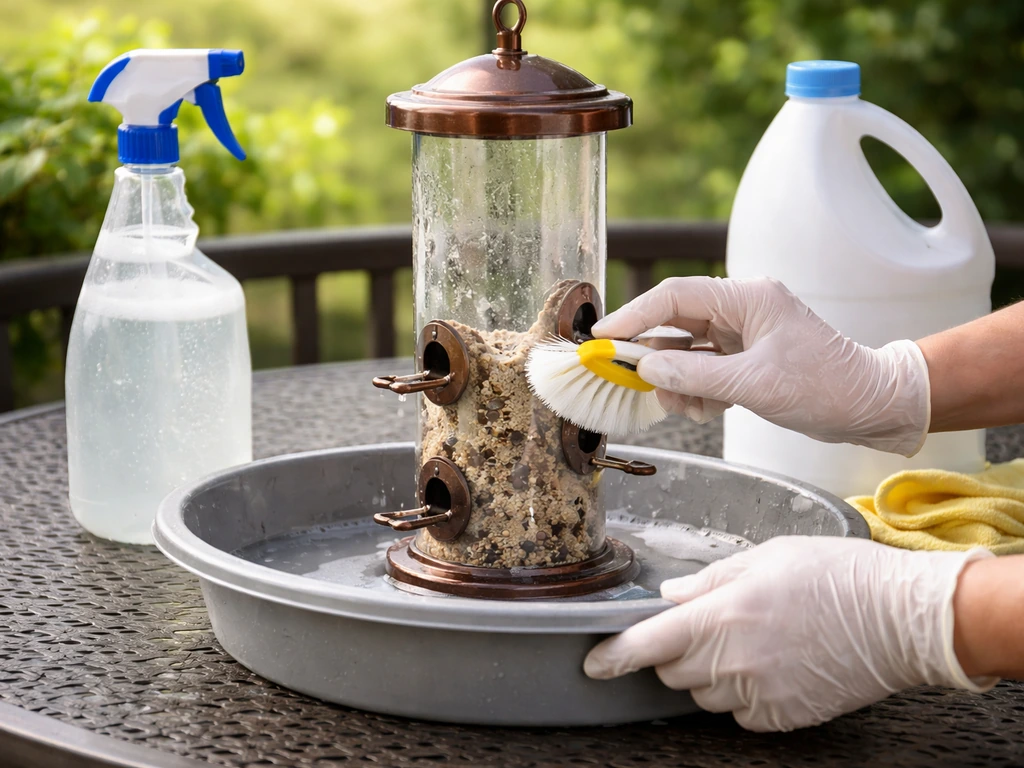
Take the feeder down immediately. Clean it with a 10% bleach solution, let it dry completely, and don't put it back up for at least a week. The U.S. Fish and Wildlife Service migratory-bird regulations materials also emphasize cleaning and disinfection steps to help avoid spreading avian disease during handling and cleanup blank" rel="noopener noreferrer">Clean it with a 10% bleach solution. Check your state wildlife agency's website for any active disease advisories. Report sick or dead birds to your state wildlife agency, not just as a formality but because that data genuinely helps track disease spread. If there's an active HPAI advisory in your area, follow the agency's specific guidance about whether to resume feeding at all.
You're getting starlings or other unwanted species
Starlings and house sparrows are attracted to platform feeders, millet, and bread. Switch to feeders that physically exclude larger birds (tube feeders with small perches, or caged feeders) and focus on seed types that target the species you want: nyjer (thistle) for finches, safflower for cardinals and chickadees. This won't completely solve the problem but will significantly shift the ratio of visitors. Managing which species you attract is also a legitimate part of staying on the right side of nuisance complaints. If you are trying to attract an oriole, use feeder tips like offering fresh nectar, hanging the feeder correctly, and keeping everything clean to reduce health and nuisance issues oriole bird feeders tips.
Your feeder is near a bear area
If you're in bear country, the calculus changes significantly. Many states and municipalities in bear-active areas have seasonal or year-round bans on bird feeders because the attractant risk outweighs the bird benefit. Check your state wildlife agency's bear management page specifically. If feeding is allowed, it's typically only during winter months when bears are denning, and feeders must be brought in at night or hung at a height and distance from structures that bears can't reach.
Your ongoing cleaning and maintenance checklist
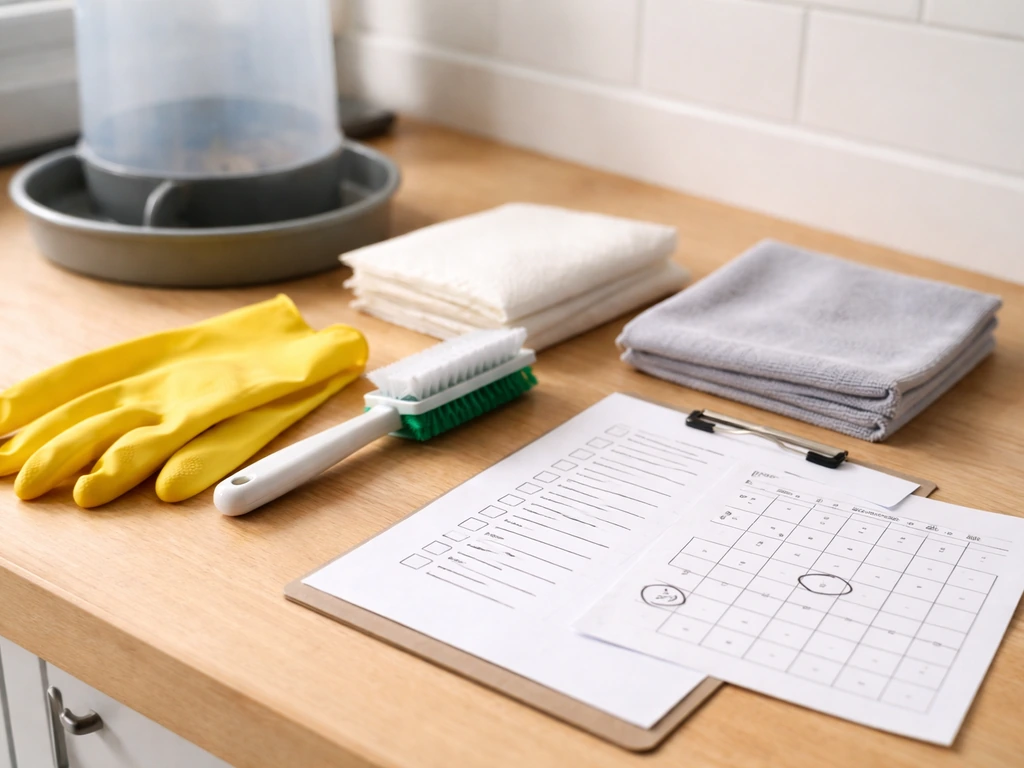
Here's the maintenance routine that keeps you in compliance with virtually every sanitation-related requirement and addresses the most common disease and nuisance risks, based on guidance from the CDC, Michigan DNR, Iowa DNR, and Oregon ODFW. These backyard bird feeding tips can also help you fine-tune placement, seed choices, and cleaning schedules based on what your local rules require.
- Weekly: Check for and remove ground spillage and hulls under the feeder. Inspect for mold or wet seed inside the feeder and discard if present. Refresh birdbath water.
- Monthly: Full feeder cleaning with 10% bleach solution (1 part bleach to 9 parts water). Soak for at least 10 minutes, scrub all surfaces, rinse thoroughly, and allow to dry completely before refilling.
- After any disease advisory or sick bird observation: Take feeder down immediately, clean with bleach solution, allow a rest period, and check state agency guidance before resuming.
- Seasonally: Review local ordinances and HOA rules for any seasonal restrictions. Assess whether your feeder placement, fill quantity, and design still meet current requirements. This matters especially if you've moved the feeder or changed seed types since you last checked.
Bird feeding done well, with the right feeder design, proper placement, consistent cleanup, and current local knowledge, is low-risk and genuinely beneficial. The goal of working through restrictions isn't to talk yourself out of feeding birds. It's to make sure that when you do it, you're doing it in a way that holds up to scrutiny, keeps the wildlife healthy, and doesn't create problems for you or your neighbors. That's a reasonable bar, and most people can clear it with a few hours of attention and a bottle of bleach.
FAQ
If bird feeding is restricted, does that mean I’m allowed to feed “a little,” or does any feeding count?
In many places the law is written around the feeder’s effects (waste, disease risk, attracting nuisance wildlife) and around specific feeder types, so a “small amount” can still be noncompliant if it creates ground seed or draw-in problems. If your area has a cleaning advisory or a disease season guidance, even low-volume feeding may require the same sanitation cadence.
What if my city allows feeders, but my HOA has stricter bird feeding restrictions?
HOAs commonly regulate the visible appearance and the equipment (commercially made units, permitted locations, or restrictions on platform feeders), even when the city code would otherwise allow feeding. If you have a complaint, check whether your HOA has a written rule for feeders, not just general nuisance language, and keep receipts or photos of any required feeder type and placement.
Do disease-outbreak advisories override local rules, and how should I handle resuming feeding after they end?
A disease advisory may be triggered by regional outbreaks and can require temporary suspension, enhanced cleaning, or reporting steps. Treat it like a time-bound rule: if you resume, follow the agency’s “resume” instructions exactly (timing, cleaning method, and whether specific seeds or feeder styles are discouraged during the advisory).
If I clean the feeder often, can I still be violating bird feeding restrictions due to placement?
Placement rules often include distance from property lines, proximity to storm drains, and whether food can fall onto sidewalks or shared areas. Even if you’re cleaning the feeder, you can still violate placement rules if wind or feeder design causes frequent litter in common areas.
How do bird feeding restrictions apply if I have several feeders or a feeder plus a birdbath?
If you feed multiple feeders, the “cleanup clock” usually applies to all of them, and spillage from one can keep your area noncompliant even if you maintain the others. Consolidate to fewer feeders, use designs that minimize waste, and check the ground daily during high-visitor periods.
What should I do if I get a neighbor complaint, even though I think my feeder is legal?
Yes, your obligation can shift if a nuisance pattern appears. If neighbors start receiving pests or mess complaints, some ordinances allow enforcement based on observed conditions rather than intent, so fix spillage immediately, document cleanup, and adjust feeder type or seed to reduce ground waste before the issue escalates.
If enforcement gets involved, what records or evidence are most helpful to show compliance?
Documentation can matter if it turns into a formal nuisance complaint. Take date-stamped photos of the feeder setup, show your cleaning schedule, and keep notes of adjustments you made (catch tray, reduced fill amount, baffle installation). If you correct the underlying issue quickly, it gives you evidence that you acted responsibly.
Are cleaning and disinfecting requirements “standard,” or do they change during disease advisories?
Cleaning requirements are often stricter during disease advisories, and they can specify more than “wash it.” Make sure the feeder and any perches or ports are scrubbed thoroughly, allow full drying, and avoid using weak or diluted solutions when instructions require a specific disinfecting method.
Which feeder types are most likely to trigger bird feeding restrictions around spillage and pests?
Some rules focus on feeder types because certain designs spill more or concentrate birds more aggressively. If your community has had repeated nuisance issues, switching from a platform to a tube or adding a catch tray can reduce both ground seed and the likelihood of attracting pests.
In bear country, what are the most common “allowed but restricted” conditions I should expect?
If you’re in bear-active areas, feeding can be prohibited outright or limited to specific times. “Allowed season” often still requires operational precautions, like removing feeders at night and placing them so bears cannot access them from the ground or from nearby structures.
What’s the best next step if I see sick or dead birds at or near my feeder?
If sick or dead birds appear, many advisories ask for reporting rather than only cleaning. Report to your state wildlife agency and keep the feeder off until the agency indicates it’s safe to resume, because ongoing feeding can worsen exposure for surviving birds.
How can I reduce nuisance species without breaking bird feeding restrictions?
Even if feeding is legal, using seed that attracts the wrong species (for example, millet or platform setups attracting starlings and sparrows) can create nuisance complaints and enforcement risk. Adjusting seed and feeder design can reduce the species mix without necessarily violating feeding rules.