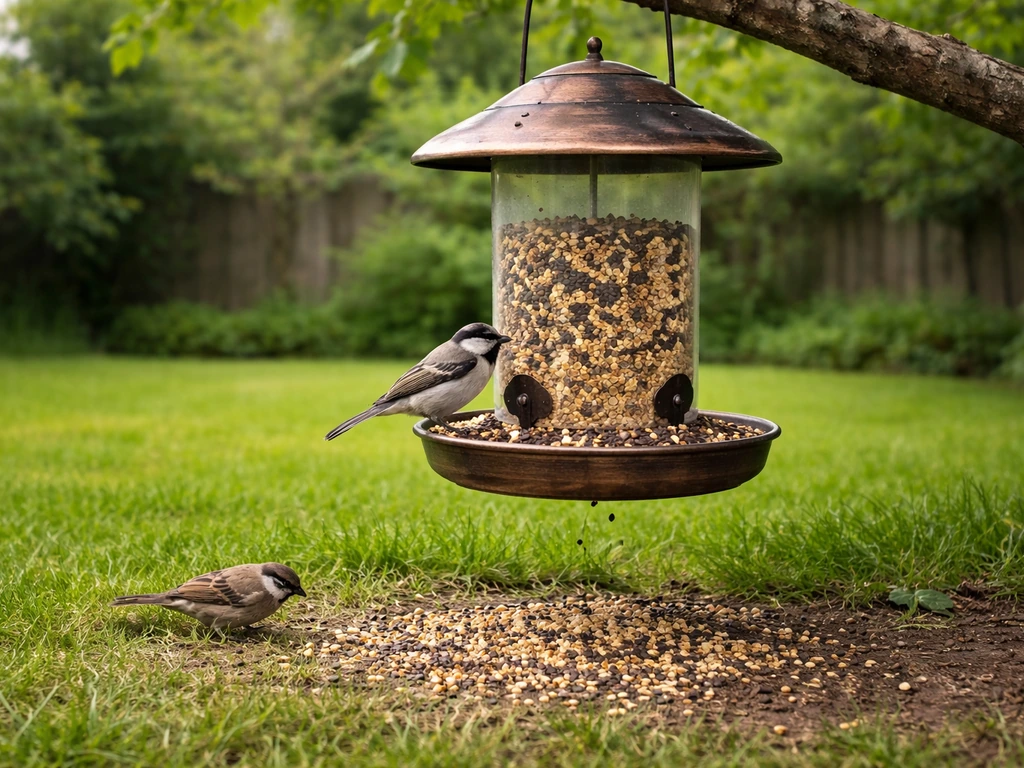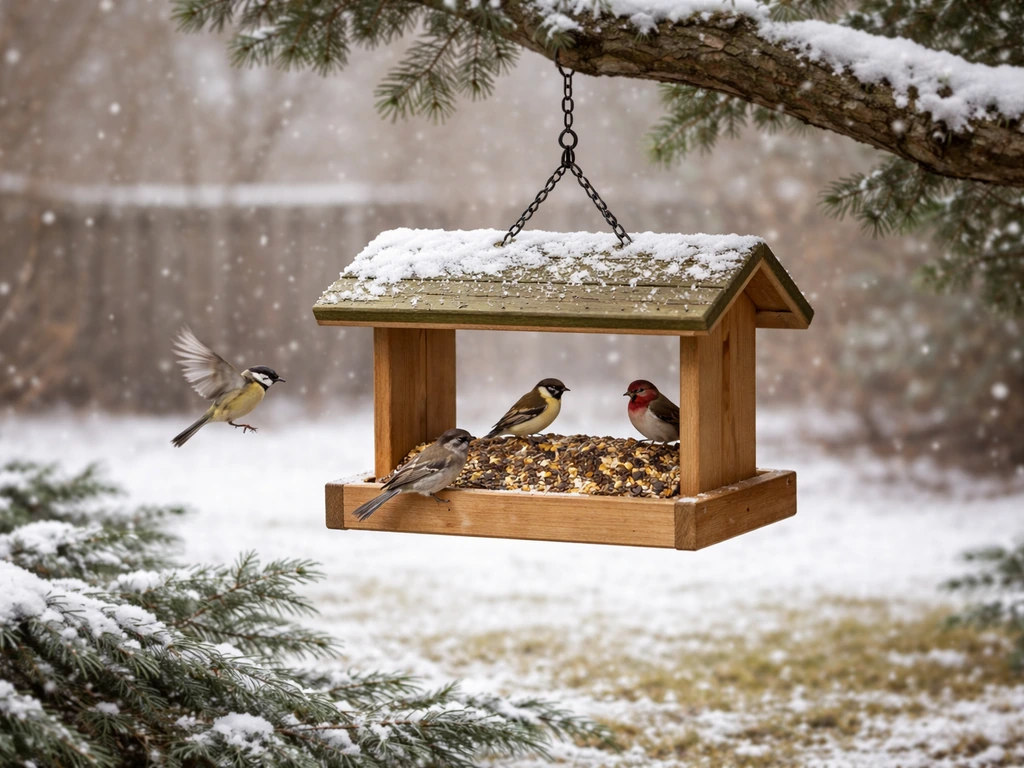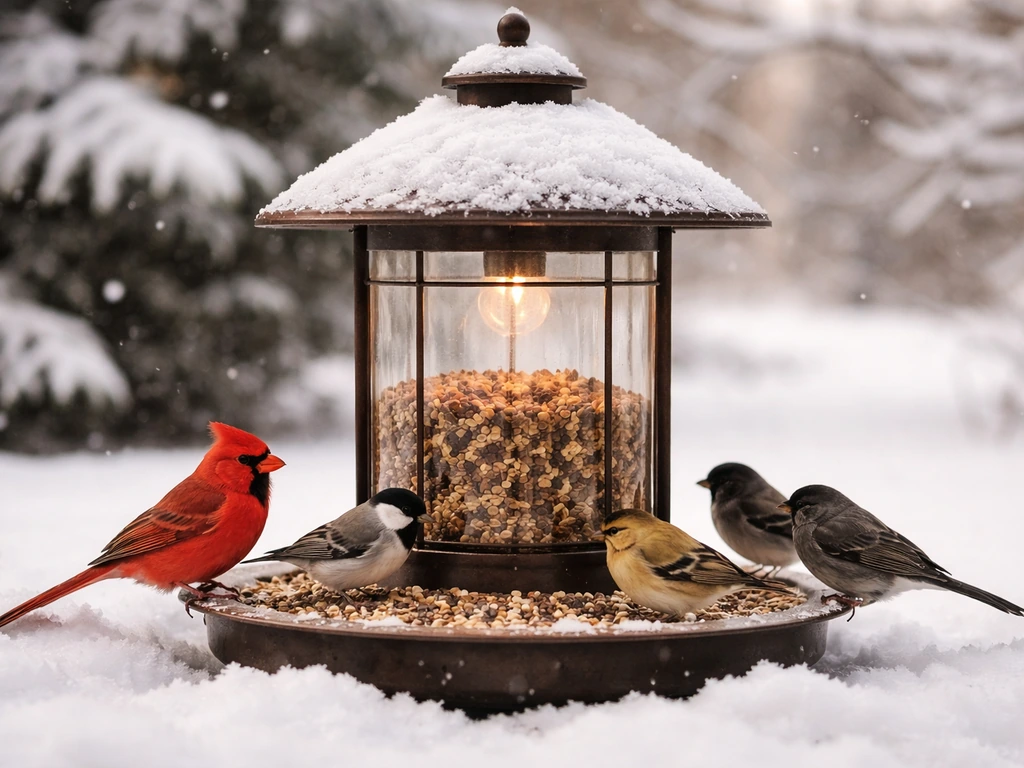
Most bird feeding problems come down to four things: wrong placement, wrong food, a dirty feeder, or an unwelcome visitor taking over. Once you figure out which one (or which combination) is causing the trouble, the fix is usually straightforward. This guide walks you through each issue in order, so you can diagnose what's actually happening at your feeder today and make changes that work.
Bird Feeding Problems: Diagnose Issues and Fix Feeders

Eleanor Hartwick
19 May 2026
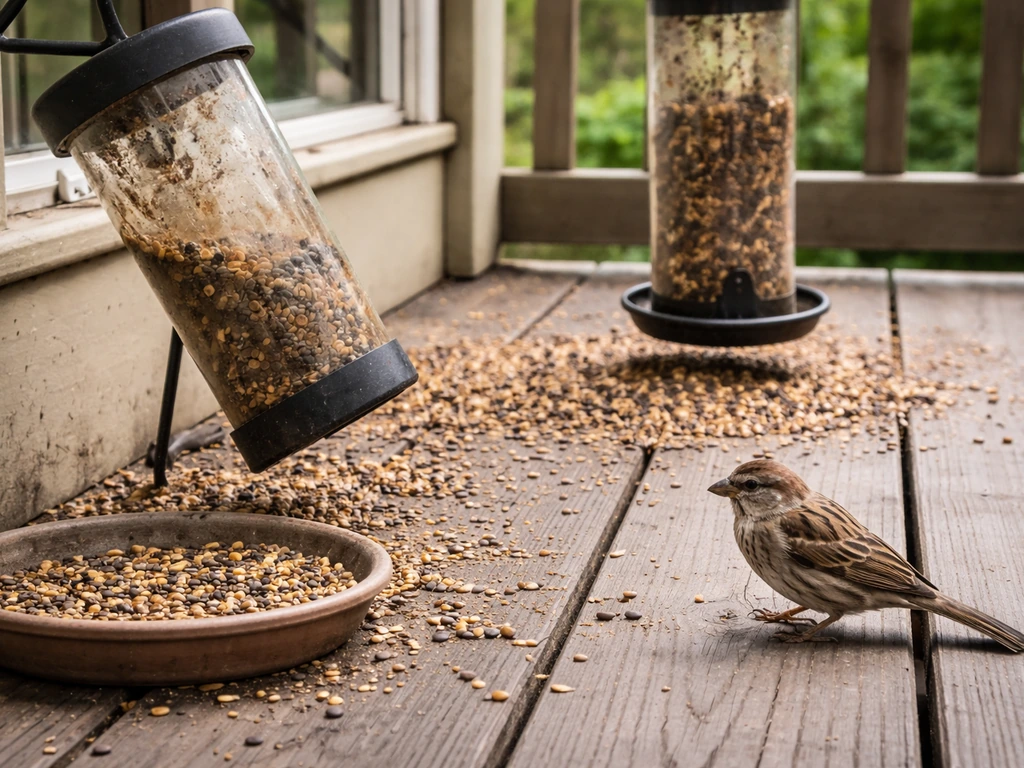
Common bird feeder problems and how to pinpoint the cause
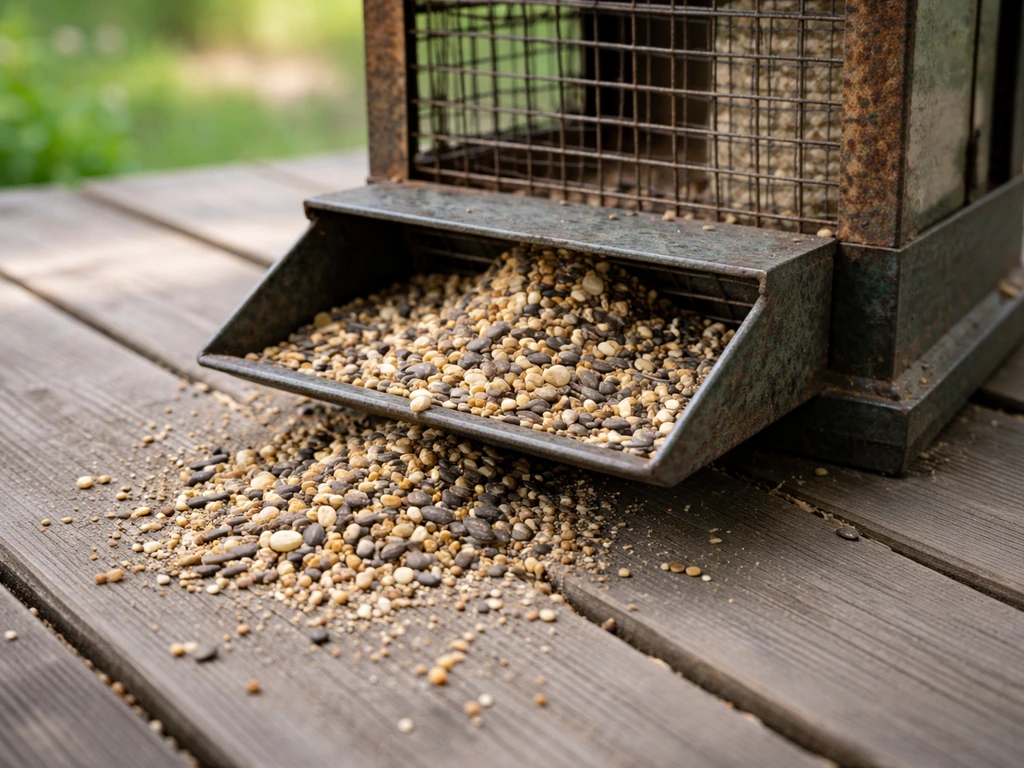
Before you change anything, spend a few minutes just watching. Most feeder problems reveal themselves quickly if you know what to look for. Are birds approaching but flying away without eating? That usually signals a placement or predator issue. Are birds eating but you're finding sick or dead ones nearby? That points to a hygiene problem. Is the feeder being emptied too fast with no small birds in sight? Squirrels, starlings, or pigeons are probably the culprits. Is seed sitting untouched and going stale? You may have the wrong food for the birds in your area, or the feeder style doesn't suit them.
A useful habit is to track what you see over a few days: which species visit, how often, what time of day, and whether anything seems to chase others off. You'll notice patterns fast. From there, match your observations to the sections below to find the specific fix.
- Birds approaching but not landing: predator presence, feeder instability, or wrong feeder type for the species
- Seed going untouched for days: wrong seed type, old or stale food, or the feeder is hard to access
- Seed disappearing very fast with few birds visible: squirrels, raccoons, or large pest birds like starlings
- Sick, lethargic, or dead birds near the feeder: disease risk from a dirty feeder or wet/moldy seed
- Birds flying into windows: feeder placed in the danger zone between 3 and 30 feet from glass
- Mess and waste piling up under the feeder: wrong seed mix with lots of filler, or feeder with no tray
Feeder placement fixes: predators, wind, shelter, and window collisions
Where you put a feeder affects almost everything: how safe birds feel, how often they visit, and whether they survive the visit. Getting placement right is the single highest-leverage change most people can make.
The window collision problem
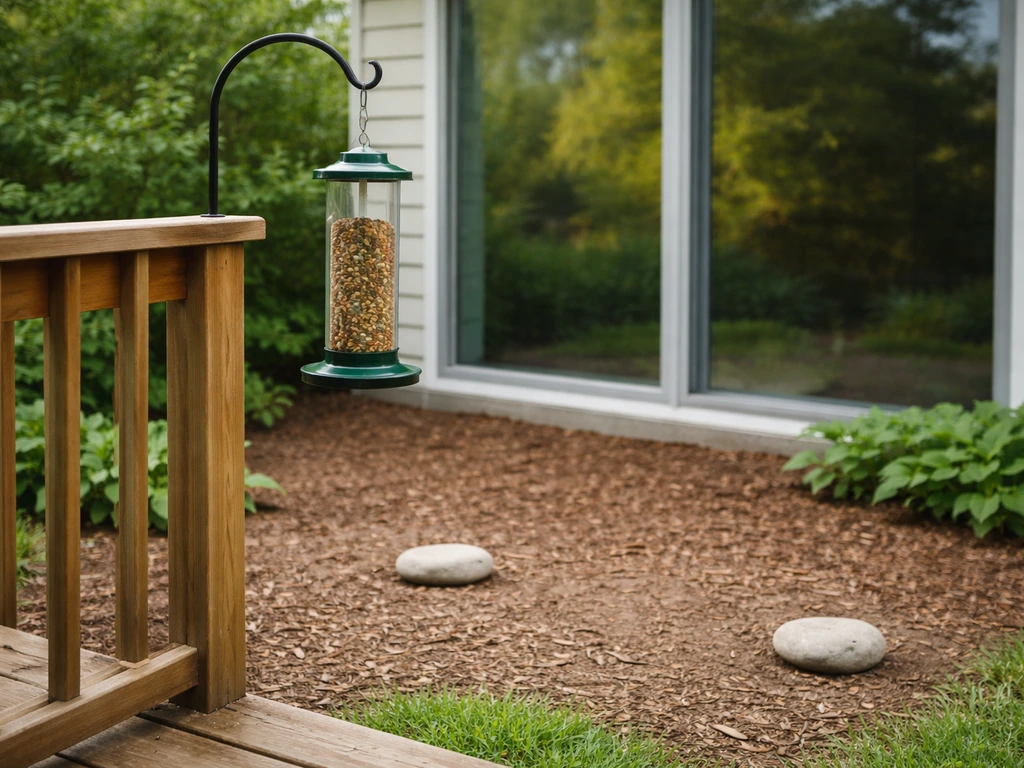
Window strikes are one of the most common feeder-related harms, and the cause is counterintuitive. Cornell research (reported by Audubon) shows that feeders placed between about 3 and 30 feet from a window sit in the danger zone: birds flushed from the feeder can build enough speed to cause fatal collisions with glass. The fix is to move the feeder either very close to the window (within 3 feet) or more than 30 feet away. When a feeder is within 3 feet, birds leaving it don't have room to gain dangerous momentum. If moving the feeder isn't practical, apply window collision deterrents like external tape patterns, decals spaced no more than 2 inches apart, or window screens.
Predator safety and shelter
Birds won't visit a feeder where they feel exposed. Place feeders within about 10 feet of a shrub, tree, or dense cover so birds have somewhere to retreat quickly. At the same time, don't place feeders right up against dense ground-level cover, because that gives cats an easy ambush spot. A pole-mounted feeder in a somewhat open area with cover nearby (but not immediately below) tends to strike the right balance. If you're seeing cats lurking, move the feeder to a higher pole and add a baffle.
Wind, rain, and weather exposure
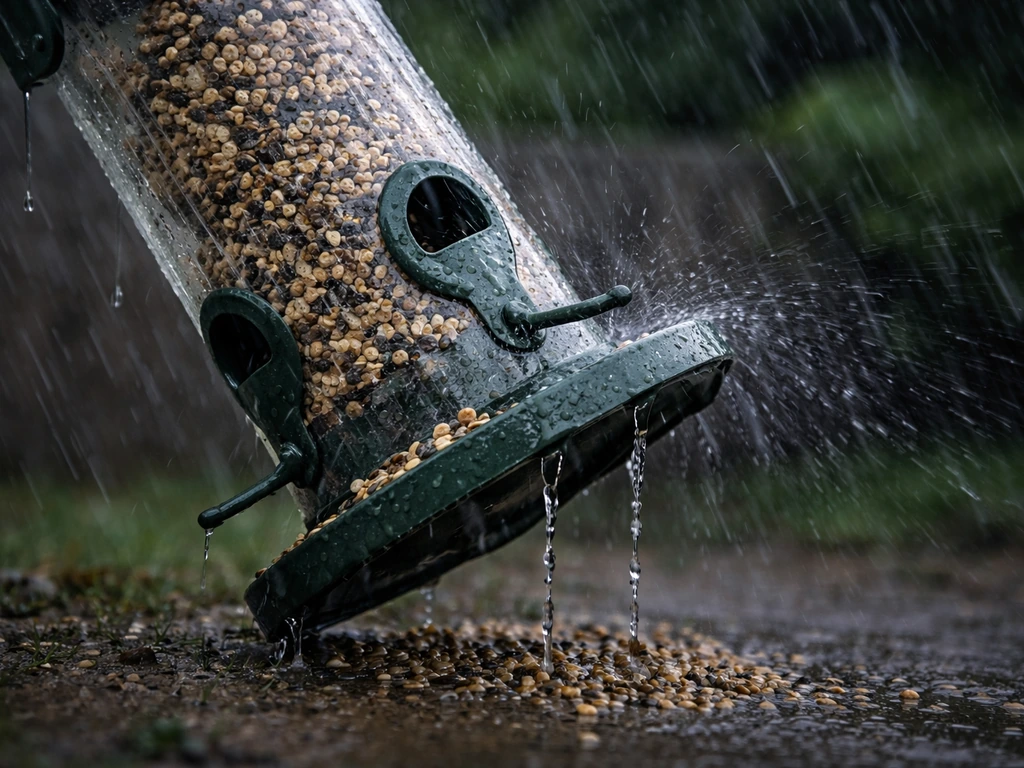
Feeders in fully exposed positions take a beating in bad weather. Wind tips trays, blows seed onto the ground, and drives rain into tube ports where it soaks and molds seed fast. Position feeders with a windbreak on the prevailing weather side, whether that's a fence, hedge, or wall. If you're in a region with strong seasonal winds, a sheltered corner between two structures often works better than the middle of an open lawn. Covered or hopper-style feeders handle rain far better than open platform feeders, so consider the feeder style if wet seed is a recurring issue.
Feed and feeder choice troubleshooting
Not all seed is equal, and a surprising number of feeding problems trace back to filling a feeder with the wrong food or using a feeder type that doesn't match the birds you're trying to attract. Some feeder styles also help prevent big birds from monopolizing access, such as using designs sized so they cannot feed through the ports wrong food.
Choosing the right seed
Black-oil sunflower seed is the single most universally useful option. It has a thin shell, high fat content, and appeals to a wide range of species including chickadees, finches, nuthatches, and cardinals. If you're buying a cheap mixed seed blend and finding a lot of it kicked onto the ground, check the ingredients: mixes heavy in red millet, milo, or wheat are largely filler that most desirable backyard birds ignore. Switch to a blend built around black-oil sunflower, safflower, or nyjer (thistle) and you'll see less waste and more use.
Nyjer seed in a tube feeder with small ports is excellent for goldfinches and siskins. Suet cakes in a cage feeder attract woodpeckers, nuthatches, and wrens, especially in cooler months. Mealworms (live or dried) work well for bluebirds and robins in spring and summer. Nectar feeders for hummingbirds require a straightforward 4:1 water-to-sugar solution with no dye added.
When seed goes bad
Soaked, clumped, or moldy seed is both a feeding problem and a health hazard. If you push your finger into the seed in a tube feeder and it feels damp or compacted, empty the whole feeder, wash it, and refill with dry seed. In humid or rainy seasons, only fill feeders halfway so seed turns over before it has a chance to get wet. Avoid filling during a storm entirely. If you keep finding mold repeatedly, switch to a hopper or covered feeder style that keeps seed drier. Never try to salvage moldy seed by drying it out; discard it.
Matching feeder type to species
| Feeder Type | Best For | Common Problem It Solves |
|---|---|---|
| Tube feeder with small ports | Finches, chickadees, siskins | Excludes larger pest birds from nyjer seed |
| Hopper/house feeder | Cardinals, jays, grosbeaks, sparrows | Keeps seed dry; suits birds that prefer a platform |
| Suet cage feeder | Woodpeckers, nuthatches, wrens | Provides high-fat food in cold weather |
| Tray/platform feeder | Ground-feeding species, doves, juncos | Accessible to species that won't use tubes |
| Caged tube feeder | Small songbirds only | Physically blocks squirrels and large birds |
| Hummingbird nectar feeder | Hummingbirds | Provides liquid sugar solution; needs frequent cleaning |
Cleaning, maintenance, and food safety to prevent disease
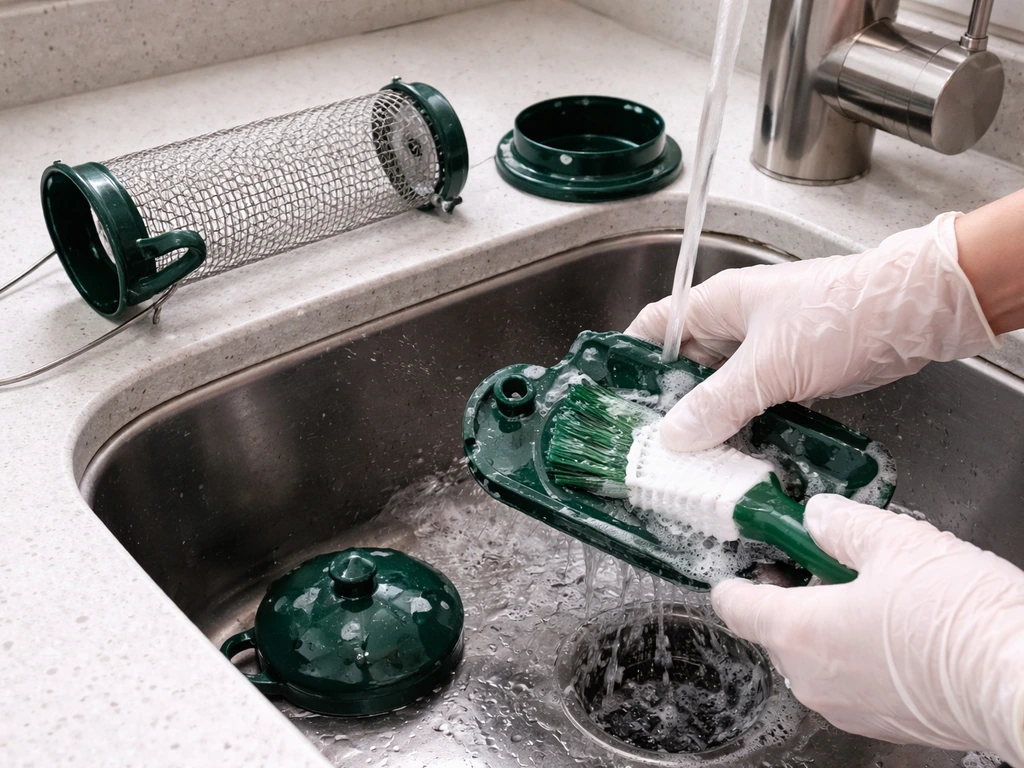
A dirty feeder is genuinely dangerous. If you notice bugs in bird feeder areas, it usually means moisture, spilled seed, or droppings are creating a food source for insects and pests. Wet seed and accumulated droppings create conditions for bacterial and fungal growth, and disease can spread quickly among birds that congregate in one spot. This isn't a theoretical concern: feeders have been linked to outbreaks of salmonellosis, house finch eye disease (mycoplasmal conjunctivitis), and, in some regions, more serious illness events that require temporary feeder shutdowns.
Project FeederWatch recommends cleaning seed feeders roughly every two weeks as a baseline, and more frequently during heavy use or warm, damp conditions. That cadence is easy to maintain if you build it into a regular routine. For disinfecting, Audubon recommends a solution of 9 parts water to 1 part bleach. Disassemble the feeder, scrub off seed residue and droppings with a stiff brush, soak or rinse with the bleach solution, then rinse thoroughly with clean water and let it air dry completely before refilling. A wet feeder refilled immediately just traps moisture and accelerates the problem you're trying to prevent.
Don't overlook the ground beneath the feeder. Hulls, droppings, and spilled seed accumulate fast and can harbor disease just as readily as the feeder itself. Rake or sweep the area every week or two, and consider placing a tray under tube feeders to catch hulls and make cleanup easier. Bird baths near feeders need the same 9:1 bleach rinse and should be changed and scrubbed at least twice a week in warm weather.
- Empty and inspect the feeder every two weeks (more often in summer or wet weather)
- Disassemble and scrub with a stiff brush to remove seed residue and droppings
- Disinfect with a 9: 1 water-to-bleach solution, then rinse thoroughly
- Allow to air dry completely before refilling
- Discard any wet, clumped, or moldy seed; do not try to salvage it
- Clean the ground below the feeder to remove hulls and droppings
- Watch for sick birds (puffed feathers, lethargy, eye discharge) and pause feeding temporarily if you spot several
Unwanted wildlife management: squirrels, rats, raccoons, and pest birds
If squirrels are emptying your feeders, you're in good company. This is probably the most common bird feeding problem people deal with, and there are several approaches that actually work. A squirrel baffle mounted on a smooth pole is the most reliable physical deterrent: a cone or cylinder baffle at least 18 inches in diameter, positioned about 5 feet off the ground, stops most squirrels from climbing up. The feeder also needs to be at least 10 feet from any launch point (tree branches, fences, rooftops) to prevent squirrels from jumping across. If your setup makes that impossible, a caged feeder (where the seed ports are enclosed in a wire cage with gaps too small for squirrels) is the next best option.
Rats are a different problem and a more serious one. Rats at feeders are almost always a sign that seed is accumulating on the ground. The fix is to reduce spillage (use a no-waste seed like hulled sunflower chips, or add a tray catcher), clean under the feeder regularly, and bring feeders in at night if rats are active in your area. Suspending feeding entirely for a week or two can also help break the habit of rodents checking that spot. This is covered more in the bird feeder mistakes content, where ground spillage is a major theme. Ground spillage and hygiene lapses are also among the most common bird feeder mistakes, so it helps to check for those alongside placement and food issues.
Raccoons are strong and persistent. A pole-mounted baffle works here too, but raccoons can defeat lighter designs. Use a heavy-duty raccoon baffle (wider and more robust than squirrel baffles), and bring feeders indoors at night if raccoons are active. They are primarily nocturnal, so simply removing the feeder after dark eliminates most raccoon access.
Pest birds like European starlings and house sparrows are a trickier issue because they're birds, so you can't exactly exclude them with a cage without affecting other species. However, switching to foods they don't prefer helps significantly: safflower seed is strongly disliked by starlings, and nyjer seed in small-port tube feeders is physically inaccessible to them. If pigeons are the problem, that topic has its own dedicated coverage with more detail on feeder designs that exclude them by weight or port size. If pigeons are visiting your feeder, look for bird feeders that pigeons can’t use, since port size and weight-activation designs can help keep them out.
Bird behavior issues: dominance, low use, bullying, and competition
If you're watching one or two birds chasing everyone else off the feeder, you're seeing normal dominance behavior, but it can effectively shut smaller or more timid species out. The simplest fix is to add a second feeder in a different location, ideally out of sight from the first. Most dominant birds can only guard one feeder at a time, so the second becomes a refuge for everyone else. Spreading feeders around the yard rather than clustering them also reduces competition.
Low feeder use in general is worth thinking through carefully before concluding there's a problem with the feeder itself. Birds may simply not have found it yet, especially if you've just set it up. New feeders can take anywhere from a few days to several weeks to attract regular visitors, depending on local bird density and existing feeding patterns in the neighborhood. If the feeder has been up for more than a month with almost no use, revisit placement (too exposed, too close to a disturbance like a busy door), seed type, and feeder cleanliness.
Some species are naturally shy and won't visit feeders near human activity. Placing a feeder in a quieter part of the yard, away from high-traffic doors and windows, can open up visits from species that would otherwise avoid the area entirely. Ground-feeding birds like juncos and native sparrows often ignore tube feeders completely; adding a low tray or platform near cover may solve the mystery of why those species never come even though you see them in the yard.
Seasonal feeding changes and when to stop feeding temporarily
Bird feeding needs genuinely shift across the year, and problems that seem mysterious in spring often make perfect sense when you factor in the season. In late spring and summer, natural food becomes abundant, so feeder use often drops sharply. That's not a problem; it's expected. Suet, however, should be removed or switched to no-melt varieties in summer, because standard suet goes rancid fast in heat and can smear onto feathers, affecting waterproofing and insulation.
Hummingbird feeders in summer need cleaning every two to three days in warm weather (or every day in very hot climates) because sugar solution ferments fast and can harm hummingbirds. If the nectar looks cloudy or you see black mold inside the feeder, clean it immediately with hot water and a brush, using the dilute bleach solution if mold is present, then rinse extremely well.
There are specific situations where stopping feeding temporarily is the responsible call. If you're seeing multiple sick or dead birds near your feeder, disease may be spreading through the local population at that spot. Remove and thoroughly clean all feeders, let the area sit unused for at least two weeks, and monitor before resuming. State wildlife agencies sometimes issue advisories recommending temporary feeder shutdowns during disease outbreaks (avian influenza alerts, for example) or during bear season in areas where bears are actively foraging. Following those advisories matters because a feeder that draws wildlife into conflict with humans is a real problem, not just a theoretical one.
In fall, be aware that leaving feeders up does not meaningfully prevent migratory birds from migrating. This is a persistent myth. Birds migrate on instinct driven by day length, not food availability. What you can do in fall is shift toward high-fat foods (suet, black-oil sunflower, peanuts) to help birds that are staying year-round build energy reserves for cold weather. In winter, keeping feeders consistently stocked and clear of ice and snow is more important than in any other season, especially during extended cold snaps when natural food sources are locked under ice.
If you're dealing with specific feeder hardware issues beyond these broader feeding problems, the bird feeder problems topic and the related bird feeder mistakes content go deeper on setup errors and equipment failures that can compound the issues covered here. If you have a specific case like wild Bill's bird feeder problems, use the troubleshooting steps above to pinpoint the cause.
FAQ
How can I tell if the birds are avoiding my feeder versus my feeder is actually empty or unusable?
Look for birds landing on the rim or ports, pecking once, then leaving. If you only see birds in the distance, revisit placement and cover first. If they land but no seed is being taken, check for soaked or moldy seed clogging ports, or a feeder design with ports too small for the species you want.
Do I need to throw away the entire seed when there is mold, or can I save the rest?
Discard any moldy seed in the feeder and do not try to dry it out. Even if some seed looks fine, moisture and spores can be trapped in the feeder system (ports, augers, and seed grooves). Clean and dry the feeder thoroughly before refilling.
My feeder gets wet after rain. What’s the best way to prevent wet seed without constantly cleaning?
Use a covered or hopper-style feeder when wet conditions are recurring, and fill in smaller amounts (for example, half-fill) so seed turns over. Also position the feeder with a windbreak on the prevailing weather side so rain is less likely to drive into ports.
Is bleach safe for feeders, and how do I avoid leaving harmful residue?
Bleach-based disinfecting works best when you fully rinse after soaking and let everything air dry completely before refilling. Skipping the rinse can leave chemical residue that irritates birds and can accelerate future grime buildup by attracting moisture.
How often should I clean a feeder if it’s only lightly used?
Use the general cleaning interval as a baseline, but adjust for conditions. If you see heavy droppings, spilled seed, or warm damp weather, clean more frequently even when visit rates are low, because disease risk increases with buildup rather than with traffic alone.
What should I do if I see dead or sick birds near the feeder but I don’t know if it’s my feeder?
Treat it as a hygiene emergency: remove and thoroughly clean all feeders, let the area sit unused for at least two weeks, and monitor before resuming. If local wildlife agencies have issued disease advisories in your area, follow them, since timing matters for stopping spread.
Do baffles help with both squirrels and larger pests like raccoons?
A squirrel baffle can be enough for many squirrel problems, but raccoons often need a heavier-duty baffle that is wider and more robust. If raccoons are active, remove access at night or bring feeders indoors after dark to break their feeding routine.
Can I keep rats away if my feeder is clean but seed is still on the ground?
Clean the area under and around the feeder regularly, because rats rely on spillage more than the feeder itself. Use no-waste seed options (such as hulled sunflower chips) or a tray catcher to reduce hulls and loose seed, then consider temporarily stopping feeding to reset the habit.
Why do I see a lot of seed waste, even though the right birds are visiting?
Waste commonly comes from filler seeds (millet, milo, wheat) that birds ignore, plus wind-driven shell loss or a feeder with openings that let birds kick seed. Check the seed ingredients and switch toward black-oil sunflower, safflower, or nyjer for your target species, and consider a different feeder style that reduces spillage.
Do I need a second feeder if I already have one that birds use?
If you’re seeing chasing and smaller birds disappearing, a second feeder often solves the problem better than changing food. Place it in a different location, ideally out of sight of the first, because dominant birds usually can only guard one access point effectively.
My feeder is new and not getting visits. How long should I wait before changing anything?
New feeders often take days to several weeks to become regular hotspots, depending on neighborhood bird traffic and existing feeding habits. If you’ve had it up for more than about a month with minimal use, reassess placement (cover and exposure), feeder cleanliness, and whether the seed matches local preferences.
What’s the fastest way to stop hummingbird feeder issues in hot weather?
In warm weather, clean every two to three days (or daily in very hot climates), and empty and refill promptly if the nectar looks cloudy or has mold. Fermented nectar can harm hummingbirds, so don’t wait for visible spoilage if it’s already warm.
Should I stop feeding in fall and winter to avoid attracting wildlife or because birds are migrating?
Do not assume feeding in fall prevents migration, it generally does not. Instead, focus on energy needs: shift to high-fat foods for birds staying year-round, keep feeders stocked consistently in winter, and avoid letting feeders ice over during cold snaps.