
If your bird feeder is empty every morning, the most likely culprit is nocturnal wildlife, not birds. Raccoons, squirrels, deer, rats, mice, and opossums are all perfectly happy to raid a feeder overnight, and a single raccoon can clean out a tube feeder in under ten minutes. That said, there are a few other causes worth ruling out: fast-feeding flocks of birds in the late afternoon, rain or humidity spoiling seed so birds stop visiting (making it look like less was eaten than actually disappeared), and feeder leaks that dump seed on the ground. Here is how to figure out exactly what is happening and fix it. Once you know the timing and what clues appear, you can apply the same reasoning to a zero day bird feeder explained diagnosis figure out exactly what is happening and fix it.
Why Is My Bird Feeder Empty Every Morning? Fixes

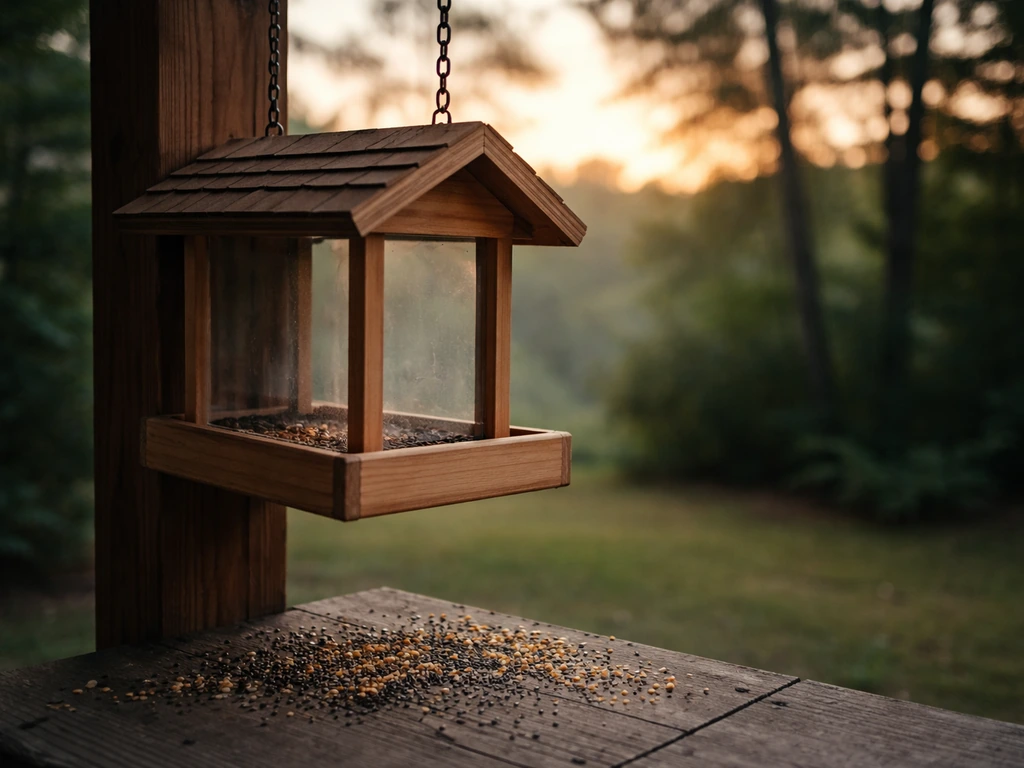
The most common reason your feeder empties overnight
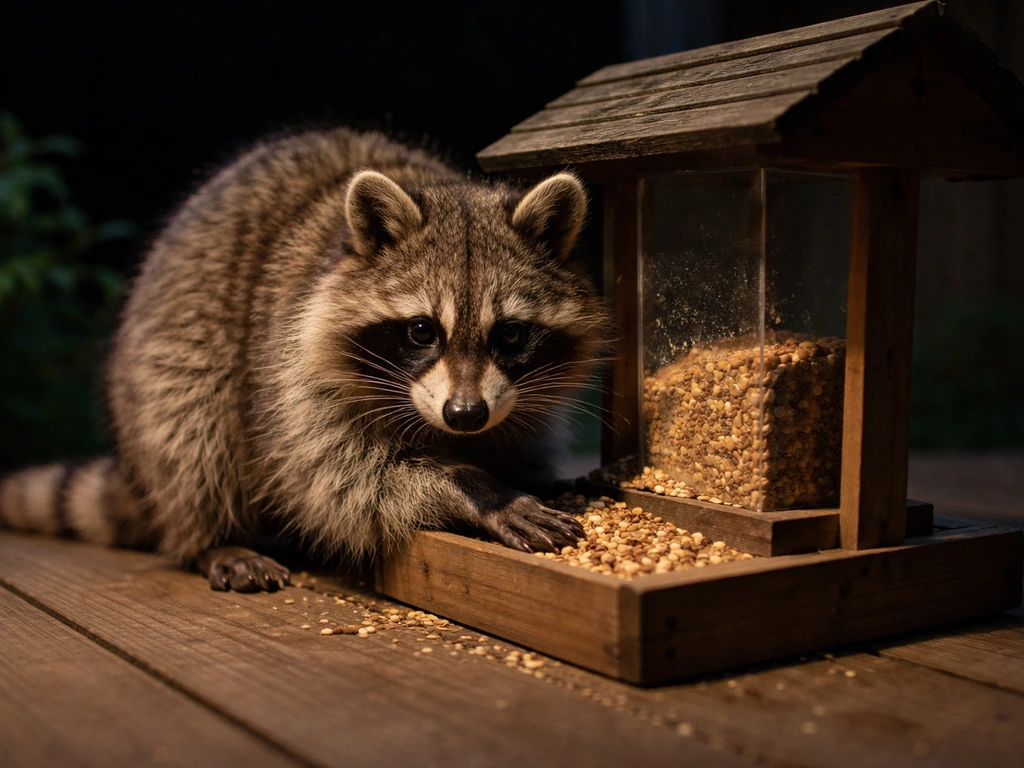
Nocturnal wildlife is responsible the vast majority of the time. Raccoons are the number-one offender in most of North America. They are strong, dexterous, and motivated, and they quickly learn that your feeder is a reliable food source. Deer will knock feeders over or tip them to spill seed. Rats and mice quietly eat through the night and are far more common visitors than most backyard birders realize. Squirrels, while mainly active during the day, can start and finish early enough that the feeder is already bare before you come outside.
The second most common cause is a heavy late-afternoon feeding frenzy. In the hour before sunset, many species, especially sparrows, finches, and starlings, feed aggressively to fuel overnight thermoregulation. A feeder loaded at noon can be genuinely bird-emptied by dusk, and it just looks empty in the morning because it was empty all night. This is actually good news if it applies to you, since no fix is needed beyond timing your refill.
To figure out which scenario fits, take a close look before you refill. Check the exact time the feeder empties by peeking at it around sunset, then again at 9 p.m. or later. If it was full at sunset and empty by 9 p.m., that is almost certainly a nocturnal animal. If it was already empty at sunset, birds are probably doing the work.
Wildlife thieves vs. birds: what to look for in the morning
When you go out in the morning, spend a minute looking at the ground and the feeder itself before you touch anything. If you want more ways to compare signs of wildlife versus normal feeding, see Wildlife thieves vs. birds: what to look for in the morning. The clues are usually obvious once you know what to look for. Those tracks and clues can also help you figure out who took the money from the bird feeder clues are usually obvious.
- Seed piled on the ground in a wide scatter: a raccoon or deer knocked or tipped the feeder; birds drop some seed but not this much
- Chewed or bent feeder parts, cracked plastic ports, or missing lids: raccoon or squirrel damage; birds do not damage hardware
- Muddy paw prints on the pole, on a nearby fence, or on the feeder itself: raccoons leave a very recognizable hand-like print
- Sunflower shell fragments spread well beyond the feeder: squirrels carry seeds away and eat them nearby, leaving a mess
- A trail of scattered seed leading away from the feeder: a larger animal (deer, raccoon) knocked it over and moved on
- Feeder completely untouched but totally empty with no debris: rats or mice, which eat neatly and leave almost no trace
- Feeder knocked off its hook or pole entirely: raccoon, large squirrel, or deer
If none of these signs are present and there is no seed on the ground, birds genuinely ate it. Watch for heavy activity in the late afternoon on your next refill day. A quick trail camera or even a phone propped on a windowsill pointing at the feeder will remove all doubt and is well worth setting up for a single night if you are still unsure.
When weather and bad seed are the real problem
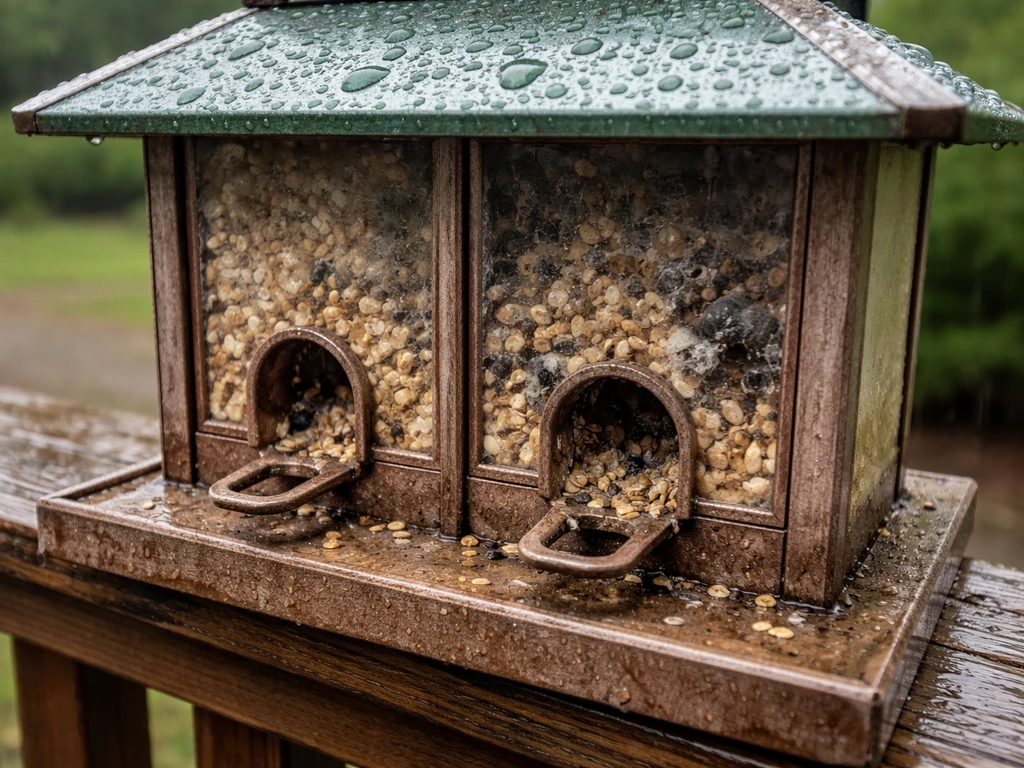
This one trips people up because it does not feel like an emptying problem at first. Rain, humidity, and poor feeder drainage can soak seed, which then clumps, grows mold, or ferments. Birds detect spoiled seed quickly and stop coming to the feeder. If the seed has been sitting there for days but the feeder looks "empty" of birds rather than empty of seed, check whether the seed is wet or matted. If you push a finger in and the seed has turned into a solid mass, it needs to come out.
Wind is also worth mentioning. Open, exposed feeders in windy locations lose an astonishing amount of seed to scatter. Small seeds like millet and nyjer are especially vulnerable. If you are losing seed to wind, you will find a wide dusting of seed on the ground in a consistent downwind direction, even in the absence of wildlife.
The fix for weather-related losses is a combination of feeder design and maintenance. Covered tube feeders and enclosed hopper feeders dramatically outperform open tray feeders in wet climates. Make sure drainage holes at the bottom of any feeder are clear and not blocked by seed debris. If your climate is consistently humid, plan on refilling in smaller quantities more frequently so seed does not have time to spoil.
Feeder placement and cover: fixes that make a real difference
Where you put your feeder has a huge effect on how quickly it gets raided, and also on whether birds feel safe enough to use it. A feeder placed directly next to a fence, tree trunk, or dense shrub is essentially handing nocturnal climbers a stepping stone. Raccoons do not need much of a boost. Aim for at least ten feet of open space between the feeder and any structure that could act as a launch point.
At the same time, birds want some cover within about ten to fifteen feet, so they have a safe place to land and wait before flying to the feeder and to escape quickly if a predator shows up. A completely exposed feeder in the middle of an open lawn will be used less, especially by smaller, shyer species. The practical sweet spot is a feeder on a freestanding pole in the open, with shrubs or a brush pile roughly ten to fifteen feet away.
Height matters, too. Ground-level or low-hung feeders are easy targets for mammals. Tube and hopper feeders on poles at least five feet off the ground, with a baffle installed, are much harder for most wildlife to access. Do not hang feeders from tree branches if nocturnal wildlife is your problem. A branch is a direct invitation.
Choosing seed and feeder types that reduce waste and theft
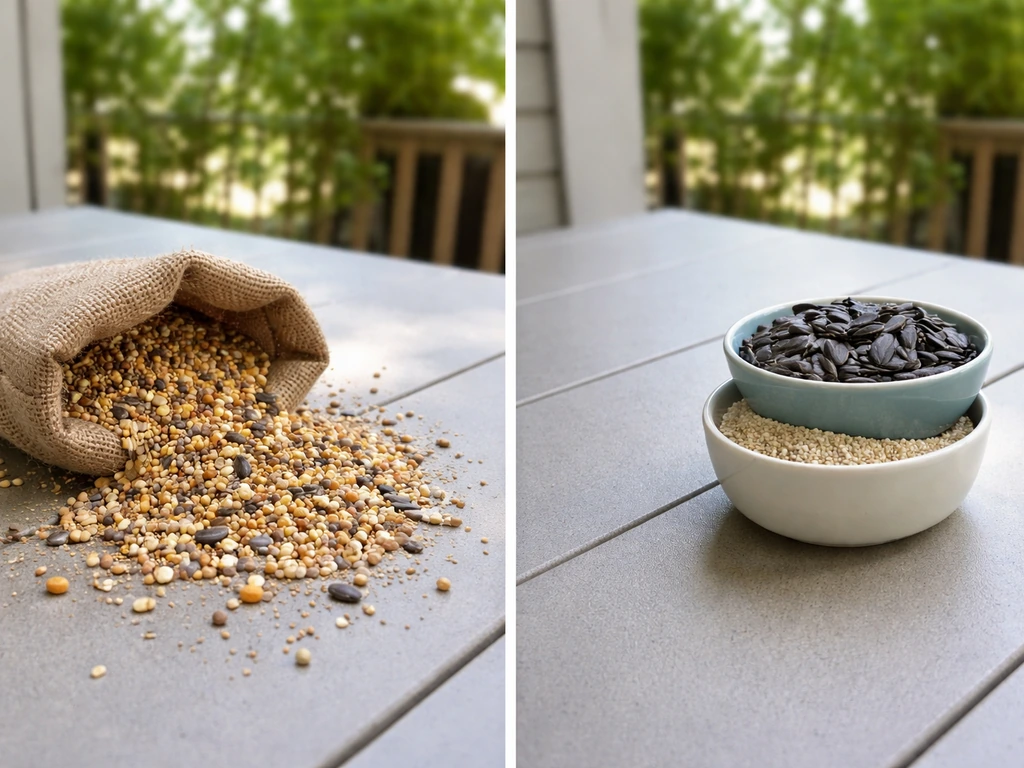
Cheap mixed seed blends are one of the most common sources of feeder waste. Those bags with millet, milo, wheat, and a handful of sunflower seeds look like value, but most birds pick out what they want and toss the rest. That discarded seed hits the ground and immediately attracts rodents. If you are seeing a pile of seed accumulating under your feeder every day, the birds are doing the tossing, and the mammals are eating what falls.
Switching to single-ingredient or targeted seed reduces waste dramatically. Straight black-oil sunflower seeds, nyjer (thistle) in a finch-specific tube, safflower seeds (which squirrels dislike), or shelled peanuts in a mesh feeder attract specific birds without generating piles of discards. Suet cakes in a cage feeder are also excellent: they do not scatter, they resist rain reasonably well, and while raccoons will absolutely try to take them, a cage-style suet holder with a tail-prop guard limits access well.
| Seed/Food Type | Birds Attracted | Waste Level | Theft Risk |
|---|---|---|---|
| Black-oil sunflower | Cardinals, chickadees, finches, nuthatches | Low | Medium (squirrels love it) |
| Safflower | Cardinals, chickadees, doves | Low | Low (squirrels often ignore it) |
| Nyjer (thistle) | Goldfinches, siskins, redpolls | Very low | Low |
| Shelled peanuts | Jays, woodpeckers, titmice | Very low | High (raccoons, squirrels) |
| Suet cake | Woodpeckers, nuthatches, wrens | Very low | Medium (raccoons) |
| Mixed seed blends | Various, but selective | High | High (attracts rodents) |
Squirrel and rodent proofing that actually works
A good baffle is the single most effective tool you can invest in. A smooth metal stovepipe baffle (at least 18 inches in diameter) mounted on the feeder pole below the feeder blocks squirrels and raccoons from climbing up. It needs to be positioned at least four to five feet off the ground and far enough from any structure that the animal cannot bypass it with a jump. Do not use plastic baffles if raccoons are involved. They chew through them.
For squirrels specifically, a weight-sensitive feeder (one where the feeding ports close under the weight of a squirrel) is genuinely effective. Brands like Squirrel Buster have a solid reputation among birders who have tested many options. These feeders do require that the feeder pole itself is baffled, because the squirrel will still try to climb up. Used together, a good pole baffle and a weight-activated feeder solve probably 90 percent of daytime squirrel problems.
For raccoons specifically, removing the feeder at night is the most reliable solution if you are not willing to invest in specialized hardware. Bring it inside or hang it from a location that is truly unreachable (a thin wire stretched between two points at least ten feet off the ground, with no nearby jumping-off point). Raccoons are patient and clever, so any solution that relies on them being deterred by mild discomfort will eventually fail.
Rodents require a different approach. If you are finding neat, total depletion with no debris, and you suspect rats or mice, focus on ground management first. Rake and remove all spilled seed from under the feeder every day. Consider switching to a no-waste seed mix, a tube feeder with a catch tray, or cylinder-style seed blocks that produce minimal debris. Do not leave seed accessible at ground level. If the problem persists, placing a tray feeder on a high pole with a baffle is often enough, since rats are less willing to attempt a baffled pole than a tree branch or ground-level feeder.
One thing worth acknowledging: attracting wildlife to your yard is a real consequence of feeding birds. If you are getting repeated visits that leave your feeder empty, avoid inviting them by keeping your bird feeder seed controlled and consider not leaving supplies out overnight, even if you are not sure why you feel like you have to say excuse me your bird feeder is empty t shirt. Rats and raccoons are not just an inconvenience. A persistent food source can establish a local population and create problems beyond the feeder. If you have an active rat problem in your neighborhood, it is worth weighing whether ground-feeding or open tray feeders are the right choice for your specific situation. Tube feeders with catch trays and regular ground cleanup significantly reduce but do not eliminate this risk.
Cleaning, maintenance, and adjusting your feeding routine
A dirty feeder is a less-used feeder. Moldy seed, wet debris in the bottom of a tube, and old hulls clogging ports all discourage birds from returning even if fresh seed is on top. The Cornell Lab and U.S. Fish and Wildlife Service recommend cleaning feeders at least once every two weeks under normal conditions, and more frequently during wet weather or when you notice heavy bird use.
The actual cleaning process is straightforward. Empty the feeder completely, scrub the interior with soap and hot water using a bottle brush, and rinse well. For a deeper disinfection, soak the feeder in a dilute bleach solution: no more than one part bleach to nine parts water. The Virginia Department of Wildlife Resources recommends a ten-minute soak at this dilution. Rinse thoroughly afterward, since residual bleach will deter birds. Let the feeder dry fully before refilling, because even a slightly damp interior will cause seed to clump and mold faster.
Do not forget the ground. Raking up old seed, shells, and debris under the feeder is part of the maintenance routine, not just a cosmetic task. Penn State Extension specifically recommends removing moldy and discarded seed from under feeders to reduce disease risk. Empty the feeder and scrub the interior thoroughly to remove mold and residue, which helps reduce disease risk. Wet seed piled on the ground is a vector for salmonella and aspergillosis, both of which can affect backyard birds.
For feeding schedule and quantity, try filling feeders in the morning rather than the evening. Evening fills mean nocturnal wildlife gets first access to fresh, full feeders. A morning refill gives birds the bulk of the day to use the seed, and by the time nocturnal animals are active, there is less left to steal. Fill to roughly a one-day supply rather than topping off every time. You will quickly get a feel for how much your local birds actually consume in a day, which tells you a lot about whether wildlife is supplementing their diet at your expense.
Seasonal adjustments matter, too. In late summer and fall, natural food sources are abundant and birds may use your feeder less, but wildlife like squirrels and chipmunks are in heavy foraging mode stocking up for winter. This is often when people first notice overnight depletion. If you have a bird feeder but no birds showing up, start by checking for common causes like nocturnal wildlife, spoiled seed, and feeder placement i have a bird feeder but no birds. In winter, genuine bird feeding activity increases sharply in cold climates because birds need more calories. In spring and summer, you may want to reduce what you offer or shift to suet cakes and nyjer, since most songbirds shift to insects and are less dependent on feeders. Adjusting what and how much you fill seasonally keeps the feeder matched to actual bird demand and makes theft more obvious when it happens.
FAQ
Can I tell if the feeder is being emptied by birds during the day or by animals overnight?
Yes. If the feeder was full at sunset but still shows no signs of birds during the day, that suggests the seed is being removed overnight or birds are avoiding a problem like wet or moldy seed. Check for wet clumps in the feeder, look for a downwind seed scatter (wind loss), and confirm whether there is seed piled on the ground under or near the feeder (tossing or dragging often indicates birds or squirrels, not “mystery emptiness”).
What’s the quickest way to confirm the timing of the seed loss?
A fast way is to do a “starting seed test.” Fill the feeder to a known level (or count how many refills you add), note the exact time, and photograph the feeder and ground at sunset and again at 9 p.m. If the seed disappears while the feeder ports look dry and the ground is clean, that points more toward nocturnal nibblers that access the feeder directly. If you see scattered seed or trash-like hulls accumulating, wind or daily tossing is more likely.
What if it looks like rodents are taking everything, but there’s almost no seed debris?
If you suspect rodents but you only ever see total depletion with very little mess, check for “hidden access.” Rats and mice can enter through gaps near the pole, chew through loose wire mesh, or feed from a feeder catch tray opening. Make sure the pole base area is clear, keep the area under the feeder raked daily, and consider a no-waste feeder style or a tube with a catch tray designed to block ground-level access.
Could a feeder leak make it seem like something is stealing seed?
Yes. Even if you cannot see wildlife, feeder leaks can mimic theft. Inspect for seed accumulating where it should not, check drainage holes and seams for gaps, and test by placing paper under the feeder area overnight. If you find seed on paper or along the pole, correct the leak or switch to a feeder design with better seals and drainage control.
Is it okay to take my feeder in at night to stop overnight raiding?
For many setups, avoid leaving seed out overnight until you solve the cause. If you are seeing consistent overnight emptiness, try bringing the feeder in after a morning fill, then put it back early the next day to minimize first-access for raccoons, rats, and other nocturnal visitors. This also makes the pattern easier to diagnose because “morning bird use” becomes more visible.
Why do I lose seed even when I don’t see any animals near the feeder?
Small seeds are a wind loss trap. If you regularly use millet, nyjer, or similar light seed, you may lose a surprising amount to scattering even without wildlife. A practical indicator is a consistent, downwind dusting rather than neat pile-ups or bite marks on seed packets. If that’s happening, use a more wind-resistant feeder type, reduce exposure (placement), or switch to heavier seed that holds position better.
Will a baffle work even if my feeder is near a fence or tree?
A baffle only works if it blocks climbing paths. If the feeder is close to a fence, tree trunk, or dense shrub, squirrels and raccoons can use a launch point to bypass the barrier. Re-check the spacing, ensure the baffle is the correct size for your pole and feeder, and confirm the top and bottom edges leave no easy “hands-and-feet” route around it.
How can I tell if the problem is spoiled seed, not wildlife?
Yes, especially for seed that clumps. Damp seed can look “gone” because birds stop feeding it, leaving behind only a thin layer or wet debris inside ports. Stir a sample with a finger. If it turns into a solid mass, or if you smell fermentation or see mold, remove and discard that batch, clean the feeder, and switch to a feeder style that better protects seed from rain and humidity.
What’s the most important mistake to avoid when cleaning the feeder?
For cleaning, do not refill until everything is fully dry. Even a slightly damp interior can cause clumping, mold, and port blockage. Also, when soaking in bleach solution, rinse thoroughly until there is no chemical odor, then let it dry completely before refilling.
Do I still need a pole baffle if I buy a squirrel-resistant feeder?
Weight-activated squirrel feeders help with squirrels, but they do not eliminate the need for pole baffles. Squirrels can still climb the pole to reach the feeder and then defeat the system if the pole is not blocked. Use a baffled pole plus a weight-sensitive feeder together, and keep nearby climbing routes blocked.
How can a trail camera help if I’m not sure which animal is responsible?
If you hear or see animals but cannot confirm which one, set up a simple overnight camera facing the feeder and ground line, not just the feeder ports. Use night mode, and include the downwind area where scattered seed lands. Review the footage at the same times you do your checks (sunset and late night) to match behavior to when the feeder empties.